Blog

  • Kolling NEWS

    Kolling NEWS

    We’re kicking off the year with plenty of encouraging research news.

    Read on for details about new funding, fascinating research into the link between heart disease and osteoarthritis and promising work into a new diabetes treatment.

    We also unveil the winners of our travel awards program, generously backed by philanthropic funding.

    Click here: Kolling NEWS

  • Significant investment in our research announced

    Significant investment in our research announced

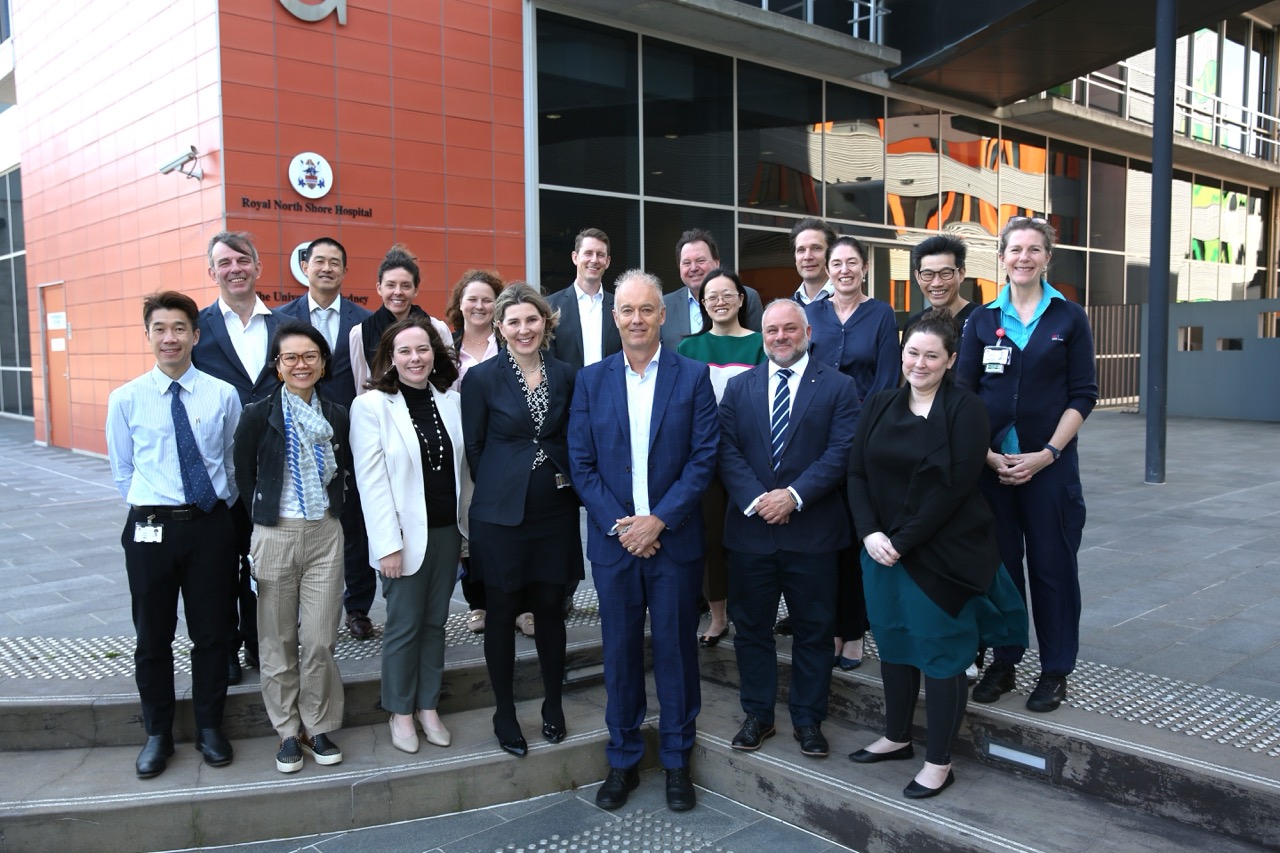
    A large collection of research projects will get off the ground following generous funding through the Ramsay Research and Teaching Fund Scheme.

    The scheme has directed more than $10 million to research on the Royal North Shore Hospital campus over the last 20 years, and this year a further $850,000 will be shared across 17 projects.

    A diverse range of studies will be supported, strengthening investigations into cardiovascular disease, cancer and diabetes as well as osteoarthritis, neonatal care, thyroid function and physiotherapy programs.

    The successful recipients this year are:

    • Professor Dale Bailey
    • Professor Roderick Clifton-Bligh
    • Professor Gemma Figtree
    • Professor David Hunter
    • Associate Professor Sarah Glastras
    • Associate Professor Joanne Glinsky
    • Associate Professor Karl Ng
    • Associate Professor Sean Seeho
    • Dr Sally Baron-Hay
    • Dr Grace Gifford
    • Dr Matti Gild
    • Dr Pierre Janin
    • Dr Barbara Lucas
    • Dr Sharon McCracken
    • Dr Lauren Monds
    • Dr Leo Pang
    • Dr Kathy Willowson     

    NSLHD CE Adjunct Professor Anthony Schembri AM welcomed the investment saying it will help the district maintain its reputation as a hub of research excellence and high value care.

    “We know that districts with an active research culture, where research is embedded as part of clinical care have a higher patient experience, less errors and better health outcomes,” he said.

    “I look forward to following the progress of these projects, as well as their impact on lifting our standard of care and our understanding of a broad range of conditions.

    “Personally, as a fellow allied health worker, it’s great to see our allied health practitioners being recognised with these important research grants.”

    The recipients were congratulated by North Shore Private, Ramsay Healthcare Acting CEO Christian Hoengaard, who said the grants represented a tremendous investment.

    “We look forward to all the good outcomes that will flow as a result of this research and I’m sure it will help us continue to deliver world leading care,” he said.

    “We have a long history of collaboration and I look forward to building on that partnership for another two decades.” 

  • Crucial funds strengthening our research expertise

    Crucial funds strengthening our research expertise

    A group of researchers will have the chance to broaden their skills and establish new collaborations following a funding boost from the Royal North Shore Hospital Scientific Staff Council.

    The council has awarded 12 travel grants to scientists working within the district and the Kolling Institute.

    The diverse group of leaders is driving research progress into heart and kidney disease, cancer, musculoskeletal conditions and the quality use of medicines. Their investigations are helping to establish a better understanding of disease and improved models of care.

    RNSH Scientific Staff Council Chair Dr Sumit Sahni said more than $25,000 will be shared amongst the group to allow them to present their research at national and international conferences.

    “I would like to congratulate this impressive group. They are all developing their research expertise and increasing their impact in their individual areas, ultimately improving the care we provide,” he said.

    The successful recipients include cancer researchers Drs Bharat Venkatesh and Nunki Hassan, musculoskeletal investigators Drs Joanne Glinsky and Xiaoqian Liu, and scientists improving the use of medications Drs Lisa Kouladjian, Kenji Fujita and Nashwa Masnoon.

    Funding has also gone to kidney disease researchers Dr Ji Bian, Dr Qinghua Cao and Amanda Purcell, and two cardiology researchers Drs Jonathan Ciofani and Sina Fathieh.

    Dr Sahni said the travel awards program has been supported for many years by Ramsay Heathcare and he would like to thank them for their continued investment in our research. 

  • Technology giving our researchers the edge

    Technology giving our researchers the edge

    Impressive new infrastructure at the Kolling Institute is set to drive progress with our research into cancer and neuroscience.

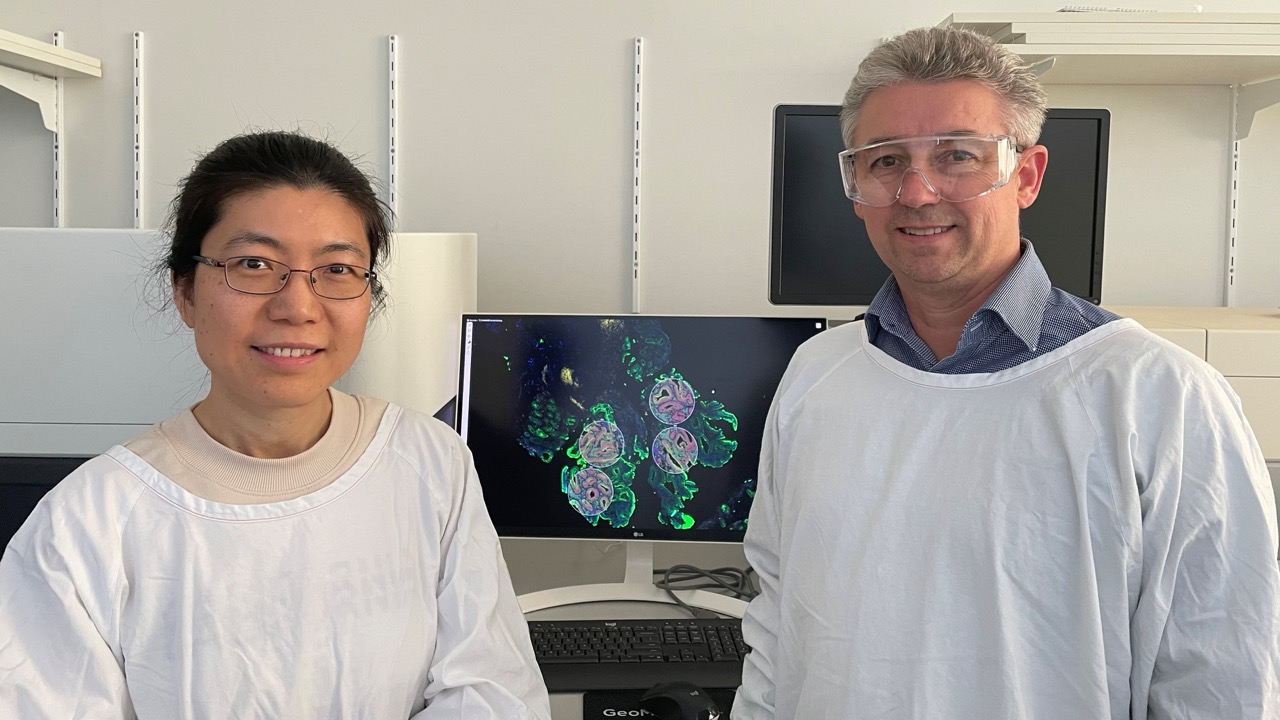
    The equipment includes a digital spatial profiling system, which is regarded as one of the most exciting technological advances globally in the investigation of tissues.

    The $525,000 instrument has been made possible following a LIEF grant through the Australian Research Council to Professor Mark Molloy. Co-funding was provided by the University of Sydney and Macquarie University.

    A new laser capture microscope has been installed at a cost of $250,000. This microscope allows researchers to capture specific tissue regions for sequencing and analysis. It was funded by the Ian Potter Foundation, the Kolling and the University of Sydney.

    Professor Mark Molloy, Lawrence Penn Chair of Bowel Cancer Research has welcomed the new technology, saying it will allow researchers to profile gene and protein expression in specific cells of complex tissues such as tumours, brain tissue, liver and kidney cells.

    “This will in turn, provide valuable new information about how cells function in disease and health,” he said.

    “It’s wonderful to have this equipment which will help us understand how disease develops.

    “It will also help us identify new biomarkers indicating which patients are likely to respond to some treatments.

    “This is important as we continue to see a rise in the number people diagnosed with some cancers.

    “For example, we are seeing an increase in those under 50 with early onset colorectal cancer, and by 2030, we expect one in 10 cases will be under 50 years old.

    “This is a concerning trend, with no clear explanation for the rise in these cases.

    “A decade ago there was little attention given to this condition, but we now have evidence of increased diagnosis in young people, who sadly, often present with aggressive, advanced disease where treatment options are more limited.

    “Colorectal cancer is certainly no longer only a disease of the aged.”

    Bowel cancer research fellow Dr Jun Li has welcomed the opportunity to utilise the new equipment.

    “It’s encouraging to have access to these new platforms as it’s allowing us to do research that we simply couldn’t do before,” she said.

    “This we hope, will lead to a greater understanding of disease, prevention and improved treatment options.”

    The equipment is open to all researchers at NSLHD and the University of Sydney through the core research facilities model.  

  • Act of generosity continues to deliver hope for those with cancer

    Act of generosity continues to deliver hope for those with cancer

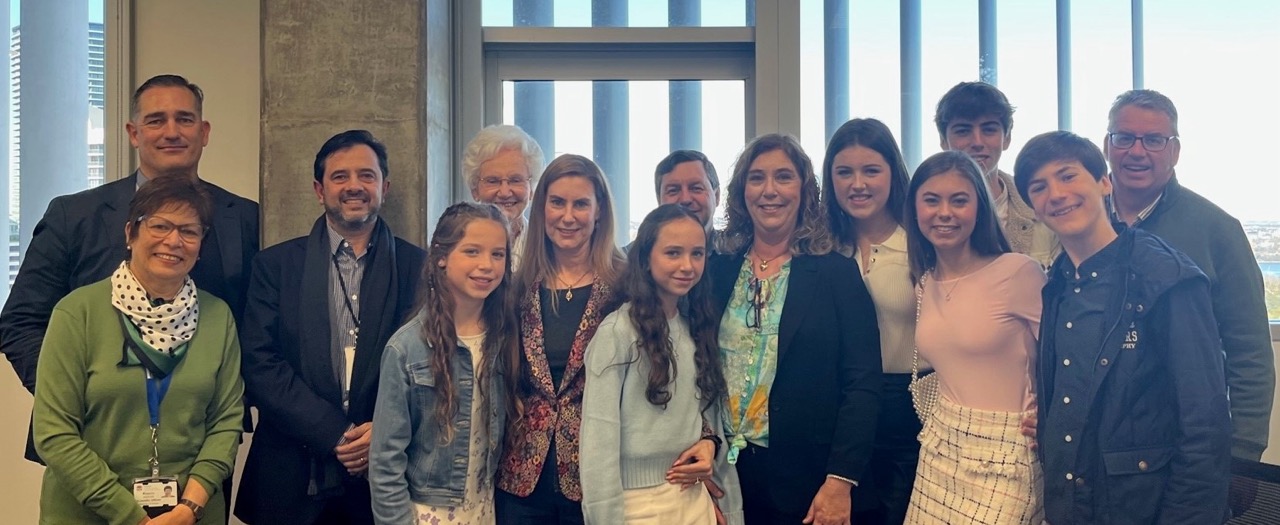
    The Kolling Institute hosted a special visit by the family of the late Bill Walsh who donated vital funds to establish a cancer laboratory within the Kolling.

    His family, including his wife, daughters and grandchildren visited the lab to maintain their strong ties with the research team and meet with Academic Director Professor Jim Elliott.

    Established in 1980, the Bill Walsh Cancer Research Laboratory now has more than 20 members driving progress in pancreatic, lung, ovarian, Mesothelioma, brain and breast cancer research.

    The team is at the forefront of discovery, respected for its contribution to our understanding of specific cancers and improvements in care.

    Professor Elliott said the visit by Bill Walsh’s family provided the chance to highlight the impressive team and the state of the art facilities.

    “It also gave us the opportunity to remember Bill Walsh’s extraordinary efforts raising funds for research and those experiencing cancer,” he said.

    Bill Walsh was diagnosed with terminal cancer in 1975 and was one of the first people to be treated with chemotherapy at Royal North Shore Hospital.

    During his treatment, he discovered that funds for cancer research at the hospital were very low.

    He was frustrated with the lack of hope for those with cancer and wanted his two young children to have a better chance of survival if they developed cancer later in their lives.

    Determined to raise money for a cancer research unit, he organised the Bill Walsh Art Union, where he raised almost $500,000.

    It was the most successful art union to date and the largest single donation to the hospital at the time. In 1978, he was awarded the British Empire Medal for services to the community.

    Bill Walsh died in 1979 and didn’t see the realisation of his dream, the Bill Walsh Cancer Research Laboratory which had been made possible as a result of his efforts.

    Professor Elliott said Bill was an inspiration and one of the great pioneers of fundraising for cancer research.

    “His courage in the face of adversity led to hope for many people with cancer.

    “I would like to thank Bill Walsh’s family for taking the time to visit the Kolling and the cancer research lab, and I’d like to encourage other families to consider supporting our crucial translational research.”

    Royal North Shore Hospital Director of Oncology and cancer specialist Professor Nick Pavlakis also thanked Bill Walsh’s family, saying Bill’s contribution has had lasting benefits.

    “The Bill Walsh lab has been an important asset not just in integrating the Royal North Shore Hospital clinical teams with lab based research activity, but in introducing many young cancer specialists to lab and translational research, which has put many on the path of ongoing cancer research careers.”

    If you would like to donate to our research, please contact the NORTH Foundation, our fundraising partner. 

  • New approach revolutionising ovarian cancer research

    New approach revolutionising ovarian cancer research

    With ovarian cancer continuing to have a devastating outcome for many women, new research at the Kolling Institute is offering hope.

    The disease has the lowest survival rate of any women’s cancer, with only 48 per cent of women living beyond five years after diagnosis.

    Ovarian cancer is often diagnosed late because the symptoms are vague, like bloating, nausea, indigestion, excessive tiredness, and a change in bowel habits, and unlike other cancers, there is no early diagnostic test.

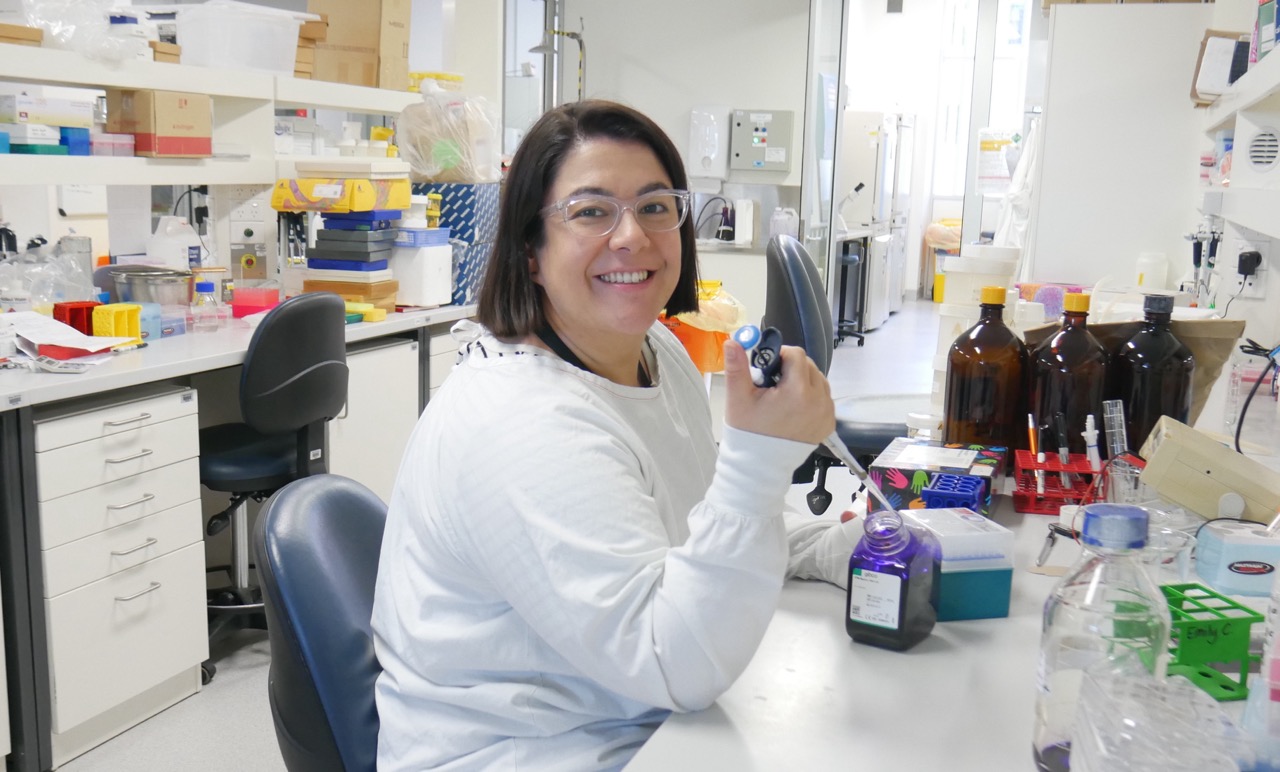
    Dr Emily Colvin from the Kolling says there is hope following some promising advances.

    Her team has identified new genes involved in the spread of ovarian cancer, and they are now also focusing on the role of the tumour microenvironment, which provides the support network for the tumour cells to survive.

    “We have been investigating the role of a specific cell in the ovarian tumour microenvironment called a cancer-associated fibroblast.

    “We have identified new genes that are switched on in these fibroblasts and influence ovarian tumour spread. These genes may play a role in how tumours avoid destruction by the immune system,” she says.

    “Knowledge of the genes involved in the initiation of ovarian cancer will help us develop effective treatments.

    “The microenvironment plays a huge role in how a patient will respond to therapy or develop resistance to drugs, or whether the cancer will metastasise, yet it has been largely ignored in ovarian cancer research.

    “By understanding how cancer cells communicate with their microenvironment, we will be able to better target them.

    “We are really interested in trying to discover why the microenvironment in ovarian cancer is a bit different to other cancers and why it’s more resistant to immunotherapy.

    “We are also keen to get started with liquid biopsy research. It’s radically replacing the need for tissue biopsy with blood tests that can tell us about a patient’s tumour. This has the potential to really change the way we treat all cancers, but particularly ovarian tumours.

    “We would like to see more research funding and advocacy so that we can really change outcomes. We’ve seen that with breast cancer, but we just don’t get that type of funding for gynaecological cancers.

    “We hope that with greater support, we could accelerate the development of an early diagnostic test, which would save so many lives.”  

  • Recognition of our impact on the world stage

    Recognition of our impact on the world stage

    Kolling Institute Governance Committee Chair Michael Nugent said it is encouraging to see more than a dozen researchers from the Kolling have been profiled in an international study recognising the world’s best.

    Published by Stanford University, the study has identified the top two per cent of researchers in the world across individual fields.

    The study is based on metrics from Scopus, a database of peer-reviewed literature including scientific journals, books and conference proceedings. Researchers were ranked on standardised information including citations, h-index, authorship positions and a composite indicator.

    “I am pleased to confirm 16 researchers from the Kolling have been highlighted in the study, demonstrating the unique expertise and experience we have across the institute,” Michael said.

    “These results are a further indication of the ground-breaking scientific progress we’re making, and the tangible impact we’re having on healthcare models of care and quality of life. Importantly, this impact is benefitting communities on a national and international scale.

    “I would like to acknowledge the following outstanding group of researchers, who all have an unrelenting commitment to improving the care we receive.”

    • Professor Rob Baxter (AM) – Breast Cancer Research
    • Professor Ian Cameron – John Walsh Centre for Rehabilitation Research
    • Professor Ashley Craig – John Walsh Centre for Rehabilitation Research
    • Professor Jim Elliott – Neuromuscular Imaging Research Lab
    • Professor Manuela Ferreira – Back Pain Research Group
    • Professor Gemma Figtree (AM) – Cardiovascular Discovery Group
    • Professor Paul Glare – Pain Management Research Centre
    • Professor Lisa Harvey – John Walsh Centre for Rehabilitation Research
    • Professor Sarah Hilmer (AM) – Laboratory of Ageing and Pharmacology
    • Professor David Hunter – Osteoarthritis Research Team
    • Professor Chris Little – Raymond Purves Bone and Joint Research Lab
    • Professor Gin Malhi – Academic Psychiatry and CADE Clinic
    • Professor Lyn March (AM) – Rheumatology Department
    • Professor Mark Molloy – Bowel Cancer Research
    • Professor Michael Nicholas – Pain Management Research Centre
    • Professor Carol Pollock (AO) – Renal Research Team

    “I would also like to acknowledge the Kolling’s former Executive Director Professor Carolyn Sue who has been recognised in the study profiling the global leaders in research.

    “It is wonderful that so many of our researchers are among the world’s best, driving significant improvements in research and clinical care.”

  • Philanthropic funds creating travel opportunities

    Philanthropic funds creating travel opportunities

    A collection of emerging research leaders will have the chance to broaden their research experience thanks to funding provided through the Skipper Jacobs Charitable Trust.

    Close to $40,000 will be shared amongst five early-to-mid career researchers, allowing them to travel nationally and internationally expanding their research and developing new skills.

    It’s anticipated the travel program will not only benefit the Kolling Institute, but will assist international collaborators, and improve health outcomes in Australia and beyond.

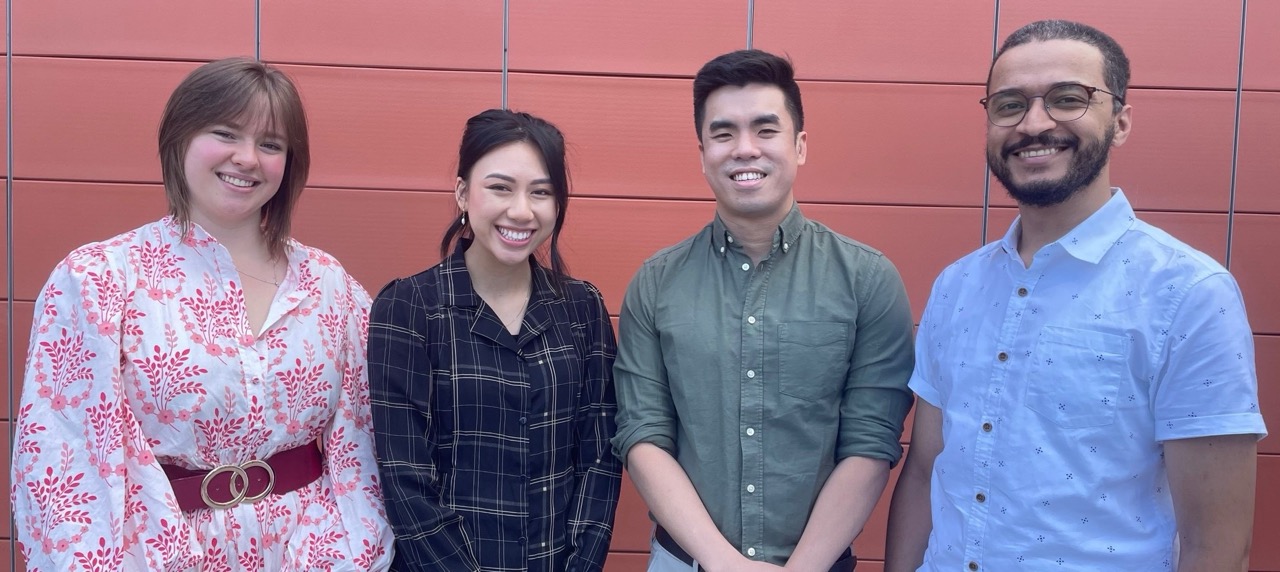
    PhD student Lionel Leck from the Cancer Drug Resistance and Stem Cell Program will take part in an internship at the Seoul National University to gain first-hand experience of a new technique looking at the molecular mechanisms of specific cancers.

    Lionel said this method of studying how proteins interact with each other in cancer stem cells will lead to better detection and a greater understanding of their behaviour, which will in turn, help develop new drugs to eradicate them effectively.

    “I’m really humbled and ecstatic to have received this award,” he said.

    “I would like to acknowledge the Skipper Jacobs Charitable Trust and the NORTH Foundation for this valuable and amazing opportunity.”

    Fellow PhD student Pich Chhay from the Cardiovascular Discovery Group will visit the South Australian Health and Medical Research Institute in Adelaide. There she will learn an innovative technique using gas chromatography to measure omega-3 in blood samples as an indicator of early heart disease.

    Pich said the research has the potential to identify those who are susceptible to heart disease, without the traditional risk factors. They can then be provided with prevention strategies including targeted medications.

    “I am delighted to receive this travel grant supported by the Skipper Jacobs Charitable Trust as it will enable me to develop new skills and present the fantastic work that is being done at the Kolling Institute to a wider science community,” she said.

    “This will help foster collaboration with multidisciplinary teams which will be invaluable in translating science through shared networks and resources.”

    Samantha Hefferan from the Murray Maxwell Biomechanics Laboratory will visit the University of Auckland, working in the Department of Chemical and Materials Engineering to broaden her understanding of the ultrastructure of human tendons.

    There she will use the lab’s new imaging methods to explore tendon structure and the impact of disease and injury.

    “It is such a pleasure to be granted this award. Without it I would not be able to participate in this amazing study opportunity.”

    “I look forward to the chance to improve my research skillset while engaging with an exciting new project.”

    “This initiative is part of an ongoing collaboration between the Kolling and an international expert at the University of Auckland. It will broaden my professional development as a scientist, while also enhancing the research partnership between the Kolling and the New Zealand university.”

    Dr Mounir Boudali is an early-career engineer with specialisation in robotics. He will visit the renowned Cleveland Clinic in the USA to enhance his knowledge of using robotics in biomechanical research for joint replacements.

    Mounir will visit the development team behind the Sim Vitro software, the software which is driving the Kolling’s new biomechanical robot.

    “I am thrilled to receive the Beryl and Jack Jacobs travel grant,” he said.

    “Nothing can beat learning from the source. We will learn how to use a sophisticated platform for biomechanical testing, while generating a huge amount of knowledge in orthopaedics and developing important collaborations.”

    Dr Kenji Fujita is an early-career pharmacist with a PhD working in the Ageing and Pharmacology Research Group at the Kolling. Kenji has helped to develop techniques to calculate the frailty index in patients undergoing surgeries, while also leading research on the quality of pharmaceutical care.

    He is keen to share his knowledge and experience with international collaborators and will visit Denmark, Norway and Japan.

    “I am thrilled to have been selected for this grant and incredibly thankful for all the support,” he said.

    “As countries recover from the pandemic and international travel picks up, I am keen to connect with like-minded professionals in my field.

    “I’ll be leading a three-day workshop in Denmark, visiting collaborators in Norway and delivering a presentation in Japan, a country with the highest proportion of older adults in the world.

    “I’m sure my trip will strengthen international collaborations and promote our translational research at the Kolling, while also lifting my international profile.”  

  • Kolling awards unveiled

    Kolling awards unveiled

    We are pleased to announce the successful recipients of our annual Kolling Institute awards program.

    Launched in 2021, the program has been expanded to acknowledge a greater number of researchers and their individual contribution to the Kolling.

    The awards aim to recognise the many outstanding achievements across education, clinical practice and service, publications, research, as well as overall accomplishment.

    This year, seven researchers are being presented with awards across the following five categories:

    PhD impact (joint award winners)

    Dr Danielle Stone – Clinical Speech Pathologist, RNSH, and PhD candidate, Neuromuscular Imaging Research Lab

    Dr Michal Lubomski – Neurologist, RNSH and PhD Candidate, Neurogenetics Research

    Supervision impact (joint award winners)

    Associate Professor Sarah Glastras – Endocrinologist, RNSH and Postdoctoral Researcher, Renal Research Laboratory

    Dr Sumit Sahni – Senior Research Fellow, Bill Walsh Cancer Research Lab

    Best clinical output

    Dr Jillian Eyles – Physiotherapist, RNSH and SHPs Research Translation Fellow, Osteoarthritis Research

    Best EMCR basic science paper

    Dr Chia-chi Liu – Senior Research Fellow, Cardiac Membrane Biology Laboratory

    Best paper overall

    Dr Yandong Shen – Postdoctoral Researcher, Northern Blood Research Centre

    Kolling Institute Academic Director Professor Jim Elliott congratulated the researchers for their invaluable contribution over the past 12 months.

    “It’s encouraging that we have so many dynamic researchers working across the Kolling, and this impressive group has had an intrinsic role in our progress, impact and research success over the past year,” he said.

    “Each of these award winners is driving substantial improvements in their individual areas of expertise, and I’m pleased that through the Kolling awards program we’re able to direct the spotlight to their significant achievements.”

  • Researchers to join leading cancer care centres in exciting new trial

    Researchers to join leading cancer care centres in exciting new trial

    Researchers from the Kolling Institute and Royal North Shore Hospital will help drive a new project investigating a revolutionary approach to care for those with neuroendocrine tumours.

    Cancer specialists Professor Nick Pavlakis and Dr David Chan will join the AUS-NET trial after a funding announcement by Health Minister Greg Hunt.

    The study will assess whether a new patient-specific care model improves health outcomes and quality of life for patients with the rare neuroendocrine cancers.

    Around 500 patients from five centres across Australia are set to be involved in the clinical trial and Dr Chan said the local team is thrilled to have been chosen to participate.

    “This is a really important study which we hope will improve the experience of patients going forward and lead to a better model of care with additional resources,” he said.

    “The clinical trial will examine a multi-disciplinary, shared-care approach involving greater specialised support and follow-up.

    “Importantly, this tailored treatment could be adopted in both metropolitan and regional centres where access to specialised care is a significant challenge for patients with this uncommon and complex cancer.

    “We hope this new model could be broadly adopted with the support of clinicians, GPs and nurses.

    “Currently, some of our patients spend a large amount of time travelling hundreds of kilometres to receive the care, knowledge and advice they need. Patients requiring lutate treatment for instance, can only receive this care at Royal North Shore Hospital and one other site in New South Wales.

    “We expect this new approach will make a marked difference to their lives if they’re able to access comprehensive, tailored care close to home, and have confidence that they’re receiving the same care that they would in a larger, metropolitan centre.

    “Our research and clinical teams have helped to develop this care model and are looking forward to trialling this promising initiative.” 

NSWGOV logo