Blog

  • Kolling centre guiding gold standard rehabilitation care

    Kolling centre guiding gold standard rehabilitation care

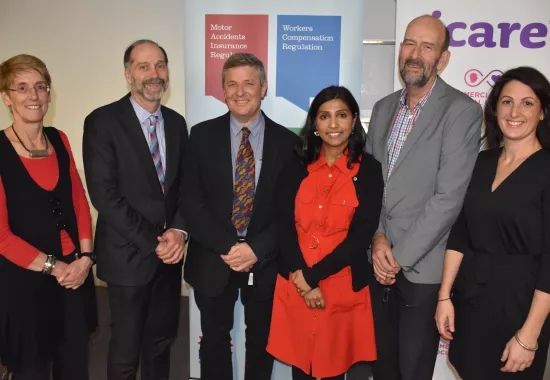
    The John Walsh Centre for Rehabilitation Research has been awarded close to $10 million to help improve the lives of those living with injury-related disability.

    The funding has been granted by the state’s compensation agencies icare NSW and the State Insurance Regulatory Authority, continuing a 20 year research partnership.

    icare NSW Managing Director and CEO Richard Harding said the research was invaluable in supporting people with injuries.

    “Getting the right care and support for injured people is paramount. This investment will ensure NSW stays at the forefront of treatments and recovery pathways for severely-injured people,” he said.

    Chief Executive of the State Insurance Regulatory Authority Adam Dent said the ongoing investment will ensure this specialised research continues over the next five years.

    “The John Walsh Centre for Rehabilitation Research has played a key role providing evidence-based advice, and informing policy and legislative changes to make personal injury schemes in NSW sustainable and meet the needs of scheme claimants,” Mr Dent said.

    Head of the centre Professor Ian Cameron has welcomed the substantial funding, saying it will allow them to expand their activities and increase the impact of their research.

    “While the emphasis of the funding is to support people injured in NSW workplaces and on NSW roads, the expanded work will directly impact on the health of people in the NSLHD who have experienced injury or illness causing disability,” he said.

    “Our research aims to improve rehabilitation services for people with severe injury, particularly traumatic brain injury and spinal cord injury, and also people with musculoskeletal and psychological injuries.

    “Our focus is on applying our research progress to clinical practice, so that we are directly improving the lives of people living with disabilities.

    “Importantly, a key part of our success will rely on our collaborations within the NSLHD and the Kolling Institute to broaden our research and educational activities.”

  • World-leading research in the spotlight

    World-leading research in the spotlight

    The Neuroscience and Pain Research Showcase provided a timely opportunity to demonstrate the breadth of expertise across this priority research area at the Kolling.

    Co-ordinated by Professors Paul Glare and Lisa Harvey, the online event attracted more than 250 people.

    A diverse range of presentations focused on the cutting-edge research targeting mitochondrial disease, psychiatric disorders, spinal cord injuries and traumatic brain injuries. Researchers shared details too of world-leading projects to reduce the damaging impact of multiple medications.

    Senior researcher Professor Lisa Harvey said it was an important opportunity to promote the talented researchers across this priority research area and their significant achievements.

    “Our neuroscience and pain researchers have a unique breadth of skills, with their research progress directly influencing clinical practice and policy frameworks, and improving community health,” she said.

    “Our research ranges from investigations into new stem cell technologies through to large international clinical trials, and it was great to hear more about these exciting projects.

    “It was also encouraging to hear from the impressive early and mid-career researchers, who shared details of their ground breaking work.”

    Pain Management Research Institute Director Professor Paul Glare said the presentations aligned well with the keynote talks from Professor Don Nutbeam, the Executive Director of Sydney Health Partners and Dr Tony Penna, the Executive Director of the Office for Health and Medical Research, who both highlighted the importance of translating research into clinical practice.

    “The showcase emphasised the importance of research collaborations, including existing partnerships within the priority research area, and the development of new opportunities with national and international collaborators,” he said.

    “The Pain Management Research Institute for instance is already working closely with our Ageing and Pharmacology team around opioid tapering, and is looking towards closer ties with the John Walsh Centre for Rehabilitation Research.

    “Stronger national and international partnerships will also bolster our efforts to improve the lives of people living with neurological conditions and disabling pain.

    “We’re looking forward to our next showcase which will hopefully be run in-person at a time that looks very different to now.”

  • Australian first study to alleviate pain for those with spinal cord injuries

    Australian first study to alleviate pain for those with spinal cord injuries

    Researchers from the Kolling Institute will partner with international and Australian experts to examine an innovative approach to nerve pain for those with spinal cord injuries.

    The ground breaking study has been awarded more than $1.78 million through the Federal Government’s Medical Research Future Fund.

    Professors Ashley Craig, James Middleton and Paul Glare from the Kolling will join the study as chief investigators, with Associate Professor Sylvia Gustin from the University of NSW leading the trial.

    Professor Craig said the study will investigate the effectiveness of an advanced interactive intervention to reduce nerve pain and improve function.

    “We often regard loss of mobility as the most serious impact of a spinal cord injury, but we have found people with this injury consistently indicate nerve pain is their most difficult and debilitating challenge,” he said.

    “We know that nerve pain affects up to 75 per cent of people with a spinal cord injury, and they describe the pain as burning, sharp, unbearable, unremitting and terrifying. Such pain is often linked with serious depression.

    “Current treatments often involve the use of antidepressants, anti-epileptics and opioids, but these medications provide limited pain relief to around 30 per cent of people and have a host of adverse side-effects related to addiction and kidney failure.

    “This means a large number of people with a spinal cord injury continue to experience debilitating pain with no access to effective treatment options.”

    The five-year study will assess a new approach using an interactive gaming technology to reduce pain by helping to rectify the negative impact of the spinal cord injury on brain activity.

    Spinal cord injuries generally reduce the frequency of brain activity, so this highly-specialised game has been designed to encourage high frequency activity and beneficial changes to the brain.

    Professor Craig welcomed the opportunity to be involved in the promising, collaborative trial.

    “Around 200 people a year suffer a spinal cord injury in NSW, and while that number may not seem large, these catastrophic injuries have a tremendous impact on individuals and their families,” he said.

    “If we’re able to effectively reduce their nerve pain without major side effects, it’ll have an immeasurable impact on their health, their ability to work and function, and specifically their mental health as well.”

    The trial will bring together researchers from the Kolling as well as the University of Sydney, University of NSW, University of Technology and the University of Washington.

  • Researchers join celebrations for national award

    Researchers join celebrations for national award

    Kolling Institute researchers have been recognised with a prestigious award for an initiative to support people to return to work after injury.

    The project, named Early Matched Care at Australia Post, was named the 2021 Winner of Comcare’s national Recovery at and Return to Work Award.

    The research team was led by Professor Michael Nicholas, from the Pain Management Research Centre at RNSH and the University of Sydney, and research manager Dr Manasi Mittinty.

    The team partnered with Australia Post for the two-year trial, which involved early identification and intervention for injured workers at risk of delayed recovery following a work-related injury.

    More than 270 workers were identified as being at high risk of delayed recovery and enrolled in the study.

    Participants in the intervention arm of the study were offered up to six sessions with a psychologist or counsellor, and a workplace rehabilitation provider to assist with barriers for early return to work. This was in addition to the medical and physiotherapy care normally provided for such injured workers.

    While the study is not completed, Professor Nicholas said the intervention arm has already demonstrated benefits with return to full hours at work in less than half the time of the usual care arm.

    Australia Post’s injury management team has responded quickly, deciding to implement the protocol for all their injured workers across Australia.

    Professor Nicholas said this is a significant development which demonstrates the potential of collaborative projects to improve outcomes for injured workers, while also producing financial savings for the employer.

    “It’s a great example of researchers working closely with industry to evaluate a new approach which will deliver long-term, tangible improvements,” he said.

    “The approach has not only been welcomed by Australia Post, but by injured workers and their doctors.

    “Workers appreciated the connection to positive people and consistent reassurance, while general practitioners report the program allowed them to provide treatments that would otherwise be very difficult for patients to access.”

  • Technology to bring relief to those with low back pain

    Technology to bring relief to those with low back pain

    With many of us looking to adopt a healthier lifestyle, researchers say a new approach may not only deliver benefits for your heart and waistline but may reduce low back pain as well.

    The condition affects one in six Australians or four million people and is the leading cause of adult musculoskeletal pain worldwide.

    Researchers from the University of Sydney and the Kolling Institute have launched an innovative study to assist those with low back pain, and they’re urging those with the debilitating condition to join the trial.

    Professor Manuela Ferreira said research has shown us that low back pain is the number one cause of disability worldwide, greatly impacting social, family and work activities.

    “We know low back pain is the main reason Australians miss work and retire involuntarily,” she said.

    “Low back pain also contributes to a lack of physical activity, increasing the risk of other chronic diseases.”

    Professor Ferreira said learning how to self-manage low back pain is particularly important, and the TEXT4myBACK study will investigate whether a lifestyle-based text message intervention can help people do just that.

    Two different formats of text message interventions are being assessed and participants will receive one of two interventions which differ in their frequency and content.

    The messages will contain educational information about low back pain and self-management strategies.

    The study will measure whether the text messages improve function and patient confidence in managing their symptoms.

    “We’re keen to measure the effectiveness of this new mobile health approach.

    “Text messaging is an easy, accessible and affordable intervention that can empower people with low back pain to better manage their own symptoms. It can be used to remotely support people anywhere, at any time of the day.

    “It has been shown to help people with other chronic diseases, such as cardiovascular disease and diabetes engage in a healthier lifestyle.

    “Text messages have helped people lose weight, stop smoking and increase their exercise participation levels.

    “The study is receiving a positive response, with participants able to join remotely, as long as they have access to a phone and internet coverage.

    “This is a great option for many Australians who do not have easy access to specialised care or support to receive evidence-based information on how to care for their spinal health.”

    To find out more, follow ibjr.sydney.edu.au/volunteer/text4myback/

  • Philanthropic funding brings new hope to those with chronic pain

    Philanthropic funding brings new hope to those with chronic pain

    Some of the nation’s leading pain experts are set to embark on research which they believe will change the way chronic pain is managed.

    The program of research will be carried out by the team from the Pain Management Research Institute after generous funding from the Ernest Heine Family Foundation.

    Located within the Kolling Institute and Royal North Shore Hospital, the Pain Management Research Institute is part of the University of Sydney’s Faculty of Medicine and Health. It is the Ministry of Health’s designated lead site for pain research in NSW.

    Institute Director Professor Paul Glare said more than $2,820,000 will go towards three projects over the next three years through the Pathways to Better Pain Management Program.

    “Chronic pain affects 20 per cent of the population and one third of people over 65,” he said.

    “It is the major cause of disability, costing the Australian economy an estimated $73 billion a year.

    “There is a pressing need to develop better management strategies, so we will be launching three research initiatives, which together have the best chance of improving the lives of those living with chronic pain.”

    The projects include:

    • Research led by Dr Karin Aubrey and Professor Chris Vaughan which aims to uncover new biological mechanisms which produce and maintain chronic pain. This will help to develop safer and more effective medications for chronic pain.
    • Research led by Professor Paul Glare and Dr Claire Ashton-James to develop digital behavioural interventions to help patients alter their attitudes and behaviour in response to pain, and lower the use of potentially harmful opioid medications.
    • Research led by Associate Professor Paul Wrigley to provide better support to people with chronic pain in the community, reducing their need for Emergency Department care.

    Associate Professor Paul Wrigley said his project ED PainPATH represented a unique opportunity to raise awareness of the needs of people with chronic pain and improve access to essential support.

    “With the help of a large hospital and community team from across NSW, a care pathway for people with chronic pain is being assessed,” he said.

    “It will support people to manage distressing chronic pain through a co-ordinated care program, improving health outcomes and reducing costs.

    “Importantly, this initiative could be adopted across the state if it proves successful.”

    Dr Karin Aubrey has welcomed the substantial funding for her research, saying there are currently very few effective medications for ongoing pain.

    “Chronic pain is challenging to treat and there’s a lot we still don’t understand about what happens in the brain when chronic pain develops,” she said.

    “If we can gain a better understanding of how long-term pain changes the brain, we will be in a better position to reduce it.

    “Our research will aim to identify new drug targets that influence chronic pain, and this will help us develop new medicines to effectively treat the pain,” Dr Aubrey said.

    Professor Glare said we are incredibly grateful to the Ernest Heine Family Foundation for this very generous funding, especially at this time with so much economic uncertainty.

    “We anticipate our research will improve the lives of many Australians living with chronic pain, and we are excited to commence this important collection of work.

    “We are confident it will deliver results by identifying new drug targets, reducing the use of opioid medications and improving care across the community.”

  • Research identifies health impact of traffic accidents

    Research identifies health impact of traffic accidents

    Clinician and Kolling Institute researcher Professor Ashley Craig said their results follow a five year study involving more than 2,000 people injured in a motor vehicle accident.

    “One in three people injured in a traffic accident suffer depression and experience post-traumatic stress symptoms,” Professor Craig said.

    “By following patients over a long period of time, we now recognise that people suffering psychological distress are at a higher risk of developing severe mental health disorders, chronic pain and long-term disability, and that it can take much longer for them to recover.

    “This can lead to a dramatic increase in costs and take four times longer for crash survivors to recover.”

    Professor Ian Cameron said the team also examined factors influencing health outcomes after motor vehicle crash injury and approaches to improving wellbeing.

    “Traditional medical models often fail to assist recovery after a crash,” Professor Cameron said.

    “Our research has shown that a return to usual activities as soon as possible is beneficial, challenging earlier recommendations that rest is best.

    “We have seen that family support, flexibility from employers, such as altered duties, and early treatment covered by insurance companies, all contribute to a quicker recovery.

    “With traffic injuries predicted to become the third leading cause of global burden by 2030, we hope that our findings will help influence future government policy and drive further reforms within the compensation system,” Professor Cameron said.

  • Global focus on musculoskeletal health

    Global focus on musculoskeletal health

    Kolling researchers are part of an international team calling for musculoskeletal health to become a global priority, addressing a current lack of funding for the world’s leading cause of pain.

    The project team found the management of musculoskeletal health is under-prioritised despite its impact on the community, and devised an action plan to address this gap.

    Led by Professors Andrew Briggs and Helen Slater from Curtin University, the project involved Professor Lyn March from the Kolling Institute and Dr Carmen Huckel-Schneider and Swatee Mishrra of the University of Sydney, as well as a broader international team.

    It mapped the current landscape for musculoskeletal health, identified trends in national health policies and developed a blueprint to prioritise musculoskeletal health. This work was informed by stakeholders from more than 70 countries.

    Professor Briggs said more than 1.5 billion people live with a musculoskeletal condition, such as low back pain, fractures, arthritis and osteoporosis, but despite calls to action, health systems continued to under-prioritise these conditions.  

    “One of the limiting factors to reform is that no global-level strategic response to the burden of disability has been developed – until now. This initiative will be critical to guiding global-level work in health reform, such as that undertaken by the World Health Organization,” Professor Briggs said.

    “This blueprint will provide guidance which countries, including low and middle-income countries, can then adapt to suit local needs and priorities.”

    Professor March said the framework focuses on critical areas for reform, including community education; leadership and governance; health financing models; service delivery models that support integrated and person-centred care; equitable access to medicines and technologies; building capacity in the health workforce to deliver the right care at the right time; population health surveillance; and research and innovation.

    “The blueprint is practical and can inform what a global strategic response might look like and how countries can respond to musculoskeletal health in order to arrest the increasing global burden of disability and cost,” she said.

    The project was commissioned by the Global Alliance for Musculoskeletal Health and funded by the Bone and Joint Foundation, with additional funding provided by Curtin University.

    The international team of researchers are from Curtin University, the Kolling Institute, University of Sydney, University of Toronto, Canadian Memorial Chiropractic College, Kathmandu University and the University of Southern Denmark.

    The report ‘Towards a global strategy to improve musculoskeletal health’ can be found at the Global Alliance for Musculoskeletal Health

NSWGOV logo