Blog

  • Epic journey to support vital rheumatoid arthritis research

    Epic journey to support vital rheumatoid arthritis research

    The burble of high-powered motorcycles was heard across the Kolling Institute forecourt as part of a 2000 kilometre ride from Melbourne to Armidale to raise awareness and funds for life-changing research.

    The ride is an initiative of Robert Hunt from the Ulysses Club which has been supporting rheumatoid arthritis research for nearly three decades.

    The late Stephen Dearnley established the club in 1983. His wife Jo had lived with the debilitating disease for more than 20 years. Today, the club has more than 120 branches.

    The Ulysses Club has donated funds to the Kolling Institute for over 15 years, consistently investing in our discovery and translational research into rheumatoid arthritis.

    Leading rheumatologist Professor Lyn March said the club has been a long-time supporter of the Sutton Arthritis Lab and we’re tremendously grateful that this ride is drawing attention to the condition and raising funds.

    “Rheumatoid arthritis is a chronic condition that affects over 500,000 Australians,” she said.

    “It causes pain, swelling, and inflammation in the joints as the immune system mistakenly attacks the tissues lining the joints.

    “It can be a life limiting illness, causing pain, reducing function and mobility.”

    As a leading clinician and internationally respected researcher, Professor March said while many people manage well on current medications, improved options are needed.

    “Game changing steps take significant investment and expertise, and we’re indebted to the Ulysses Club members for embarking on this ride and fostering large-scale community support.”

    The Ride for Rheumatoid journey will wrap up in Armidale, where a national rally will be held.

    All funds from the ride will go directly towards rheumatoid arthritis research, including a PhD scholarship at the Kolling Institute.

    Professor March encouraged the community to get behind the club.

    Head of the Sutton Arthritis Research Lab in the Kolling Associate Professor Meilang Xue expressed her gratitude to the club members.

    Donations can be made through: Ride for Rheumatoid to Armidale

  • New trial to determine if diet and exercise alone can prevent knee osteoarthritis

    New trial to determine if diet and exercise alone can prevent knee osteoarthritis

    In one of the first global clinical trials of its kind, researchers have launched a study to investigate if a diet and exercise program aimed at weight loss can prevent the development of crippling knee osteoarthritis.

    The trial will be led by researchers from the University of Sydney and the Kolling Institute in collaboration with an international team from Wake Forest University in North Carolina, Brigham and Women’s Hospital in Boston and the University of North Carolina at Chapel Hill.

    The Osteoarthritis Prevention Study or TOPS will compare the impact of a dietary weight-loss, exercise and weight-loss maintenance program with health education in preventing the development of knee osteoarthritis.

    The condition is the leading cause of disability among adults, particularly impacting women over 50 who are overweight or obese.

    The large-scale clinical trial will be conducted over four years, with participants receiving either a program of regular diet and exercise sessions or a healthy lifestyle program with information sessions, newsletters and text messages.

    Internationally recognised rheumatologist, leading University of Sydney researcher and Royal North Shore Hospital clinician Professor David Hunter said the study is one of the first prevention clinical trials which could help people with occasional knee pain reduce their risk of knee osteoarthritis.

    “Our trial has come at a time when an increasing number of people are turning to medications like Ozempic or GLP-1 agonists to assist with weight loss and the management of knee osteoarthritis,” he said

    “These weight-management medications are a feasible option for managing the condition, but questions remain around safety, cost-effectiveness and the likelihood of weight rebounding.

    “Recent investigations by our team indicate that despite the promising results from trials of GLP-1 agonists, lifestyle interventions remain the first-line, safest and most cost-effective approach for people who are overweight, obese or living with knee osteoarthritis.

    “Building on that research, our clinical trial will aim to confirm the most effective lifestyle strategies to actually prevent knee osteoarthritis before the condition develops.

    “We are looking forward to progressing this valuable area of research and establishing evidenced-based models of care to avoid this increasingly common, disabling condition.”

    The research team is now recruiting 320 women who are 50 years or over, who experience little to no knee pain, and who have a Body Mass Index of 30 or more.

    The study will involve screening visits over 2–4 weeks and yearly assessment visits over four years, as well as regular diet and exercise or healthy lifestyle classes. Participants will receive long-term support towards achieving a healthy lifestyle.

    “Classes are currently available on the Lower North Shore of Sydney and we encourage women who live or work in the area to apply to the program,” said Professor Hunter.

    “Depending on the interest, we could look to start classes in other areas of metropolitan Sydney as well,” he said.

    Funding has been provided by the National Institutes of Health, the Arthritis Foundation, the University of Missouri, Wake Forest University, and Rapid Nutrition PLC.

    This study has been approved by the Northern Sydney Local Health District Human Research Ethics Committee (Ref: 2023/ETH00669).

    You can contact the study team directly with any questions at tops.study@sydney.edu.au 

  • The Kolling hosts the brightest minds in optogenetics

    The Kolling hosts the brightest minds in optogenetics

    More than 80 top national and international scientists converged on the Kolling Institute for the 4th Optogenetics Australia meeting, featuring the very latest light technologies driving research.

    The event attracted dynamic keynote speakers from the USA, Europe and China, and leading research institutions across Australia.

    Chair of Optogenetics Australia and senior Kolling Institute pain medicine researcher, Associate Professor Karin Aubrey said optogenetics is a range of technologies that allow researchers to use light to control biological processors.

    “New technologies often determine what is possible at the cutting edge of science, accelerating our understanding of what causes disease and how we diagnose, prevent and treat it,” she said.

    “The first human application of optogenetics, published in 2021, partially restored vision in a blind patient.

    “The technology is also being used to develop less invasive methods for sleep apnoea treatment, to reduce stroke effects and even to modify plants so that they can thrive in space.”

    Associate Professor Aubrey said optogenetics is a powerful tool in neuroscience, as it allows researchers to study individual components of brain circuits that cause neurological disease.

    “Australian researchers are using light-sensitive tools and other innovative techniques to study the brain’s stress, addiction, pain, memory and depression circuits.

    “Encouragingly, we have a depth of experience in optogenetics at the Kolling within the Pain Management Research Labs, and the event provided a great opportunity for collaboration and networking.

    “I would like to thank everyone involved in making the event a success, including leading international developers Professor Michael Bruchas from University of Washington, Professor Yulong Li from Beijing University, Deniz Dalkara from the Institute de la Vision in France and Assistant Professor Guosong Hong from Stanford University.

    “These researchers are producing some of the best new tools in the field and it was valuable to hear the latest progress.”

    The next Optogenetics Australia meeting will be staged in 2027. 

  • Top pain specialist and researcher receives Australia Day gong

    Top pain specialist and researcher receives Australia Day gong

    Internationally respected clinical academic Professor Paul Glare has been named a Member of the Order of Australia for his significant service to medicine in the fields of pain management and palliative care.

    Professor Glare is a specialist physician in pain medicine and senior researcher with the Kolling Institute.

    He is the Director of the Michael J Cousins Pain Management Research Centre at Royal North Shore Hospital, the Chair of Pain Medicine with the Northern Clinical School and Head of Pain Medicine with the Sydney Medical School.

    Professor Glare has welcomed the accolade.

    “I am very honoured to receive this award, but more importantly, it recognises the importance of advancing the specialities of pain medicine and palliative care,” he said.

    “While precision medicine and technological advances are very important for saving lives, the relief of suffering should always be the objective of medicine and healthcare generally.

    “It has been rewarding to be part of the Northern Clinical School and the Northern Sydney Local Health District to be able to promote pain and palliative care through the pain management centre at Royal North Shore Hospital and to be able to teach the students from Northern.

    “The neuroscience and pain priority research group within the Kolling Institute has also given me great opportunities to continue my research on pain in cancer survivors and the use of mobile health in supporting pain management.”

  • Kolling NEWS

    Kolling NEWS

    Our Kolling Institute newsletter brings together a collection of profiles on our impressive researchers. Flip through our flipping book to discover more about our leading research into kidney disease, rare cancers and the use of supplements for osteoarthritis. There’s a focus too on the first steps towards gene therapy for Meniere’s disease, the latest research into treatments for dementia and an innovative program taking musculoskeletal care to the bush.

  • Culturally relevant pain solutions

    Culturally relevant pain solutions

    After training as a musculoskeletal physiotherapist in India, the Kolling Institute’s Dr Saurab Sharma returned to Nepal to treat patients with musculoskeletal pain conditions but quickly found that Western practices to assess and treat pain didn’t translate well to his community. One issue was the internationally-recognised numeric pain rating scale, where zero indicates no pain and 10 is maximum pain.

    “Some people in Nepal struggle with it because they can’t compute numbers in their head,” he explains, making it difficult for them to rate their pain accurately. “Also, not many people take surveys in their day-to-day life. For many, it’s the first time in their life.”

    Saurab also noticed a lack of local research. “There’s no research on musculoskeletal pain in my region, specifically back pain,” he says. To address this, he collaborated with Professor Mark Jensen, a prominent pain researcher, and later completed a PhD in New Zealand.

    Now Chief Scientist for Clinical Research at the Kolling’s Pain Management and Research Centre Saurab emphasises the need for more pain research in low and middle-income countries, as well as culturally relevant interventions for diverse communities in Australia.

    Saurab’s work has focused largely on Nepal. He compared four pain scales and found that the numeric scale had the highest error rate and was disliked by patients.

    The “Faces rating scale,” which uses facial expressions to indicate pain intensity had the best results and was preferred by patients.

    He has translated and validated 29 pain assessment tools for Nepal, but there’s still more work to be done. He also developed educational resources using local language and metaphors to describe pain; they have now been adapted for four countries and languages.

    Importantly, he believes the West can learn from Nepal’s approaches to pain management. In countries with limited access to multidisciplinary teams, peer support groups in communities often play a vital role.

    “We could implement similar models here in Australia,” he suggests, proposing that individuals could be trained for a few days in evidence-based pain management and then support others in their community.

    To boost back pain research, Saurab formed a consortium of researchers, clinicians, and patients from 35 low- and middle-income countries. “In many countries, there’s no local pain research. We don’t even know how back pain is managed.”

    In a recent study, he found that in majority of countries patients have to rely on pharmacotherapy and electrotherapy, neither of which is recommended. Harmful interventions with no evidence of effectiveness such as bloodletting is also used in some countries.

    “Education and self-management are recommended by most global back pain guidelines but are rarely used,” Saurab notes. He’s now developing interventions to treat pain in Australia’s diverse communities, including Nepali, Chinese, Indian, and Vietnamese populations. 

  • New collaboration to drive world leading research into osteoarthritis treatment

    New collaboration to drive world leading research into osteoarthritis treatment

    An innovative partnership with industry will see our researchers at the Kolling Institute develop evidence-based strategies to improve osteoarthritis management in Australia and globally.

    Consumer healthcare company Haleon is sponsoring a five-year fellowship to investigate the role of supplements in managing osteoarthritis and digital health technologies to improve mobility.

    Osteoarthritis is a leading cause of disability, impacting more than two million Australians and 595 million people globally. It represents a significant public health burden particularly among older populations.

    The fellowship will fund a postdoctoral researcher to work under the guidance of world leading osteoarthritis expert, rheumatologist and researcher Professor David Hunter. Dr Jocelyn Bowden has been awarded the fellowship and is looking forward to broadening our understanding of the use of supplements and innovative digital technologies.

    Professor Hunter said the research collaboration represents a shared focus and investment in improving osteoarthritis management.

    “This is a painful and disabling disease that has a huge impact on the people affected.”

    “A collaborative effort between researchers and manufacturers will drive innovation and hopefully improve the lives of those affected by this disease.

    “Use of supplements and natural ingredients in managing osteoarthritis is an exciting area with a lot of potential. I’m not aware of any other long-term project like this focusing on osteoarthritis.”

    Dr Bincy Thampi, Medical and Scientific Affairs Lead at Haleon ANZ said they were excited to work with researchers to deliver better management strategies for the disabling disease.  

  • Collaboration driving results

    Collaboration driving results

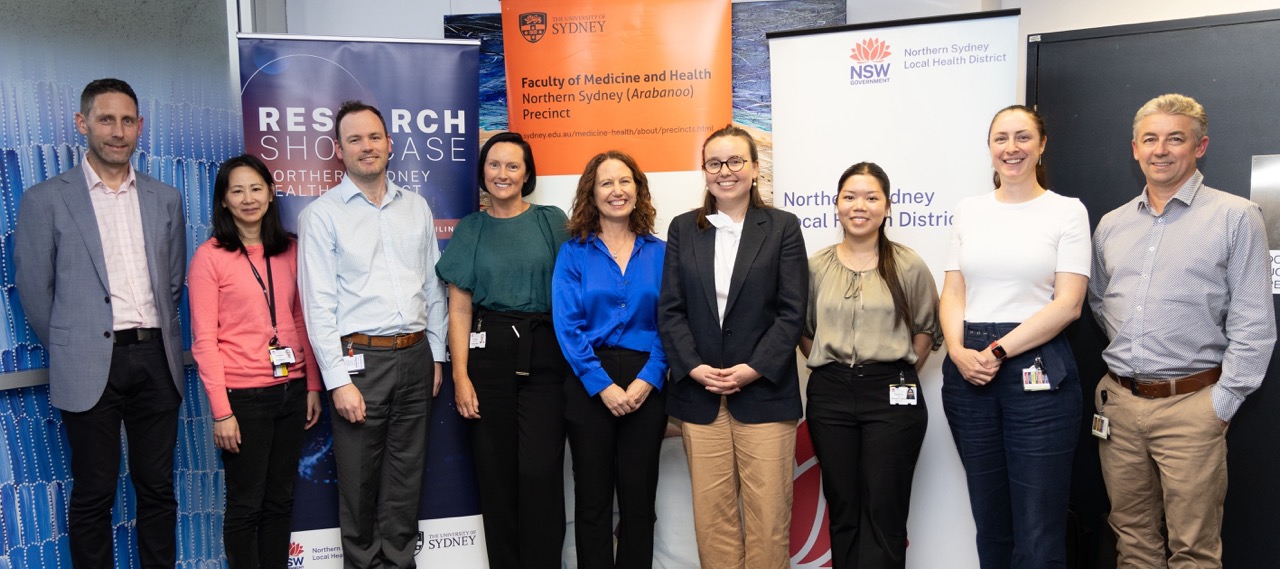
    The Northern Sydney (Arabanoo) Precinct hosted its annual showcase at the Kolling, highlighting the innovative research between the Northern Sydney Local Health District and the University of Sydney.

    Launched in 2022 by Academic Directors Professors James Elliott, Robyn Gallagher and Margaret Schnitzler, the showcase focused on the joint research tackling complex healthcare challenges.

    Eight speakers addressed the event, including Dr Julia Pilowsky who presented her research on the use of advanced algorithms to detect pressure injuries from ICU clinical notes.

    Dr John Atyeo shared his work on developing AI models of pelvic floor anatomy. These models are expected to provide valuable insights for surgeons and physiotherapists.

    Professor Trudy Rebbeck presented the results of the PACE-MSK clinical trial, which involves a stepped care model for musculoskeletal conditions. She discussed how her team plans to adapt this model to better serve rural Australian communities, sparking interest in how healthcare can be tailored to meet regional needs.

    Dr Adrian Lim discussed his interdisciplinary approach to advancing neurofibromatosis care. His work, which integrates genetics, dermatology and AI, has laid the foundation for improved diagnosis and treatment of this rare condition.

    Wrapping up the event, Dr Saurab Sharma discussed the challenges and solutions for providing equitable pain management in low-income settings.

    Academic Director Professor James Elliott said the showcase provided a terrific platform to feature the breadth of high impact clinically relevant research.

    “The work presented spans dermatology to medical oncology, physiotherapy, nursing, psychology and radiation therapy with outcomes and measures impacting terrestrial and extraterrestrial human health and wellbeing,” he said.  

  • Innovation at the Kolling’s core

    Innovation at the Kolling’s core

    In the heart of the Kolling Institute, a world-renowned research centre, a raft of clinical trials is driving the future of healthcare.

    “Clinical trials are intrinsic to research,” says Professor James Elliott, Academic Director of the institute. “They help us test something so that we can better inform care for patients with various conditions who come to our hospitals for treatment.”

    The Kolling Institute has a strong track record in conducting impactful clinical trials. Notably, it has been involved in running multiple trials for those with heart and kidney disease, musculoskeletal conditions and chronic pain.

    Their cancer trials have made significant contributions across various tumour streams, including pancreatic, haematological, breast, and bowel cancers.

    James emphasises that basic science, discovery and scientific innovation are embedded in the Kolling’s over 100-year history.

    “Often, it is those innovations from our basic science laboratories that ultimately inform the mechanisms by which trials are developed.”

    James adds that understanding the ways diseases work allows researchers to target trials more precisely, leading to better patient outcomes.

    However, the need for trials sometimes outpaces scientific understanding.

    “We can’t always wait for a full understanding of a disease,” James notes. “In some cases, we must move forward with trials to push the needle on patient care, even as we continue to explore the underlying mechanisms.”

    A key advantage for the institute is its proximity to one of Australia’s largest tertiary hospitals, Royal North Shore Hospital. This connection provides access to a vast patient population, which is crucial for conducting large-scale clinical trials.

    “We serve over a million patients,” says James, stressing the importance of their “trial as therapy” culture. “We want patients to expect that they may be invited to participate in a clinical trial or research study as part of their care.”

    The Kolling Institute is a world leader in researching osteoarthritis, musculoskeletal conditions, cancer, neuroscience and pain, and cardiac, cardiovascular and renal disorders. 

  • The latest update from the Kolling

    The latest update from the Kolling

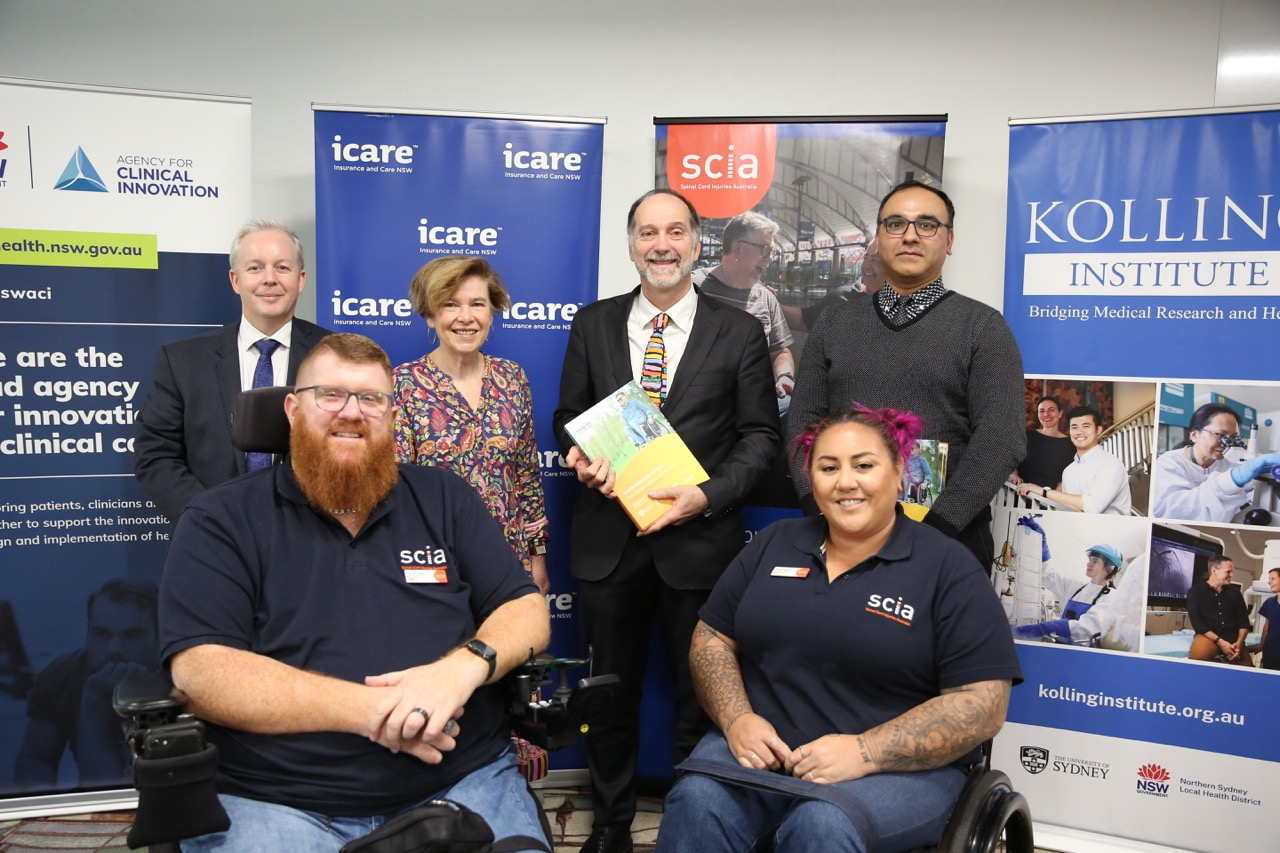
    Here’s a snapshot of our latest research at the Kolling Institute and the impact it’s having across the community, from new national guidelines for physios helping those with life-changing spinal cord injuries to a new approach for those with debilitating chronic pain. There’s a focus too on our researchers reducing the physical toll of spaceflight and the latest care for osteoarthritis. 

    Flip through our flipping book for more:

NSWGOV logo