Blog

  • High tech project offers hope for Parkinson’s treatment

    High tech project offers hope for Parkinson’s treatment

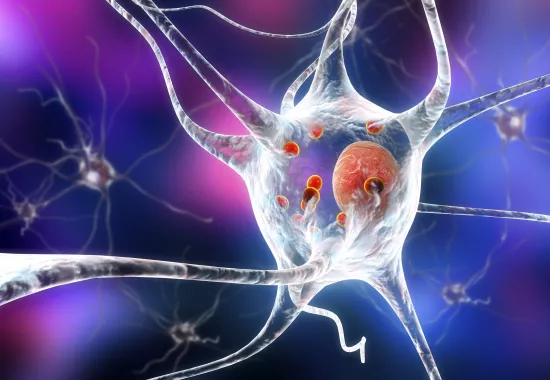
    Kolling researchers are set to lead a ground-breaking project to identify new drug therapies for those with Parkinson’s disease.

    The project has been made possible following Federal Government funding through the National Drug Discovery Centre.

    Senior Kolling researcher Dr Daniel Whiten has welcomed the announcement, saying the funding will help our team translate our scientific progress into an effective treatment for Parkinson’s disease patients.

    “Parkinson’s disease affects approximately one per cent of the population over 65, leading to a continual loss of neurons in the brain, and loss of function,” he said.

    “Currently, we are unable to slow or stop this process with medication, but we have identified a new pathway to restore cellular function in the brain, and this project will help us identify the compounds which can activate this pathway and reduce the impact of Parkinson’s disease.

    “The funding means we will now have access to highly specialised robotic screening at the Walter and Eliza Hall Institute, allowing us to test several hundred thousand compounds in a relatively short amount of time.

    “This approach will give us the best chance of identifying the most effective compounds for new drug therapies.

    “I’m looking forward to working with Professor Carolyn Sue, Dr Gautam Wali and Professor Michael Kassiou from the University of Sydney on this exciting project.

    “It is an important step in the development of new treatments for Parkinson’s disease and highlights the translational strength of the Kolling, where we are able to directly transfer our breakthroughs in research into better treatment options for patients and ultimately better health outcomes.”

    Professor Sue said the project was a wonderful opportunity to work collaboratively with the National Drug Discovery Centre team at the Walter and Eliza Hall Institute.

    “This is a tremendously exciting project as it’s investigating new ways to treat Parkinson’s disease,” she said.

    “Currently, all treatments are aimed at reducing the symptoms of the condition. This project however, will look to halt the symptoms and reduce the progression of the disease.”

    The large scale screening campaign will be carried out over the coming months.
  • Executive Director joins elite group of Australian health professionals

    Executive Director joins elite group of Australian health professionals

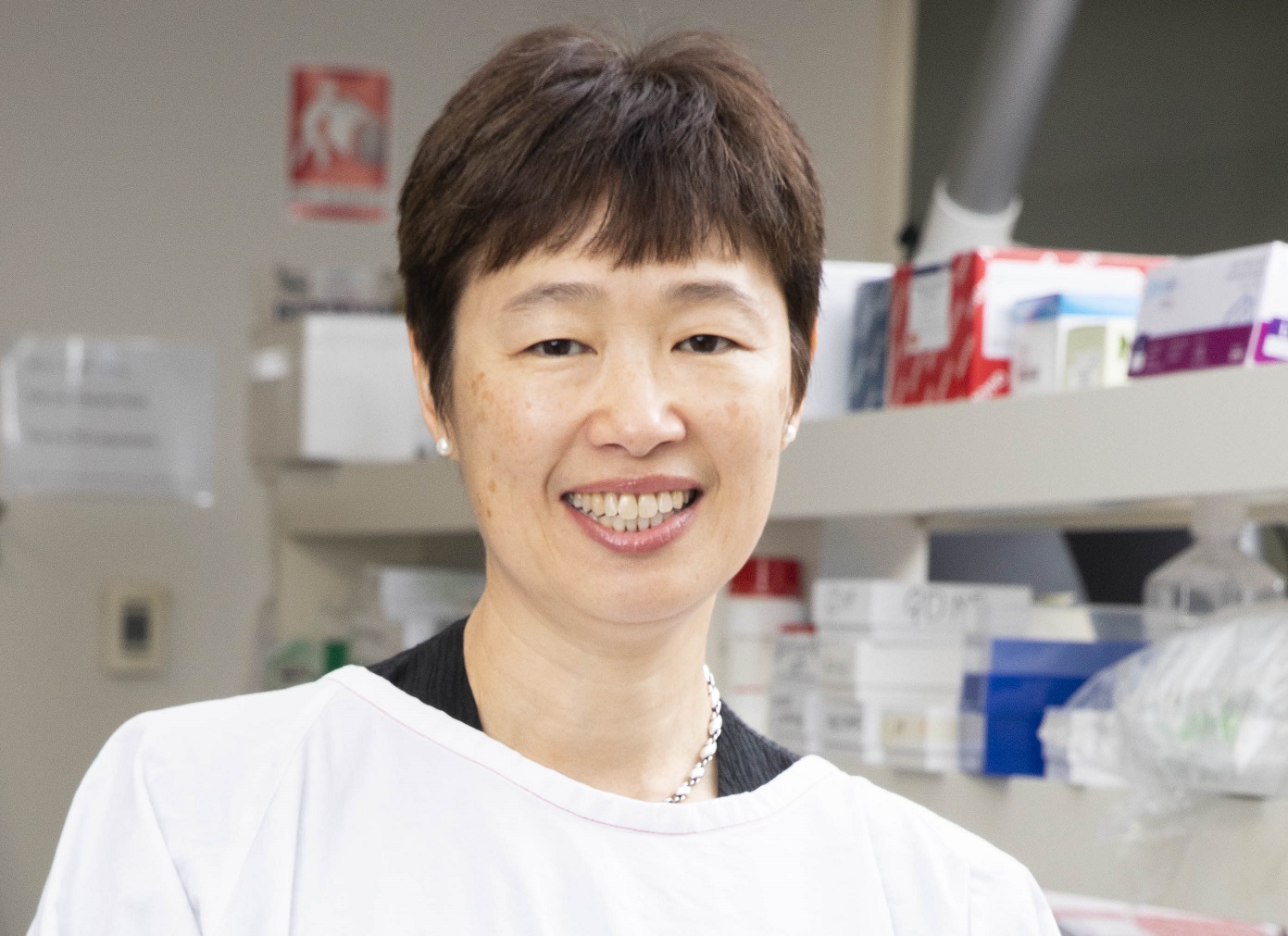
    Congratulations to the Kolling’s Executive Director Professor Carolyn Sue, elected a Fellow of the Australian Academy of Health and Medical Sciences for her outstanding contribution to health and medical research in Australia.

    Professor Sue is part of a distinguished group recognised for their personal achievement, outstanding leadership and continuing involvement in health and medicine-related sciences in Australia.

    “I am honoured to be elected a Fellow of the Australian Academy of Health and Medical Sciences and join many inspirational colleagues who I have long since admired,” she said.

    “I would like to acknowledge both my clinical and laboratory research teams who share this recognition with me as we work together to find better ways to improve the lives of the patients we care for.”

    Professor Sue is a neurologist, internationally respected for her expertise in mitochondrial disorders and Parkinson’s disease. As a clinician scientist at the Kolling Institute and Royal North Shore Hospital, Professor Sue runs the country’s largest tertiary referral clinic for patients with complex neurogenetic conditions, including Parkinson’s disease, mitochondrial diseases and other inherited movement disorders.

    Her research has led to improved diagnosis and treatment of mitochondrial diseases, and identified the prevalence of mitochondrial DNA mutations in the community.

    Under her leadership, research in the Department of Neurogenetics focuses on bridging the gap between clinical and molecular science. Professor Sue has a major interest in understanding the disease processes involved in neurological disorders, with an emphasis on developing new treatment options.

    In 2019, Professor Sue was awarded the Order of Australia for significant services to medicine, and in recent weeks she received funding for a game-changing research project to improve our understanding of the genetic links to Parkinson’s disease.

    Professor Sue recently received significant NHMRC funding for a project to improve access to diagnosis for mitochondrial disease patients. The innovative model is set to have national and global benefits.

  • Kolling researchers join global search for new insights into Parkinson’s disease

    Kolling researchers join global search for new insights into Parkinson’s disease

    Kolling Institute researchers will help drive an exciting international project to identify the genetic links to Parkinson’s disease and new ways to treat the debilitating disorder.

    The program will bring together leading researchers from Sweden, the United States and Australia after a $12.5 million grant from the Aligning Science Across Parkinson’s initiative, which will be administered by the Michael J. Fox Foundation for Parkinson’s Research.

    The Kolling Institute’s Executive Director Professor Carolyn Sue is thrilled to be involved as an investigator, with the degenerative movement disorder impacting more than six million people worldwide.

    “Parkinson’s disease is one of the biggest neurological health challenges this century, affecting an increasing number of people due to our ageing population,” she said.

    Professor Sue, who is also the Director of Neurogenetics at Royal North Shore Hospital, said the project will use state-of-art technologies and a very specialised approach involving gene editing.

    “Our research will investigate three specific genes linked to the disease, including the LRRK2, PARKIN and A-SYNUCLEIN genes.

    “By understanding how genes contribute to Parkinson’s disease, we will be in a better position to identify new therapies that could slow the disease process.

    “Even if we slow the process by a small amount, the impact on patients will be significant.”

    Two members of Professor Sue’s neuroscience research team will also join the three-year project, including Dr Ryan Davis and Dr Gautam Wali.

    “We have world leading expertise in this field and have been selected to take part after a global search for innovative programs to speed-up the search for the next generation of treatments for Parkinson’s.

    “This collaborative project will see our team work with other world leading experts, including Professor Deniz Kirik from Lund University, who will be the lead investigator on the project for the University of Sydney as an Honorary Professor, and Professor Glenda Halliday from the Brain and Mind Centre.

    “Together we will work to unravel some of the fundamental mechanisms that cause Parkinson’s disease and help to develop new ways to treat the disorder.

    “The program illustrates the importance of our translational research at the Kolling Institute, where we can directly incorporate scientific breakthroughs to improve clinical care for our patients.

    “It also highlights the significance of a collaborative approach, where we can harness the strengths and expertise from multiple institutions, including the Northern Sydney Local Health District and the University of Sydney to accelerate our research progress.”

  • Research identifies health impact of traffic accidents

    Research identifies health impact of traffic accidents

    Clinician and Kolling Institute researcher Professor Ashley Craig said their results follow a five year study involving more than 2,000 people injured in a motor vehicle accident.

    “One in three people injured in a traffic accident suffer depression and experience post-traumatic stress symptoms,” Professor Craig said.

    “By following patients over a long period of time, we now recognise that people suffering psychological distress are at a higher risk of developing severe mental health disorders, chronic pain and long-term disability, and that it can take much longer for them to recover.

    “This can lead to a dramatic increase in costs and take four times longer for crash survivors to recover.”

    Professor Ian Cameron said the team also examined factors influencing health outcomes after motor vehicle crash injury and approaches to improving wellbeing.

    “Traditional medical models often fail to assist recovery after a crash,” Professor Cameron said.

    “Our research has shown that a return to usual activities as soon as possible is beneficial, challenging earlier recommendations that rest is best.

    “We have seen that family support, flexibility from employers, such as altered duties, and early treatment covered by insurance companies, all contribute to a quicker recovery.

    “With traffic injuries predicted to become the third leading cause of global burden by 2030, we hope that our findings will help influence future government policy and drive further reforms within the compensation system,” Professor Cameron said.

NSWGOV logo