Blog

  • Philanthropy supporting our emerging leaders

    Philanthropy supporting our emerging leaders

    Funding from the Skipper Jacobs Charitable Trust has helped a group of our young research leaders broaden their experience and establish new collaborations.

    Close to $40,000 was shared amongst five early-to-mid career researchers, allowing them to travel nationally and internationally to progress their research and develop new skills.

    One of those to receive funding is Dr Kenji Fujita, an early-career pharmacist with a PhD working in the Ageing and Pharmacology Research Group at the Kolling Institute.

    Kenji helped develop techniques to calculate the frailty index in older hospitalised patients, while also leading research into the quality of pharmaceutical care.

    During his trip he led a three-day workshop in Denmark, visited collaborators in Norway and delivered a presentation in Japan, a country with the highest proportion of older adults in the world.

    “It was a great opportunity to build international collaborations and promote our translational research at the Kolling. I really appreciate this travel grant,” he said.

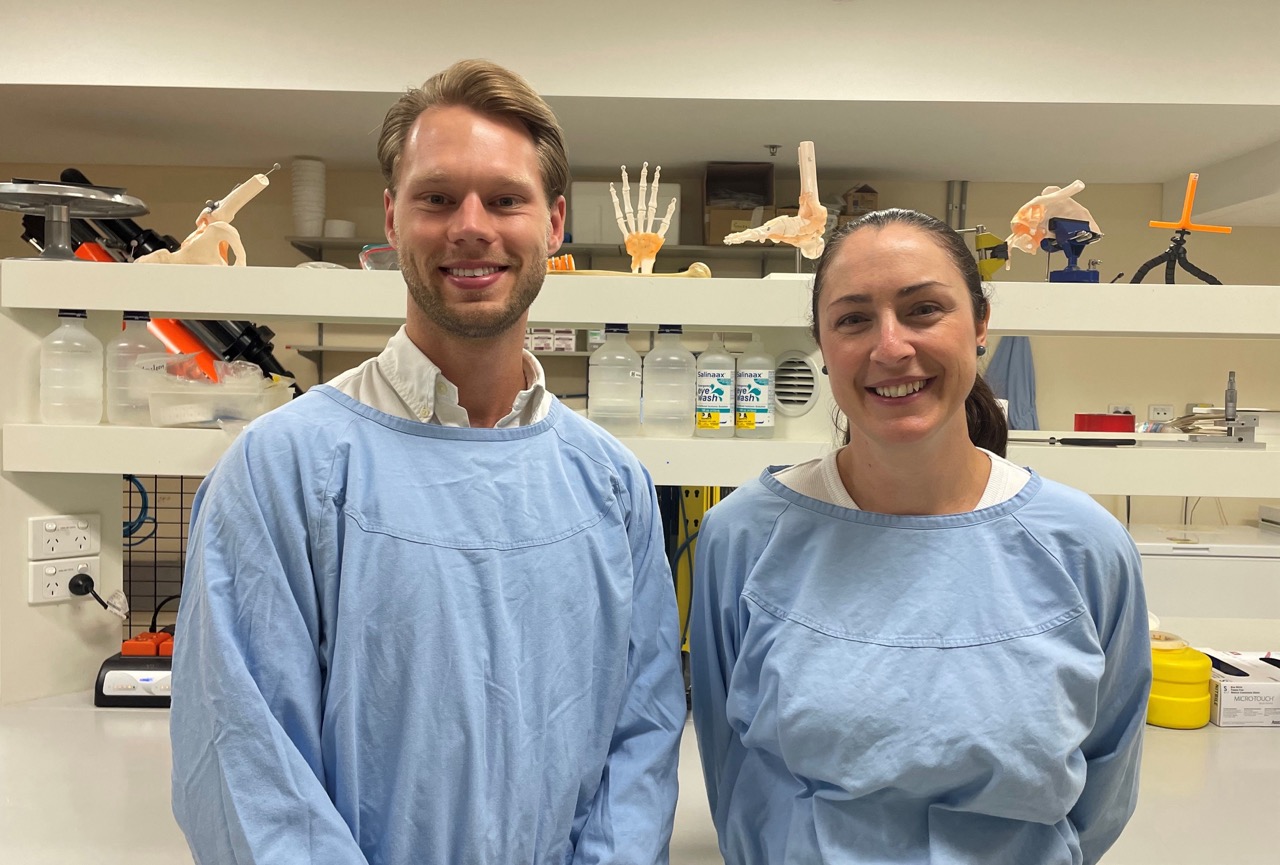
    Another researcher to benefit from the travel grant was Samantha Hefferan from the Murray Maxwell Biomechanics Laboratory.

    Sam visited the University of Auckland, where she was able to use the lab’s high-tech imaging methods to explore the ultrastructure of human tendons, and the impact of disease and injury.

    “I valued every moment of my three months in New Zealand. I was challenged every step of the way with both my research and living in an unfamiliar environment,” she said.

    “I gained a lot during my time, not only learning new technical skills but also understanding more about the complexity of independently planning and developing tailored protocols for my research questions.”

    “On top of strengthening our collaboration with research groups at the University of Auckland, I now have the knowledge-base to bring the practical components of planned collaborative projects closer to home for future research students at the Kolling Institute.”

    Academic Director Professor Jim Elliott thanked the Skipper family for their financial backing of the trust, as well as the NORTH Foundation for their support of the travel program.

    “It has been instrumental in helping individual researchers, raising the international profile of the Kolling Institute and contributing to crucial research progress.”

    If you would like to support our researchers, please donate through the NORTH Foundation

  • Significant investment in our research announced

    Significant investment in our research announced

    A large collection of research projects will get off the ground following generous funding through the Ramsay Research and Teaching Fund Scheme.

    The scheme has directed more than $10 million to research on the Royal North Shore Hospital campus over the last 20 years, and this year a further $850,000 will be shared across 17 projects.

    A diverse range of studies will be supported, strengthening investigations into cardiovascular disease, cancer and diabetes as well as osteoarthritis, neonatal care, thyroid function and physiotherapy programs.

    The successful recipients this year are:

    • Professor Dale Bailey
    • Professor Roderick Clifton-Bligh
    • Professor Gemma Figtree
    • Professor David Hunter
    • Associate Professor Sarah Glastras
    • Associate Professor Joanne Glinsky
    • Associate Professor Karl Ng
    • Associate Professor Sean Seeho
    • Dr Sally Baron-Hay
    • Dr Grace Gifford
    • Dr Matti Gild
    • Dr Pierre Janin
    • Dr Barbara Lucas
    • Dr Sharon McCracken
    • Dr Lauren Monds
    • Dr Leo Pang
    • Dr Kathy Willowson     

    NSLHD CE Adjunct Professor Anthony Schembri AM welcomed the investment saying it will help the district maintain its reputation as a hub of research excellence and high value care.

    “We know that districts with an active research culture, where research is embedded as part of clinical care have a higher patient experience, less errors and better health outcomes,” he said.

    “I look forward to following the progress of these projects, as well as their impact on lifting our standard of care and our understanding of a broad range of conditions.

    “Personally, as a fellow allied health worker, it’s great to see our allied health practitioners being recognised with these important research grants.”

    The recipients were congratulated by North Shore Private, Ramsay Healthcare Acting CEO Christian Hoengaard, who said the grants represented a tremendous investment.

    “We look forward to all the good outcomes that will flow as a result of this research and I’m sure it will help us continue to deliver world leading care,” he said.

    “We have a long history of collaboration and I look forward to building on that partnership for another two decades.” 

  • Researchers offer the latest evidence around supplements for osteoarthritis

    Researchers offer the latest evidence around supplements for osteoarthritis

    With a large number of people relying on supplements to reduce their osteoarthritis pain, our researchers at the Kolling Institute have conducted a much-needed review of the most popular ones.

    The condition is impacting an increasing number of people, with many experiencing joint pain and functional impairment due to the disabling disease.

    Sadly, there is a lack of effective drugs to treat the condition so many people resort to supplements in the hope of achieving some relief.

    Now, researchers at the Kolling Institute have completed a comprehensive review, summarising the best available evidence and detailing the most effective supplements.

    Rheumatology fellow Dr Xiaoqian Liu from the Osteoarthritis Research Team said we have developed a traffic light diagram that provides easily obtainable information for clinicians and patients.

    “There are three colours in the diagram, representing the various recommendation levels,” she said.

    “Green means recommend, orange means probably recommend or probably don’t recommend and red means don’t recommend.

    “Following our review, we conditionally recommend a short period of use of curcumin, Boswellia serrata extract and pine bark extract as the current evidence shows they have a large treatment effect in relieving pain and improving function.

    “Other supplements however, have only demonstrated a minimal treatment effect in pain relief.”

    Researchers say the quality of the current evidence is low and larger studies are needed to confirm the findings, but they hope their review will help those with osteoarthritis make an informed decision.

    “There are a tremendous number of supplements on the market, so it’s crucial the community has access to the latest, reliable information around the impact of these supplements.”

  • New research to determine best practice for knee osteoarthritis

    New research to determine best practice for knee osteoarthritis

    Our researchers at the Kolling Institute are set to influence the delivery of osteoarthritis care across Australia following a significant funding announcement.

    More than $1.4 million has been awarded to internationally recognised rheumatologist and researcher Professor David Hunter as part of the NHMRC Partnership Project Grants Scheme.

    The scheme is designed to help researchers work directly with partners to deliver programs that respond to community needs, improve equity and broaden access to care.

    Professor Hunter’s project is one of seven being funded this year at a total cost of $9 million.

    It will compare the effectiveness of a telehealth approach with optimal face-to-face treatment for knee osteoarthritis.

    Professor Hunter said we are enormously appreciative of both the partners who will be involved in this project, as well as the NHMRC for funding our work.

    “It will provide important information for policymakers to determine which groups of people will benefit most from the particular types of therapy,” he said.

    “It will also help confirm which model of care is the most effective and cost-effective, and which type of therapy could be efficiently delivered on a large scale.

    “It’s expected the methods and resources we develop during the trial will be shared widely, and adopted on a national scale.”

    With an increasing number of Australians experiencing osteoarthritis, Professor Hunter said it’s important we are able to inform policy makers and service providers on the best-practice management of this condition.

    “Despite the significant burden of the disease, the current delivery of osteoarthritis care is often not consistent or informed by evidence-based guidelines.

    “It is often fragmented, inappropriate and of little value.

    “Our team is consistently working to lift standards of care and long term health outcomes, so we are thrilled this new funding will help us progress our research in this area.”

    The total investment in the seven NHMRC partnership projects will reach more than $24 million after funding from the partners.

  • Technology delivering support to those with back pain anywhere, any time

    Technology delivering support to those with back pain anywhere, any time

    With the number of people living with low back pain escalating sharply, researchers are turning to widely-accessible technology to reduce the impact of the disabling condition.

    The team from the University of Sydney and the Kolling Institute has launched a study measuring the effectiveness of a mobile health program which offers self-management strategies via text messages.

    Study lead Professor Manuela Ferreira said broader options for care are needed given the number of people who experience the condition.

    “Low back pain is the greatest cause of disability worldwide, impacting social, family and work activities,” she said.

    “In Australia, it affects one in six people and is the main reason Australians miss work and retire involuntarily.

    “New modelling conducted by our team estimates more than 800 million people globally will be living with low back pain by 2050, a 36 percent increase from 2020.

    “People with low back pain need affordable interventions to help them manage their condition, and this health program provides practical, evidenced-based strategies.

    “Text messaging is an easy, accessible and affordable intervention that can empower those with low back pain to better manage their own symptoms.

    “It can be used to support people anywhere, at any time of the day.

    “Text messaging initiatives have been shown to help people with chronic diseases such as cardiovascular disease and diabetes, and we are working to determine if this approach can also be an effective tool for those with chronic back pain.”

    The study, named TEXT4myBACK, is assessing two formats of text message interventions, which differ in frequency and content.

    Researchers will then measure whether the text messages are improving function and back pain symptoms.

  • Australian researchers uniquely positioned to support upcoming space missions

    Australian researchers uniquely positioned to support upcoming space missions

    The expertise across Australia’s space medicine community was showcased during a special event co-ordinated by the Kolling Institute and the Australasian Society of Aerospace Medicine.

    Staged over two days, the colloquium involved national and international experts including representatives from the Australian Space Agency, the CSIRO, Boeing and the Australian Antarctic Program.

    Presenters discussed the specific medical, dental, and psychological needs of astronauts, Australian-designed space suits and opportunities for our space community in NASA’s Artemis exploration of the moon and ultimately Mars.

    Kolling Academic Director Professor Jim Elliott said Australia’s involvement in the Apollo Moon landings is well documented, but perhaps what is not well known is the depth of experience in Australia’s contemporary space industry.

    “We have a tremendous depth of medical, technological and research expertise in this field,” he said.

    “Australian clinicians and researchers have been collaborating with international space agencies for years. Our clinical experience and research have helped inform developments in space life sciences as our international partners recognise our unique scientific expertise.

    “Some research has specifically focused on clinical advances to improve the healthcare support to astronauts.

    “Our technological sector is also well placed to offer specialised support, with a consistent track record of driving innovation.

    “Australian experience has driven advances in radiation protection, wearable sensors and compression suits worn by astronauts to limit the musculoskeletal effects of microgravity.”

    Dr John Cherry, a director from the Australasian Society of Aerospace Medicine said Australia is in a strong position to support long duration human spaceflight missions.

    “We are world leaders in rural and remote healthcare, with experience delivering care in some of the most extreme and isolated environments on earth,” he said.

    “The Australian Antarctic Program for example has developed specialised training and technology to enable a generalist doctor to provide high quality medical, surgical, anaesthetic and dental care to an isolated team.

    “Many of the challenges faced in these settings will be experienced by astronauts and space agencies as human spaceflight extends further into space.”

    Professor Elliott said the Australian space medicine community is keen to see the medical progress as a result of the upcoming space explorations.

    “It’s anticipated that some of the lessons learned in space will deliver benefits back on earth and help to drive improvements in health outcomes.

    “For instance, the new knowledge around the deconditioning of astronauts in space could help doctors back home managing patients with deconditioning after long periods in hospital.” 

  • Kolling Institute Year in Review 2022

    Kolling Institute Year in Review 2022

    Check out our Kolling Institute Year in Review 2022 celebrating our research success. It highlights our world-leading translational research and our impact across our priority research areas. Click on the link here.

  • Research questions the value of injectable medications for osteoarthritis

    Research questions the value of injectable medications for osteoarthritis

    Our researchers at the Kolling Institute are encouraging those with osteoarthritis to rely on treatments with a proven track record and avoid quick fixes without the data to show they work.

    The comments follow a steady rise in osteoarthritis cases nationally, with around three million Australians now living with the condition, and many forced to retire early.

    The rise in cases has coincided with strong interest in injectable medications, particularly for knee osteoarthritis, such as hyaluronic acid, stem cells and platelet-rich plasma.

    But Royal North Shore Hospital rheumatologist and world leading osteoarthritis researcher Professor David Hunter said we don’t have the data to show these injections work.

    “The hyaluronic acid injections are no better than a saltwater injection, but they will cost you a lot more, while we just don’t have good enough evidence for the stem cell injections or the platelet-rich plasma,” said the University of Sydney researcher.

    Professor Hunter is disappointed that the latest evidence on treatments is not filtering through to consumers and new resources are not reaching those with osteoarthritis.

    He would like to see a stronger focus on the core treatments which work.

    “Individuals with osteoarthritis need to be encouraged to manage their condition using behaviour and lifestyle interventions in the knowledge that the development of disease-modifying drugs might still be some way away,” he said.

    “Some of the evidence-based treatments include doing exercises that strengthen the muscles around the affected joint.

    “We recommend working with a physiotherapist or an exercise physiologist trainer to learn how to strengthen those muscles.”

    Professor Hunter said staying active and losing weight, if you are carrying extra kilos, are also important steps that can make a difference.

    “We know that losing five per cent of body weight can improve joint pain and function by 30 per cent. This can have a significant impact.”

    Research indicates cortisone injections can be used for short-term relief but not a long-term solution.

    “One injection may be fine but repeat steroid injections appear to increase the risk of progressing the disease,” he said.

    More information on treatments and the latest advice can be found on websites including Arthritis Australia, My Joint Pain and Joint Action.

    Professor Hunter’s views were published in Nature Reviews Rheumatology.

    For more details, check out the 9NEWS story below.

    9NEWS: Experts warn against knee injections

  • Back pain cases to rise sharply

    Back pain cases to rise sharply

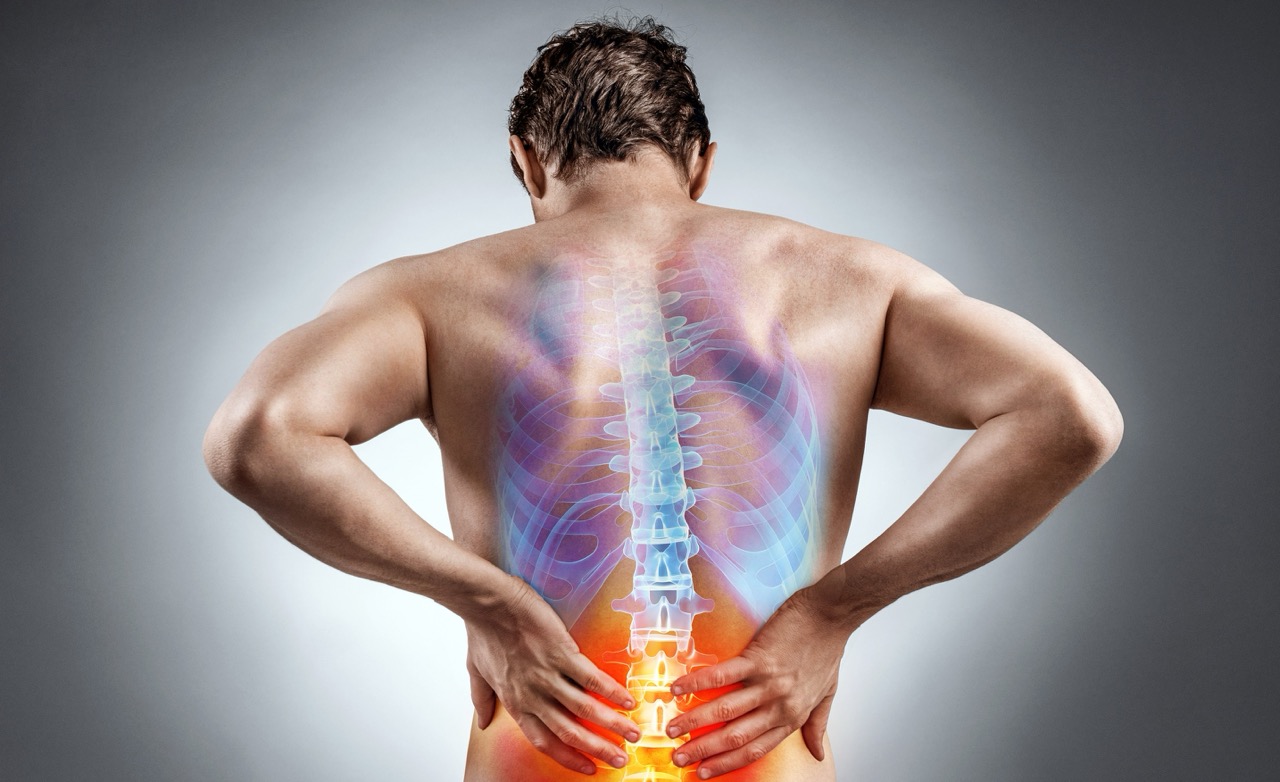
    A new study by researchers at the Kolling Institute estimates more than 800 million people will be living with low back pain by 2050, a 36 percent increase from 2020.

    The prediction follows an analysis of 30 years of global health data from over 200 countries.

    Modelling shows the number of back pain cases globally will rise to 843 million people by 2050, while in Australia, it’s expected there will be a 50 percent increase. The biggest jump is likely to be seen in Asia and Africa.

    Researchers are concerned the trend will only get worse with an inconsistent approach to back pain treatment. They say many commonly recommended treatments have been found to be ineffective, including some surgeries and opioids.

    Researchers say there’s also a misconception that low back pain mostly affects adults of working age. This study shows that most low back pain cases affect older people, and more women than men.

    Lead author Professor Manuela Ferreira, from Sydney Musculoskeletal Health and the Kolling Institute said our analysis paints a picture of growing low back pain cases globally, putting enormous pressure on our healthcare system.

    “We need to establish a national, consistent approach to managing low back pain that is informed by research,” she said.

    “Currently, how we have been responding to back pain has been reactive. Australia is a global leader in back pain research, so we can be proactive and lead by example on back pain prevention.”

    Senior author Professor Lyn March from the Kolling Institute said we know that most available data comes from high-income countries, making it sometimes hard to interpret these results for low to mid-income countries.

    “We urgently need more and accurate data from countries of low to mid-income,” she said.

    Co-author Dr Katie de Luca, from CQUniversity, said if the right action is not taken, low back pain can become a precursor to chronic health conditions such as diabetes, cardiovascular disease and mental health conditions, invasive medical procedures, and significant disability.

    “Low back pain continues to be the greatest cause of disability burden worldwide. There are substantial socio-economic consequences of this condition, and the physical and personal impact directly threatens healthy ageing.”

    The study analysed global health data from 1990 to 2020. It is the first study to inform modelling for the future prevalence of back pain. The findings have been published in Lancet Rheumatology.

  • Researchers call for a greater focus on the physical impact of whiplash injuries

    Researchers call for a greater focus on the physical impact of whiplash injuries

    Researchers from the Kolling Institute have led an international study investigating why some people spontaneously recover from whiplash following a motor vehicle collision, while others don’t. Their work has uncovered new evidence indicating it may relate to the health of muscles and stress.

    More than 140 people were recruited to the longitudinal study, which involved research teams from the United States, Canada, and Australia.

    The study ran for more than five years, with participants undergoing a series of ultra-high resolution MRIs of the spine and neck.

    Researchers analysed pain, psychological distress, as well as physiological measurements of muscle fat in the neck.

    Following the extensive analysis, researchers found higher neck muscle fat infiltration and distress may be a risk factor for whiplash related injury, although it was unclear whether this was a pre-existing condition or the result of the trauma.

    Lead researcher Professor Jim Elliott, Academic Director of the Kolling Institute said it’s known that higher levels of stress can have a negative effect on overall health and wellbeing, but in particular, the health and functioning of our skeletal muscles.

    “This study provided more evidence that those reporting higher levels of post-traumatic distress had higher levels of muscle fat infiltration,” he said.

    “Future work needs to determine if these conditions were present before the injury, and whether pre-traumatic life stress is accompanied by poor muscle health and function.”

    Professor Elliott said the study represented an important body of work with 1.3 million Australians alone experiencing chronic whiplash associated disorder.

    “We know that half of those who experience whiplash during a collision recover rapidly, while the other half do not recover and 20 per cent have severe ongoing pain and disability.

    “This causes a significant personal toll, as well as an economic burden of close to a billion dollars a year just in Australia.

    “Research to date has generally focused on secondary prevention rather than primary prevention of whiplash associated disorder.

    “Nearly all the high quality trials over the last 25 years have tested interventions to reduce adverse outcomes, yet these trials have done little to reduce the burden of the disorder.

    “In fact, neck pain, the most common symptom of chronic whiplash remains the fourth leading cause of Years Lived with Disability, a ranking which has not changed in over 30 years.

    “There is a clear need for innovation in diagnosis and prognosis, as well as effective strategies to mitigate the risks for the large number of people living with the chronic disorder.

    “Currently, the focus is on the consequences of a collision, such as post-traumatic psychological distress and disability. Following our research, we would like to see greater attention directed to the biological and biomechanical mechanisms involved in the disorder.

    “We believe this broader approach could improve the prediction of the clinical course and therefore the management of the condition.

    “It could offer valuable information and treatment options for the 25 per cent of people who suffer a whiplash injury and then transition from acute to chronic pain and disability.”

    The study was funded by the National Institutes of Health in the USA. It has been published in the prestigious Spine Journal.

NSWGOV logo