Blog

  • World first research to develop cognitive impairment guidelines after spinal cord injury

    World first research to develop cognitive impairment guidelines after spinal cord injury

    A team of researchers from the Kolling Institute’s John Walsh Centre for Rehabilitation Research has launched a study to develop the first internationally accepted guidelines for assessing cognitive function after a spinal cord injury.

    The latest data indicates that over 15 million people globally live with a spinal cord injury, and in Australia, there are over 20,000 people living with the injury.

    There are around 300-400 new cases of this injury every year in Australia.

    The devastating physical impact of these injuries has been extensively studied from the loss of motor control (such as paralysis) to the pain and sensory issues, and the significant problems with cardiovascular and respiratory function.

    However, the psychological and cognitive impacts of this severe neurological injury have not been as well understood, such as the extent of cognitive impairment and mental health disorders over time.

    There is now a growing body of evidence around the psychosocial consequences of a spinal cord injury, with new studies by the John Walsh Centre for Rehabilitation Research highlighting a concerning trend.

    Professor of Rehabilitation Ashley Craig said we are just completing the first ever study conducted anywhere internationally that has assessed cognitive function and potential cognitive impairment in adults with a spinal cord injury from soon after their injury in the acute stage, until their discharge from rehabilitation up to 12 months post injury.

    “Our research found that at least 30 per cent of adults with a spinal cord injury were assessed as having at least mild cognitive impairment, and that this impairment was identified as a major risk factor for the development of mental health disorders like depressive mood and anxiety after the person is discharged from hospital,” he said.

    “This is very concerning given that this may result, not only in a higher risk of a mental health disorder in those with cognitive impairment, but also an increased risk of secondary health conditions like chronic pain, skin problems like pressure ulcers, and respiratory infections. The person with cognitive impairment may become confused and overwhelmed about how best to self-manage these conditions.

    “Despite the high number of people experiencing these challenges, our research has identified there are currently no internationally-recognised cognitive assessment tests suitable for measuring cognitive function after a spinal cord injury.”

    Our team has now begun research to develop a new framework for cognitive screening, which will involve sensitive and valid cognitive assessment tools.

    “This is an important body of work which will build on our prior research to validate the cognitive domain areas we have previously identified that affect most adults with spinal cord injury. We will then develop alternative ways of assessing day to day cognitive function in conjunction with established neurocognitive tests we currently use that are limited.”

    “We know that there are multiple possible causes of cognitive impairment after spinal cord injury, such as age, polypharmacy, level of lesion, mental health, fatigue, and autonomic function. Our framework must attempt to account for these possible affects”, Professor Craig said.

    The John Walsh team will work with international partners in the UK, Europe and the USA, who are keen to collaborate in the development of a new cognitive assessment framework.

    This research will be informed by another current study that is investigating how best to integrate guidelines for psychosocial health and cognitive care with the multidisciplinary health teams managing spinal cord patients in the units at Royal North Shore Hospital, Prince of Wales Hospital and Royal Rehab.

    The John Walsh team developed these guidelines which are available on the Agency for Clinical Innovation website: 

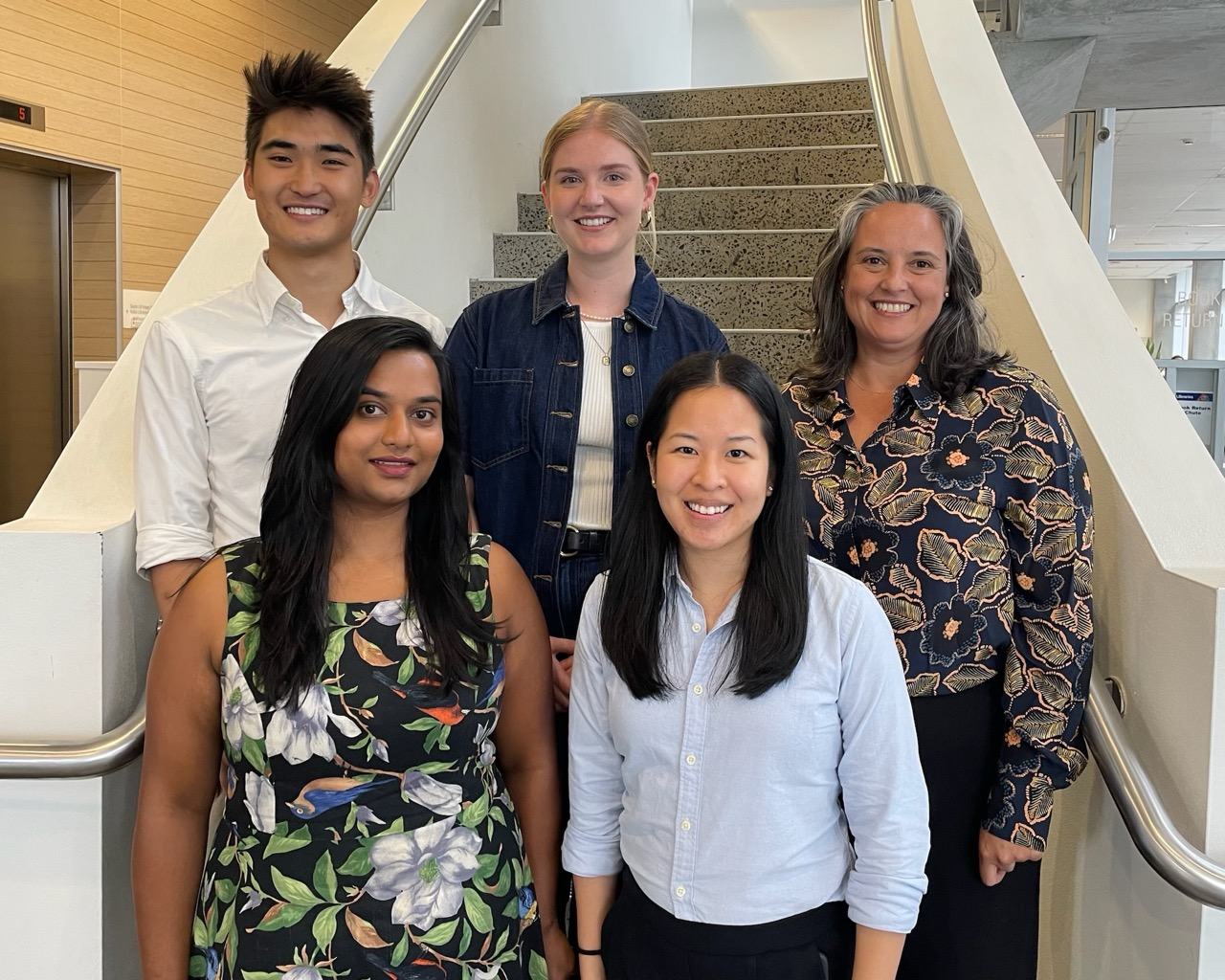
    The team involved is Prof Ashley Craig and Prof James Middleton, Dr Mohit Arora, Dr Ilaria Pozzato, Dr Candice McBain, Dr Danielle Sandalic, Daniel Myles, Anne Marie Sarandrea, Dr Jazbeer Kaur and Dr Yvonne Tran. 

  • Innovative musculoskeletal program heads to the bush

    Innovative musculoskeletal program heads to the bush

    In a sign of the strength of the Kolling Institute’s research and clinical capabilities, Professor Trudy Rebbeck has been awarded a $2.5 million grant to offer a musculoskeletal care program in rural and remote parts of Australia.

    As a Professor of Allied Health and a physiotherapist, Trudy will lead the collaborative project involving University of Sydney, NSLHD and Kolling Institute researchers Michael Nicholas, Ian Cameron, Annette Kifley and Claire Ashton-James.

    She is excited to launch the initiative which has been funded as part of a $20 million boost for improved primary care and chronic pain treatment.

    Trudy said an increasing number of people are experiencing chronic musculoskeletal conditions like back, neck pain and arthritis, but few people in rural and regional areas are being offered evidence-informed care involving good advice and an exercise plan.

    “We know that people in these communities have poorer access to appropriate care and ultimately poorer musculoskeletal health,” she said.

    “Our large-scale program, named PACE RURAL, will be offered across the country for the first time, providing a high quality and yet low-cost solution.”

    It will involve a simple online tool at the point of care to identify people who may recover well and those who may not. Those who are likely to recover well can be guided by the online resource (Mypainhub.com) which provides accurate advice and exercises to aid recovery.

    People needing extra care will receive early virtual access to an expert allied health clinician.

    The allied-health specialist will work with the local GP through an advanced assessment of risk factors and develop an individualised treatment plan.

    “For many people living in rural and remote parts of Australia, one of the biggest challenges is access to specialised healthcare, so we hope that through this program, we will broaden access to evidenced-based, effective care and importantly, improve long-term musculoskeletal health,” she said.

    “We know from our work in metropolitan regions that increasing support from allied-health clinicians delivers better health outcomes for higher risk individuals, so we expect this project will now provide a cost-effective solution in rural and remote Australia too.” 

  • The latest update from the Kolling

    The latest update from the Kolling

    Here’s a snapshot of our latest research at the Kolling Institute and the impact it’s having across the community, from new national guidelines for physios helping those with life-changing spinal cord injuries to a new approach for those with debilitating chronic pain. There’s a focus too on our researchers reducing the physical toll of spaceflight and the latest care for osteoarthritis. 

    Flip through our flipping book for more:

  • Vale John Walsh

    Vale John Walsh

    It is with great sadness that the Kolling Institute acknowledges the passing of Professor John Walsh AO.

    Professor Walsh had a longstanding relationship with many researchers across the Kolling and the local health district and was immensely respected by his colleagues.

    Having a background as an actuary, Professor Walsh applied his expertise to many projects over his life, specifically policy development and research related to disability and rehabilitation.

    In 2014, the John Walsh Centre for Rehabilitation Research was named in his honour. It has since played an integral role within the Kolling Institute, and influenced national and international models of care.

    Over the past decade, Professor Walsh provided advice to researchers at the centre both on an informal basis and as a researcher for specific projects.

    For around ten years, John also held an appointment as an Adjunct Professor in the Faculty of Medicine and Health at the University of Sydney.

    Professor of Rehabilitation Medicine and Senior Staff Specialist Ian Cameron said John’s continuous guidance and generosity was a highlight of his working relationship with him. 

    “John was always generous with his time. His knowledge of rehabilitation and disability issues was vast,” he said.

    “John provided guidance on clinical, policy, public health and actuarial issues related to disability and rehabilitation.”

    Our deepest condolences and best wishes are with his loved ones during this time. 

  • Researchers inform next-gen space suit design

    Researchers inform next-gen space suit design

    Leading researchers from the Kolling Institute have welcomed the opportunity to collaborate with Metakosmos as it pioneers the development of a next-generation space suit.

    Led by CEO Kiriti Rambhatla, Metakosmos is working to revolutionise human spaceflight technology. Their Kosmosuit architecture has garnered acclaim and the interest of the Kolling Institute’s Academic Director Professor James Elliott.

    Since 2020, Metakosmos has worked with the CSIRO and the Department of Defence to improve production processes. Their research focuses on three key areas: wearer protection, aesthetic design and mitigating physiological impacts such as space radiation and microgravity.

    Space radiation for example, can have detrimental effects on the musculoskeletal system, including bone density loss, muscle atrophy, joint degeneration, impaired healing and increased injury risk. Astronauts can come back to Earth five to eight centimetres taller.

    There is also a risk of injuries during extra vehicular activity preflight training periods prior to space radiation or microgravity exposure. Metakosmos is working on designing systems that can protect the users from injuries during the entire lifecycle of human spaceflight.

    Metakosmos and colleagues are close to unveiling an application that will redefine the way human spaceflight lifecycles are monitored and managed at scale.

    Incorporating biomarker tracking, Metakosmos’ suits monitor astronauts’ musculoskeletal health, stress levels and radiation exposure in real-time. With a 40 per cent increase in efficiency and 50 per cent reduction in total mass, these suits support performance in extreme conditions.

    Metakosmos’ designs cater to various environments, from deep-sea operations to international space station missions. Their collaboration with the Kolling Institute underscores a commitment to advancing human spaceflight capabilities and terrestrial based health, performance and wellbeing.

    James Elliott first met Kiriti Rambhatla at a space consortium hosted by the Kolling Institute in collaboration with the Australasian Society of Aerospace Medicine.

    “We immediately realised we had synergies,” he said.

    “Kiriti was interested in our collaborative multidisciplinary work towards measuring wellbeing after trauma. Not much is known about long-term post-trauma recovery, and no two recoveries are the same.

    “Kiriti was intrigued by our methodology, which involves collecting comprehensive physiological data, creating pathways that work on simulated models, and addressing modifiable environmental factors, such as trip hazards and fall risks.

    “Our research is continually evolving as we measure and refine our approach. The Kolling Institute’s interest in muscle mapping aligns perfectly with the goals of Metakosmos, and we are integrating our findings to support this area.

    “By leveraging their combined expertise, Metakosmos and the Kolling Institute, among other institutions, are breaking new ground in wearable technology for extreme environments, marking a significant step forward in human health and performance on earth and beyond.” 

  • Australian researchers help astronauts tackle the health challenges of spaceflight

    Australian researchers help astronauts tackle the health challenges of spaceflight

    As the National Aeronautics and Space Administration (NASA) progresses its ambitious Artemis spaceflight program, Australian researchers including the Kolling Institute’s Academic Director Professor James Elliott will tap into their scientific expertise to offer support.

    Professor Elliott attended a recent event at NASA’s Johnson Space Centre in Texas, which brought together leading clinicians and scientists from around the world to discuss ways to reduce the spine injuries experienced by astronauts.

    This group is exposed to a range of musculoskeletal conditions including spinal pain and muscle challenges due to the lack of gravity when in space.

    Professor Elliott said we know that physical changes to the spine during spaceflight predispose astronauts to symptomatic spine pain and nearly 50 per cent of cases presenting to NASA’s musculoskeletal care team involve spine pain.

    “The risk of spine pain during and after spaceflight raises operational issues and concerns for the long-term spine health of astronauts and others going into space,” he said.

    “We are looking forward to sharing our expertise to help reduce injury, and improve the health and performance of astronauts.

    “NASA has expressed an interest in our MuscleMap program, which is a revolutionary technique to assess whole-body skeletal muscle composition using high-resolution MRI.

    “The program is generating a reference dataset of muscle composition across the lifespan to help diagnose pathology, gauge the effectiveness of interventions, and develop new health outcome measures.

    “The normative data sets, developed by the MuscleMap program, could be used to compare data sets from the astronauts, so that when astronauts return from space, and they’ve experienced zero gravity exposure, you will be able to see what’s happened to their muscle system and what has changed to their skeletal muscle composition.

    “The MuscleMap program could be an assessment tool to help improve their pain and performance when they’re in space, when they get home, and in preparation for future missions.

    “We are very excited to be involved with this cutting-edge research which we hope will directly support astronauts and their long-term health.”  

  • 269 million people to experience neck pain by 2050

    269 million people to experience neck pain by 2050

    New research led by investigators from the Kolling Institute has identified a concerning global trend which will see the burden of neck pain dramatically increase over the next 30 years.

    The research analysed data from more than 200 countries, measuring the prevalence of neck pain from 1990 to 2020.

    It found 203 million people now experience neck pain across the globe, a figure which has remained stable over the last 30 years and not improved.

    More women than men live with neck pain, while the condition primarily affects people between 45 years and 74 years.

    Despite the high prevalence of neck pain, its causes have not been clearly defined across populations.

    Investigators say the evidence suggests a range of factors from muscle strains, work or sports related events through to degenerative conditions like osteoarthritis, car accidents, or neurological issues are contributing to the painful condition.

    Lead author and Kolling Institute Academic Director Professor James Elliott said the data points to a sharp rise in expected cases due to a rapidly ageing global population.

    “Concerningly, the projections indicate a 32 per cent increase in cases between 2020 and 2050, bringing the total number of cases of neck pain to 269 million,” he said.

    “This will lead to a tremendous burden on health systems across the globe, as well as a significant individual toll.

    “We know that neck pain has a considerable economic, social and personal cost, and we would like to see more effective interventions introduced on a large scale.

    “Currently, there is no gold standard diagnostic test for neck pain, no known pathophysiology and no universally effective treatment for it.

    “We need to shine a light on the condition and drive new technology, new assessments and new management options that are economically viable, effective and broadly available.

    “We hope that following this historic research there will be a renewed commitment to improving our understanding of the different causes and risk factors for neck pain, and an escalation in the collection of global neck pain data.”

    Senior author and leading rheumatologist Professor Lyn March has welcomed the focus on neck pain, saying this research represents a call to action for policy makers to strengthen the capacity of their health systems to deliver quality musculoskeletal care services.

    “It’s crucial the community has access to early detection, management and long-term care, and that greater resources are invested in research to reduce the global burden of neck pain,” she said.

    The research, which has been published in The Lancet Rheumatology, was funded by the Bill and Melinda Gates Foundation and Global Alliance for Musculoskeletal Health.

  • Research helping the community tap into the best osteoarthritis care

    Research helping the community tap into the best osteoarthritis care

    While a large share of the community experiences osteoarthritis, many people are not receiving the latest, evidenced-based care leaving them with poorer and more painful outcomes.

    Health and government bodies are working to address the shortfall, investing resources to increase awareness of high-value care.

    As part of this national approach, Kolling Institute researcher and physiotherapist Dr Jillian Eyles has received a prestigious $660,000 NHMRC investigator grant to promote best-practice osteoarthritis care.

    Dr Eyles said we know that the first-line approach for osteoarthritis involves non-surgical treatments based on education, self-management, exercise and weight control.

    “This approach works well for many people and is consistently recommended by the clinical guidelines, and yet 64 per cent of people with osteoarthritis are not offered these treatments,” she said.

    “We can see there are many barriers to delivering the best care from a lack of knowledge and skills of health professionals to traditional referral pathways.

    “There is an urgent need to reduce the use of treatments that are not recommended such as unnecessary surgical procedures, and we will be working with surgeons to gain a better understanding around the existing pathways.

    “As part of this grant, we will also be looking at new ways to educate and train the health workforce to deliver best-evidence care, and we’ll be working to improve the uptake of programs which offer best-evidence models of care.

    “This will involve phasing-out low-value osteoarthritis treatments which should no longer be used.

    “A large amount of research has made considerable progress in recent years, and its crucial that this new advice and understanding of the joint disease is broadly incorporated into both the hospital and community settings.

    “More than eight per cent of Australians lives with osteoarthritis, so it’s important everyone has good access to the best available advice and treatment.”

  • Our researchers making an impact on the world stage

    Our researchers making an impact on the world stage

    Internationally respected investigator Professor Chris Little has been recognised for his remarkable contribution to orthopaedic research at an event in Long Beach California.

    Infront of a large international audience, Professor Little was elected a Fellow of the Orthopaedic Research Society for his exemplary service and leadership.

    The accolade acknowledges Chris’ achievement, expert knowledge and contribution to the society and the field of musculoskeletal research over more than 20 years.

    Fellows are recognised as thought leaders and serve as role models for those beginning their research journey.

    Chris has welcomed the honour.

    “Since its inception 70 years ago, the US Orthopaedic Research Society has arguably become the pre-eminent international scientific society dedicated to musculoskeletal research,” he said.

    “I am therefore very honoured and humbled to have been nominated as an Orthopaedic Research Society Fellow.

    “Such personal accolades are really a reflection of the extraordinary members of the Raymond Purves Research Lab team that I’ve have the privilege of leading over the past 20 years.

    “Ultimately, it’s the work that they do to increase knowledge of the mechanisms of musculoskeletal disease to help develop new treatments, that is the most important thing.

    “Societies like the Orthopaedic Research Society enable us to both disseminate what we learn in our research and learn from others around the world, so that together we can hopefully change the lives of patients.”

  • New research challenges the link between the weather and joint pain

    New research challenges the link between the weather and joint pain

    Many people believe there is a connection between the weather and joint or muscle pain, but a team of researchers from the Kolling Institute and the University of Sydney say their latest study has found there is no link between the two.

    Lead author Professor Manuela Ferreira said there is a longstanding belief that changes in weather conditions, such as rain or temperature variations, can trigger or worsen muscle and joint pain, but based on their analyses, they have found the weather has no direct influence on the most common musculoskeletal conditions.

    “We looked at data from over 15,000 people from seven different countries,” she said.

    “Together, these people reported over 28,000 episodes of pain, mostly back pain, knee or hip osteoarthritis. We also included people with rheumatoid arthritis and gout.

    “We then looked at the frequency of those pain reports in different types of weather, hot, cold, humid, dry, rainy and found no difference.

    “In other words, people do not experience more pain or pain flares when it is hot, or cold, or humid or raining suggesting there is no direct link between the weather and joint or muscle pain.

    “The only exception was gout where we found hot and dry weather can increase the risk of a flare in people with gout.”

    Professor Ferreira said the study highlights a wider issue that even though more than a quarter of Australians are affected by a chronic musculoskeletal condition, there are still widespread misconceptions and limited treatment options.

    “Patients are often left to navigate and understand their medical condition without access to reliable information,” she said.

    “Our research has debunked a common myth, and we hope shifted attention to evidenced based care.

    “When seeking pain prevention and relief, both patients and clinicians should focus on how to best manage the condition, including weight management and exercises, and not let the weather influence any treatment.”

NSWGOV logo