Blog

  • Celebrating over 100 years of innovation

    Celebrating over 100 years of innovation


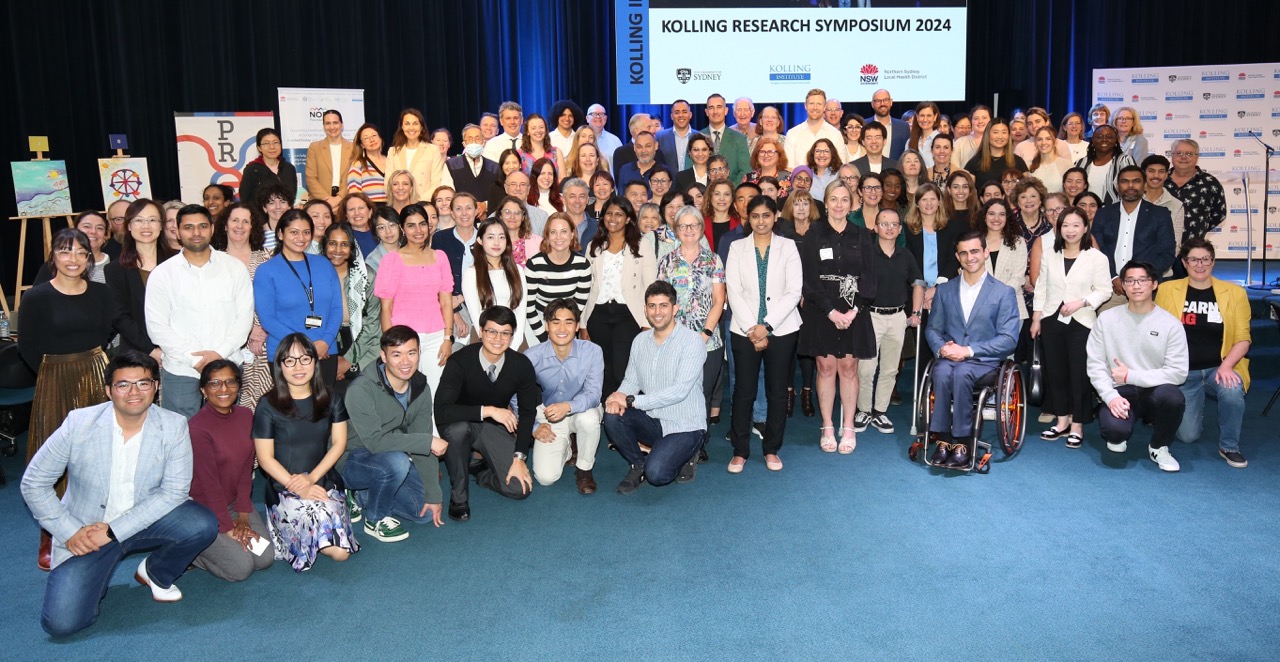
    The inaugural Eva Kolling Research Day was staged within Royal North Shore Hospital, providing the perfect chance to celebrate the vision and generosity of a true pioneer.

    Established in 1920, the Kolling Institute is the oldest medical research institute in New South Wales. It has been at the forefront of cutting-edge research for more than a hundred years, with its founding director Dr W. Wilson Ingram opening the first clinic for diabetes treatment in Australia.

    In 1931, a new two-storey building was officially opened and named the Kolling Institute of Medical Research after businessman Charles Kolling. His widow Eva was a strong supporter of research and made a substantial donation towards the development of the new building.

    The Kolling Institute’s iconic photo features Eva laying a foundation stone. 

    Her vision and the long-standing impact of the Kolling were highlighted at the inaugural research day by Royal North Shore Hospital honorary archivist Catherine Storey OAM, who shared insights into the Kolling’s remarkable journey.

    The institute’s Academic Director Professor James Elliott said the event offered the chance for researchers to engage with visitors, to learn more about the health challenges facing the community, and to share details of their current research.

    “A key part of our research success will depend on the strength of our community ties, including community driven clinical trials and broad community involvement,” he said.

    “I would also like to thank the NORTH Foundation for their unrelenting support, and for raising awareness of the dedicated and skilled clinician researchers within the Kolling Institute.”

    Early-to-mid-career researchers presented a poster display, illustrating their commitment to improving health outcomes, driving new health policy, and realising global reach.

    Two awards were announced on the day, including an Excellence in Clinical Translation Science gong to Temitope Esther Afolabi from the Kolling’s Lab of Ageing and Pharmacology, and an Excellence in Basic Science award to Daisy (Qinrui) Chen from the Renal Research Lab. 

  • Kolling Institute Newsletter May 2025

    Kolling Institute Newsletter May 2025

    Check out our latest newsletter

    • Researchers target sleep for muscle pain relief
    • Landmark clinical trial to improve lung cancer treatment
    • Pioneering Muscle Map project receives funding support
    • Travel awards for emerging research leaders
    • And much more: 

    Click here:

  • Beryl and Jack Jacobs Travel Awards offer crucial international opportunities

    Beryl and Jack Jacobs Travel Awards offer crucial international opportunities

    Five emerging researchers will have the chance to develop their skills and raise the international profile of the Kolling Institute thanks to generous funding from the Skipper Jacobs Charitable Trust.

    Academic Director Professor James Elliott said a total of $40,000 will be shared by the early-to-mid career researchers to increase their research impact and strengthen their collaborations.

    Pablo Cruz-Granados: travelling to Spain

    Pablo, a PhD candidate within the Kolling’s Menière’s Disease Neuroscience Lab, will complete a three-month stay with the Otology and Neurotology group at the University of Granada.

    Pablo said I would like to thank the Skipper Jacobs Charitable Trust for this amazing opportunity.

    “During my time, I will be investigating the clinical phenotypes of Ménière’s Disease to gain a better understanding of its presentation in different populations,” he said.

    “I will be expanding my skill set by learning advanced bioinformatic tools to analyse structural variants in DNA which could identify mechanisms underlying the disease.

    “I’m excited to accept the Beryl and Jack Jacobs Travel Award and truly appreciate the generous support. It will be incredibly valuable for my research and upcoming travel.”

    Dr Kenji Fujita: travelling to Denmark and Japan

    Kenji, a postdoctoral research fellow in the Departments of Clinical Pharmacology and Aged Care has helped develop a real-time calculation system to measure frailty in older hospitalised adults.

    During his trip, he will deliver a keynote address at the International Pharmaceutical Federation conference in Copenhagen on innovative approaches to reduce the inappropriate use of medications in older adults.

    He will also meet with research partners in Japan to advance their collaborative project analysing medication data from millions of older adults across community pharmacies in Japan.

    Kenji said he was truly honoured to receive the award.

    “This international travel will enhance my academic leadership profile, while strengthening cross-institutional partnerships and promoting the Kolling Institute’s innovative translational research globally,” he said.

    Dr Noriko Sato: travelling to Washington, USA and Wakayama, Japan

    Noriko is a research fellow within the Kolling who specialises in frailty research in older patients using data from six hospitals in NSW.

    She will present the frailty study at the International Society for Pharmacoepidemiology conference in Washington and chair an international symposium at the Japanese Society of Social Pharmacy.

    Noriko said I am very pleased to have received this award and excited about the chance to present our study at the largest and most prestigious pharmacoepidemiology conference.

    “This travel grant will broaden my expertise, strengthen international collaborations and extend the impact of our Kolling research using data to improve the use of medications in clinical practice,” she said.

    Kate Bryce: travelling to North Carolina and Florida, USA

    Kate, a PhD student with the Osteoarthritis Clinical Research Group at Kolling, investigates the use of digital technologies to encourage behaviour change in the treatment of osteoarthritis.

    Kate will attend the 2026 Osteoarthritis Research Society International (OARSI) World Congress in the USA, where she will meet with experts in behaviour change and implementation science, including collaborators from Duke University, the University of North Carolina at Chapel Hill and Wake Forest University.

    Kate says their expertise will allow us to enhance the broader rollout of the ATLAS clinician eLearning platform for osteoarthritis and a mobile app for knee osteoarthritis named OA Coach.

    “Visiting their universities and learning from their work will help refine digital interventions to support clinician and patient behaviour change more effectively, and I’m grateful to have received this travel award.”

    Bimbi Gray: travelling to Florida and North Carolina, USA

    Bimbi, a PhD candidate also with the Osteoarthritis Clinical Research Group, will attend the 2026 OARSI World Congress and deliver a presentation on the ATLAS program.

    The trip will strengthen partnerships with leaders at the Thurston Arthritis Research Centre in North Carolina and the Arthritis Foundation’s Osteoarthritis Action Alliance. These collaborations will speed the implementation of ATLAS with insights to refine and scale the program for broader adoption.

    Bimbi said she was thrilled to receive the travel award.

    “As an early-career researcher, this experience will bolster my expertise in knowledge translation, implementation science and international collaboration, while also boosting the reputation of our research at the Kolling Institute,” she said.

    Professor Elliott thanked the Skipper family for their generous backing of the program, and the NORTH Foundation for their ongoing support. 

  • Obesity a leading cause of knee osteoarthritis

    Obesity a leading cause of knee osteoarthritis

    New research from the University of Sydney and the Kolling Institute reveals that obesity, having a knee injury and occupational risks such as shift work and lifting heavy loads are primary causes of knee osteoarthritis.

    Published in Osteoarthritis and Cartilage, the study was led by Dr Vicky Duong and Associate Professor Christina Abdel Shaheed from Sydney Musculoskeletal Health, a joint initiative between the University of Sydney, Northern Sydney Local Health District and Sydney Local Health District.

    Using data from 130 studies involving people from 20 to 80 years old, the researchers examined over 150 risk factors to determine which were associated with an increased risk of developing knee osteoarthritis.

    Knee osteoarthritis is a debilitating condition that affects over 500 million people around the world and is a leading cause of disability.

    The research found that addressing lifestyle factors, such as losing weight or adopting a better diet, could significantly improve people’s health.

    The study found that following a mediterranean diet, drinking green tea and eating dark bread could reduce the risk of developing knee osteoarthritis.

    Co-author and Kolling Institute researcher Professor David Hunter said the research identified some key trends.

    “Women were twice as likely to develop the condition than men, and older age was only mildly associated with increased risk,” he said.

    Reducing the risk of knee osteoarthritis

    Dr Duong, lead author and post-doctoral researcher at the Kolling Institute, said eliminating obesity and knee injuries could potentially reduce the risk of developing knee osteoarthritis by 14 percent across the population.

    “We urge governments and the healthcare sector to implement policy reforms that address occupational risks, subsidise knee injury prevention programs, and promote healthy eating and physical activity to reduce obesity,” she said. 

  • Pioneering study to improve sleep and reduce musculoskeletal pain

    Pioneering study to improve sleep and reduce musculoskeletal pain

    An innovative study, led by a team of researchers from the Kolling Institute, has the potential to change the way osteoarthritis and low back pain are managed.

    More than $4.7 million has been awarded to the project through the Medical Research Future Fund’s program for early to mid-career researchers.

    Study lead Associate Professor Michelle Hall said we know that chronic muscle pain and poor sleep often go hand-in-hand, yet sleep is rarely addressed in standard musculoskeletal care.

    “Our program however, will target insomnia as a first line treatment for a range of musculoskeletal pain conditions, including hip and knee osteoarthritis, and low back pain,” said the University of Sydney researcher.

    “These conditions are the leading cause of disability worldwide and co-exist with poor sleep. We know that insomnia affects up to 80 per cent of people with chronic musculoskeletal pain, and poor sleep actually worsens chronic pain.

    “Our ground-breaking program will measure the impact of adding cognitive behavioral therapy to physiotherapy care for people with muscle pain and insomnia.

    “This type of therapy is a proven treatment for both sleep and chronic pain, yet it is not routinely offered due to limited psychologist availability and funding.

    “Physiotherapists are well-positioned to address this care gap, given they typically manage people with chronic musculoskeletal conditions and are more widely available than clinical psychologists.

    “Our approach could also represent a significant financial saving.

    “Earlier trials have demonstrated a reduction in medication use and costs, and given the $7 billion cost of medications for osteoarthritis and low back pain each year, the projected savings could exceed $60 million a year.”

    The program will be adopted across nine public hospitals in NSW, Queensland and Western Australia, and will involve seven Australian universities and a UK institution.

    “We would like to thank the many consumers and partners who have helped us develop this project. It has the potential to be upscaled and could improve models of care and patient outcomes for a large number of people across Australia and internationally.

    “We are looking forward to progressing this important research and reducing the severity of pain experienced by the community.” 

  • Long term support to avoid knee osteoarthritis

    Long term support to avoid knee osteoarthritis

    Thank you to Northside Living News for profiling an exciting clinical trial to prevent knee osteoarthritis.

    Our researchers at the Kolling Institute are now recruiting to the large-scale trial which will offer long-term support to lose weight and avoid knee osteoarthritis all together.

    If you would like to know more about the trial and to sign up, click here:

    To read about the details in Northside Living News:

  • New digital health program to reduce muscle, joint and bone pain across culturally diverse communities

    New digital health program to reduce muscle, joint and bone pain across culturally diverse communities

    A federal government funding boost will pave the way for a much-needed, tailored program for culturally diverse communities experiencing musculoskeletal pain.

    Dr Saurab Sharma, the Chief Clinical Scientist from the Pain Management and Research Centre at Royal North Shore Hospital, has received a National Health and Medical Research Council investigator grant to progress his research and develop an innovative treatment plan.

    Investigator grants are awarded to only a small number of leading scientists in Australia each year to advance health research.

    As a researcher within the Kolling Institute, Dr Sharma said a specific, co-designed program is needed as culturally and linguistically diverse Australians often miss out on high quality care due to cultural, language, and health literacy barriers.

    “These communities are often excluded from research including clinical trials, which means evidence-based treatments are designed without their input or experiences,” he said.

    “Ultimately, this means Australians from diverse backgrounds receive poor care and experience poorer outcomes compared to other Australians.”

    The $700,000 grant will support the development of a digital, pain-management treatment program for communities from Arabic, Chinese, Indian, Nepali, and Vietnamese backgrounds with musculoskeletal pain.

    “Importantly, the program will be co-designed with individuals with lived experiences of musculoskeletal pain, healthcare professionals from respective cultural backgrounds, and world-leading musculoskeletal pain experts,” he said.

    “Our initiative aims to empower marginalised and disadvantaged communities, build research capacity within these communities, and foster a greater understanding of pain among community members and healthcare professionals to transform pain management for these vulnerable communities.

    “Encouragingly, our program could be adopted on a global scale as it will be tailored for Arabic, Cantonese, Hindi, Mandarin, Nepali, and Vietnamese languages, which are spoken by over 2.2 billion people globally.

    “A cultural and linguistic adaptation of the educational resources could benefit approximately a quarter of the world’s population.

    “We hope the pain management program will enhance health equity, reduce costs and inform national and international guidelines on musculoskeletal pain.”  

  • Pioneering MuscleMap project secures strong philanthropic support

    Pioneering MuscleMap project secures strong philanthropic support

    An innovative tool which could revolutionise the detection and treatment of musculoskeletal and neurological conditions will be further developed following a $230,000 gift.

    The donation was made following a campaign by the University of Sydney’s Advancement team and the NORTH Foundation to support the world’s first open-source dataset of whole-body muscle composition.

    The Kolling Institute’s Academic Director Professor James Elliott said there is a critical need for the diagnostic tool with musculoskeletal and neurological conditions among the leading causes of illness and disability worldwide.

    “With these conditions affecting more than four billion people, they are expected to cost around $21 billion in healthcare expenditure by 2033 in Australia alone,” he said.

    “Early identification and intervention are crucial if we are to offer long-term health benefits and minimise the disease burden.

    “We know that these conditions often lead to a steady decline in muscle health, and this decline is evident by an increase in fat deposits in the muscles and the loss of muscle fibres.

    “CT and MRI scans can be used to identify these changes, but the time it currently takes is prohibitive.

    The MuscleMap tool however, will automatically identify any changes, potentially revolutionising the detection of muscle health in any part of the body. It could inform treatment for everyone from elite athletes to astronauts and older people with complex conditions.

    Astronauts for instance, experience significant muscle loss due to the effects of prolonged exposure to zero gravity.

    Using existing MRI and CT scans, the landmark global study has applied an artificial intelligence model to produce a dataset of muscle health of any part of the body. This will enable a patient’s muscle deterioration to be compared with a healthy person’s.

    Professor Elliott said this will mean a clinician will be able to upload a scan into the MuscleMap program, and within minutes, will have access to detailed information measuring muscle composition compared to a reference dataset.

    “For athletes and the general population, the tool will accurately inform the journey from injury to repair, recovery and return to physical activity.

    “For patients with osteoporosis, the program will provide a detailed analysis of overall health and muscle deterioration, which will then inform personalised strategies to develop healthier muscle mass and improve general health and wellbeing.

    “We are very appreciative of this generous donation to the MuscleMap project. It will enable the broader team to continue developing the digital infrastructure needed to launch the open-source portal.

    “It will be a pioneering resource, accessible to clinicians and researchers globally, and supporting the long-term health of communities.” 

    To donate to the innovative MuscleMap project visit the NORTH Foundation.

  • Latest findings on managing osteoarthritis

    Latest findings on managing osteoarthritis

    If you’re looking for the best advice for osteoarthritis care, have a listen to one of our leading clinicians and Kolling Institute researchers Professor David Hunter as he highlights the most effective treatment approaches and the low-value ones to avoid.

    Thank you to Dr Norman Swan and the team at the ABC’s Health Report for the chance to discuss the condition and an exciting clinical trial we are currently recruiting to.

  • Epic journey to support vital rheumatoid arthritis research

    Epic journey to support vital rheumatoid arthritis research

    The burble of high-powered motorcycles was heard across the Kolling Institute forecourt as part of a 2000 kilometre ride from Melbourne to Armidale to raise awareness and funds for life-changing research.

    The ride is an initiative of Robert Hunt from the Ulysses Club which has been supporting rheumatoid arthritis research for nearly three decades.

    The late Stephen Dearnley established the club in 1983. His wife Jo had lived with the debilitating disease for more than 20 years. Today, the club has more than 120 branches.

    The Ulysses Club has donated funds to the Kolling Institute for over 15 years, consistently investing in our discovery and translational research into rheumatoid arthritis.

    Leading rheumatologist Professor Lyn March said the club has been a long-time supporter of the Sutton Arthritis Lab and we’re tremendously grateful that this ride is drawing attention to the condition and raising funds.

    “Rheumatoid arthritis is a chronic condition that affects over 500,000 Australians,” she said.

    “It causes pain, swelling, and inflammation in the joints as the immune system mistakenly attacks the tissues lining the joints.

    “It can be a life limiting illness, causing pain, reducing function and mobility.”

    As a leading clinician and internationally respected researcher, Professor March said while many people manage well on current medications, improved options are needed.

    “Game changing steps take significant investment and expertise, and we’re indebted to the Ulysses Club members for embarking on this ride and fostering large-scale community support.”

    The Ride for Rheumatoid journey will wrap up in Armidale, where a national rally will be held.

    All funds from the ride will go directly towards rheumatoid arthritis research, including a PhD scholarship at the Kolling Institute.

    Professor March encouraged the community to get behind the club.

    Head of the Sutton Arthritis Research Lab in the Kolling Associate Professor Meilang Xue expressed her gratitude to the club members.

    Donations can be made through: Ride for Rheumatoid to Armidale

NSWGOV logo