
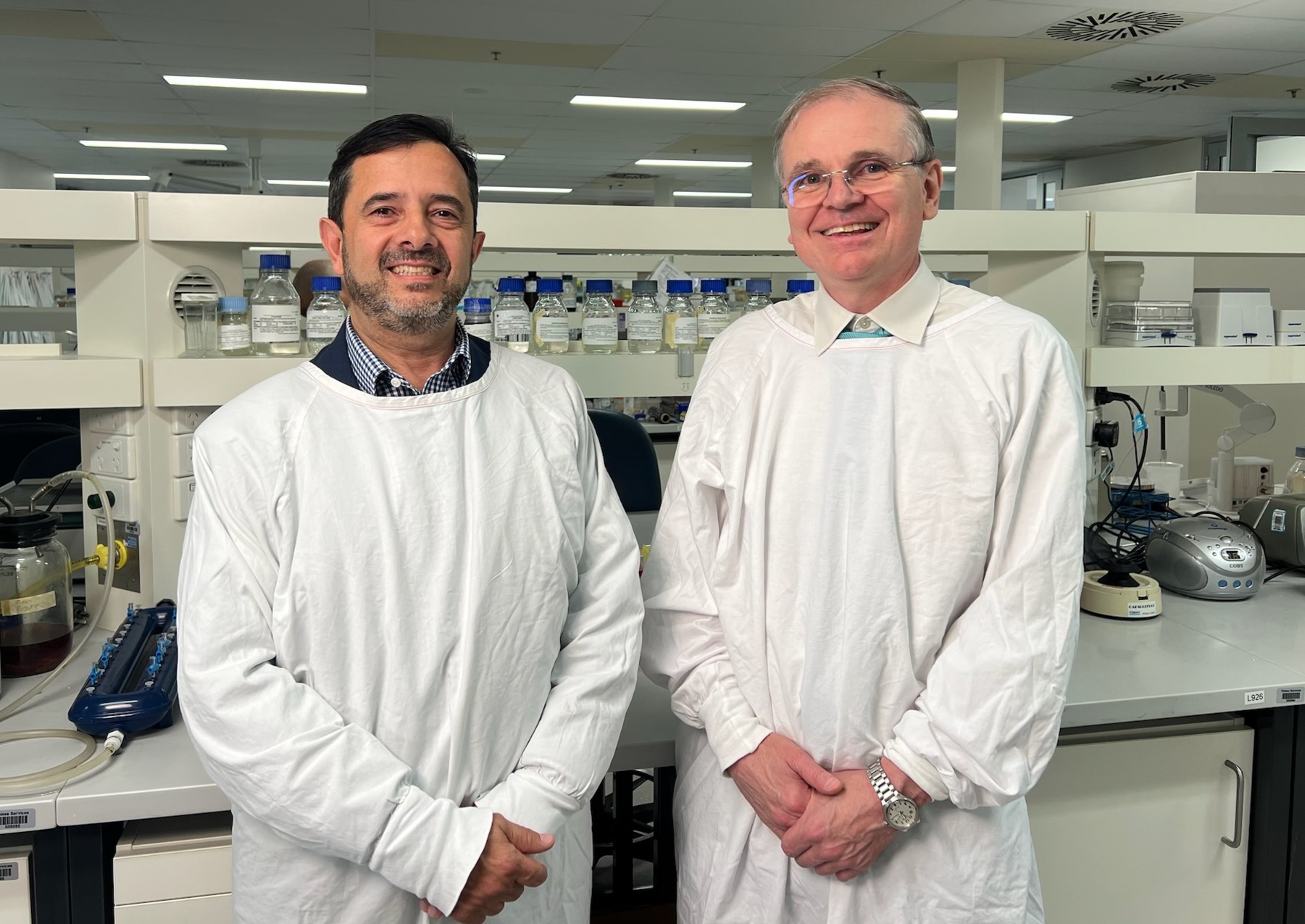
Researchers at the Kolling Institute have been awarded significant funding to embed an innovative technique for cancer diagnosis and treatment into healthcare across New South Wales.
Delivered by the Cancer Institute NSW, the $3.75 million Translational Program Grant has been awarded to leading clinician and University of Sydney researcher Professor Anthony Gill to test and implement liquid biopsies into routine cancer care.
Liquid biopsies involve a simple blood test to identify and monitor cancers, and are expected to revolutionise treatment approaches and outcomes for all cancers.
Based at Royal North Shore Hospital and the Kolling Institute, Professor Gill said liquid biopsies are a very new and exciting technique which will replace invasive surgeries and tissue biopsies for some patients.
“The great majority of trials of new cancer treatments around the world now include a liquid biopsy component to track the response of the tumours. It is now important to bring capability for this new testing to NSW,” he said.
“This technology can pick up small amounts of DNA shed by cancer in the blood, providing a valuable screening tool and crucial information to guide treatment.
“Liquid biopsies are not only used in the diagnosis of cancer, but to assess whether any cancer has been left behind following surgery, if a cancer has returned and if a tumour is not responding to chemotherapy.
“They will inform treatment approaches after surgery to determine if radiotherapy or chemotherapy are also needed to prevent a cancer returning. We know that if tiny fragments of DNA from the cancer are still in the blood after surgery, then more treatment is needed.
“Liquid biopsies will support personalised care, enabling clinicians to accurately track the effectiveness of targeted treatments, and adjust therapies to meet individual needs.”
Importantly, the innovative technique will deliver broad support for remote and disadvantaged communities.
“Patients from rural and isolated communities often travel hundreds of kilometres for biopsies to diagnose their cancer, or to track their progress. With this technique, a simple blood test can be taken close to home and sent to our unit for testing,” he said.
This program will help progress our understanding of specific cancers and the most effective treatments.
Royal North Shore Hospital oncologist and leading University of Sydney researcher Professor Nick Pavlakis has welcomed the multi-million dollar funding boost, saying liquid biopsies will deliver wide-ranging benefits.
“Liquid biopsies for cancer are not just one test. It is a combination of different tests,” he said.
“Some are designed as screening tests, some are designed to predict response to treatment, some are designed to monitor for recurrence. Each different type of test has a different role at different stages of diagnosis and treatment.”
A liquid biopsy tumour bank is being developed so that when patients with cancer have a blood test, they will be given the opportunity to donate a small sample of blood. This will help refine our testing, and progress crucial therapies for a broad range of cancers.

