Blog

  • Epic journey to support vital rheumatoid arthritis research

    Epic journey to support vital rheumatoid arthritis research

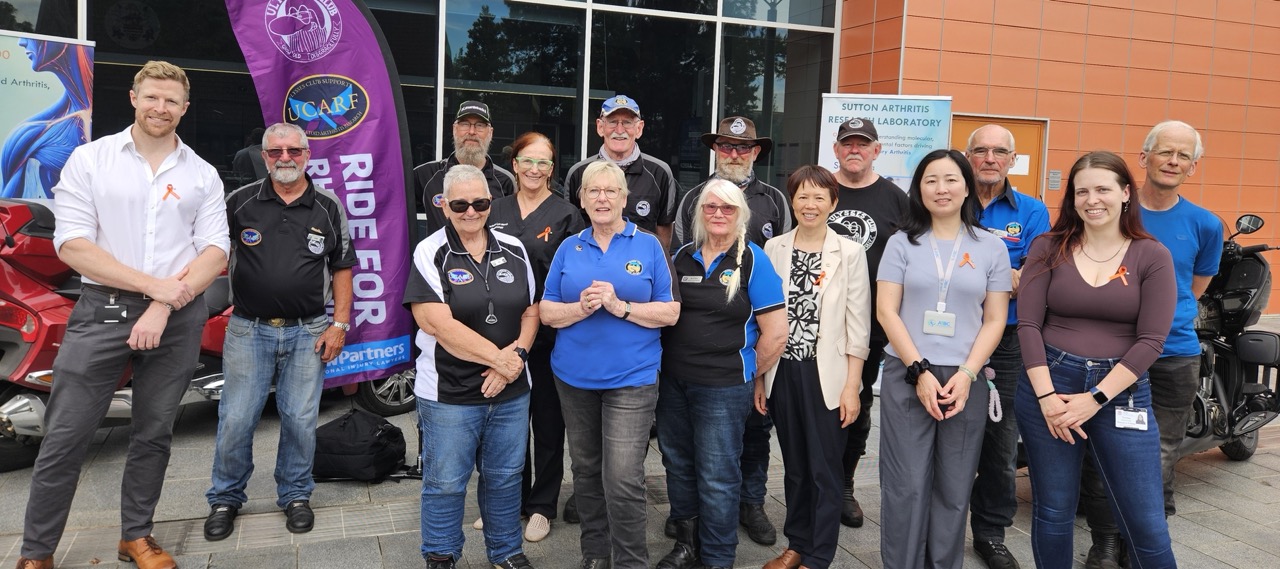
    The burble of high-powered motorcycles was heard across the Kolling Institute forecourt as part of a 2000 kilometre ride from Melbourne to Armidale to raise awareness and funds for life-changing research.

    The ride is an initiative of Robert Hunt from the Ulysses Club which has been supporting rheumatoid arthritis research for nearly three decades.

    The late Stephen Dearnley established the club in 1983. His wife Jo had lived with the debilitating disease for more than 20 years. Today, the club has more than 120 branches.

    The Ulysses Club has donated funds to the Kolling Institute for over 15 years, consistently investing in our discovery and translational research into rheumatoid arthritis.

    Leading rheumatologist Professor Lyn March said the club has been a long-time supporter of the Sutton Arthritis Lab and we’re tremendously grateful that this ride is drawing attention to the condition and raising funds.

    “Rheumatoid arthritis is a chronic condition that affects over 500,000 Australians,” she said.

    “It causes pain, swelling, and inflammation in the joints as the immune system mistakenly attacks the tissues lining the joints.

    “It can be a life limiting illness, causing pain, reducing function and mobility.”

    As a leading clinician and internationally respected researcher, Professor March said while many people manage well on current medications, improved options are needed.

    “Game changing steps take significant investment and expertise, and we’re indebted to the Ulysses Club members for embarking on this ride and fostering large-scale community support.”

    The Ride for Rheumatoid journey will wrap up in Armidale, where a national rally will be held.

    All funds from the ride will go directly towards rheumatoid arthritis research, including a PhD scholarship at the Kolling Institute.

    Professor March encouraged the community to get behind the club.

    Head of the Sutton Arthritis Research Lab in the Kolling Associate Professor Meilang Xue expressed her gratitude to the club members.

    Donations can be made through: Ride for Rheumatoid to Armidale

  • Prestigious grant for groundbreaking blood cancer research at the Kolling

    Prestigious grant for groundbreaking blood cancer research at the Kolling

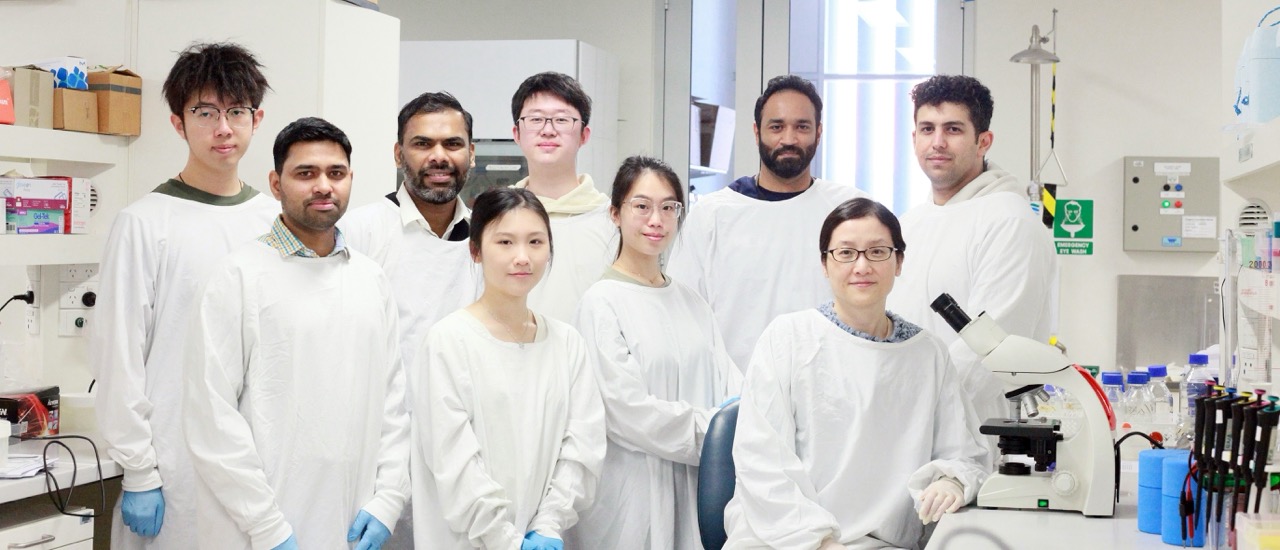
    A two-decade long commitment to reducing blood cancers has delivered coveted national funding to Associate Professor Jenny Wang to progress her vital cancer research.

    As the head of the Kolling Institute’s Cancer and Stem Cell Laboratory, Associate Professor Wang has secured a $2.95 million investigator grant from the National Health and Medical Research Council to advance her pioneering research into acute myeloid leukaemia.

    Jenny said she was overwhelmed by the grant success.

    “It was thrilled to hear the news,” she said.

    “To secure a large National Health and Medical Research Council grant is challenging, so I’m really pleased to be able to accelerate our research with this significant funding boost.”

    Acute myeloid leukaemia is the deadliest form of blood cancer, with only 27 per cent of patients surviving more than five years after treatment.

    “Our research aims to revolutionize treatment by targeting leukaemia stem cells,” she said.

    “These cells are resistant to conventional chemotherapy, and are believed to be the primary cause of treatment failure and relapse.

    “Currently, more than 80 per cent of people with this type of blood cancer will experience a relapse, and the majority will have a poor outcome.

    “Our research is working to develop stem cell-targeted therapies where we eliminate the leukaemia stem cells altogether.

    “Encouragingly, this would potentially replace intensive chemotherapy with more targeted treatments.

    “This wonderful funding boost will enable my team and I to progress these promising new therapies and offer hope to people with this aggressive cancer.

    “We expect this funding will lead to renewed optimism for improved outcomes in the fight against acute myeloid leukaemia and other deadly blood cancers.”

  • New trial to determine if diet and exercise alone can prevent knee osteoarthritis

    New trial to determine if diet and exercise alone can prevent knee osteoarthritis

    In one of the first global clinical trials of its kind, researchers have launched a study to investigate if a diet and exercise program aimed at weight loss can prevent the development of crippling knee osteoarthritis.

    The trial will be led by researchers from the University of Sydney and the Kolling Institute in collaboration with an international team from Wake Forest University in North Carolina, Brigham and Women’s Hospital in Boston and the University of North Carolina at Chapel Hill.

    The Osteoarthritis Prevention Study or TOPS will compare the impact of a dietary weight-loss, exercise and weight-loss maintenance program with health education in preventing the development of knee osteoarthritis.

    The condition is the leading cause of disability among adults, particularly impacting women over 50 who are overweight or obese.

    The large-scale clinical trial will be conducted over four years, with participants receiving either a program of regular diet and exercise sessions or a healthy lifestyle program with information sessions, newsletters and text messages.

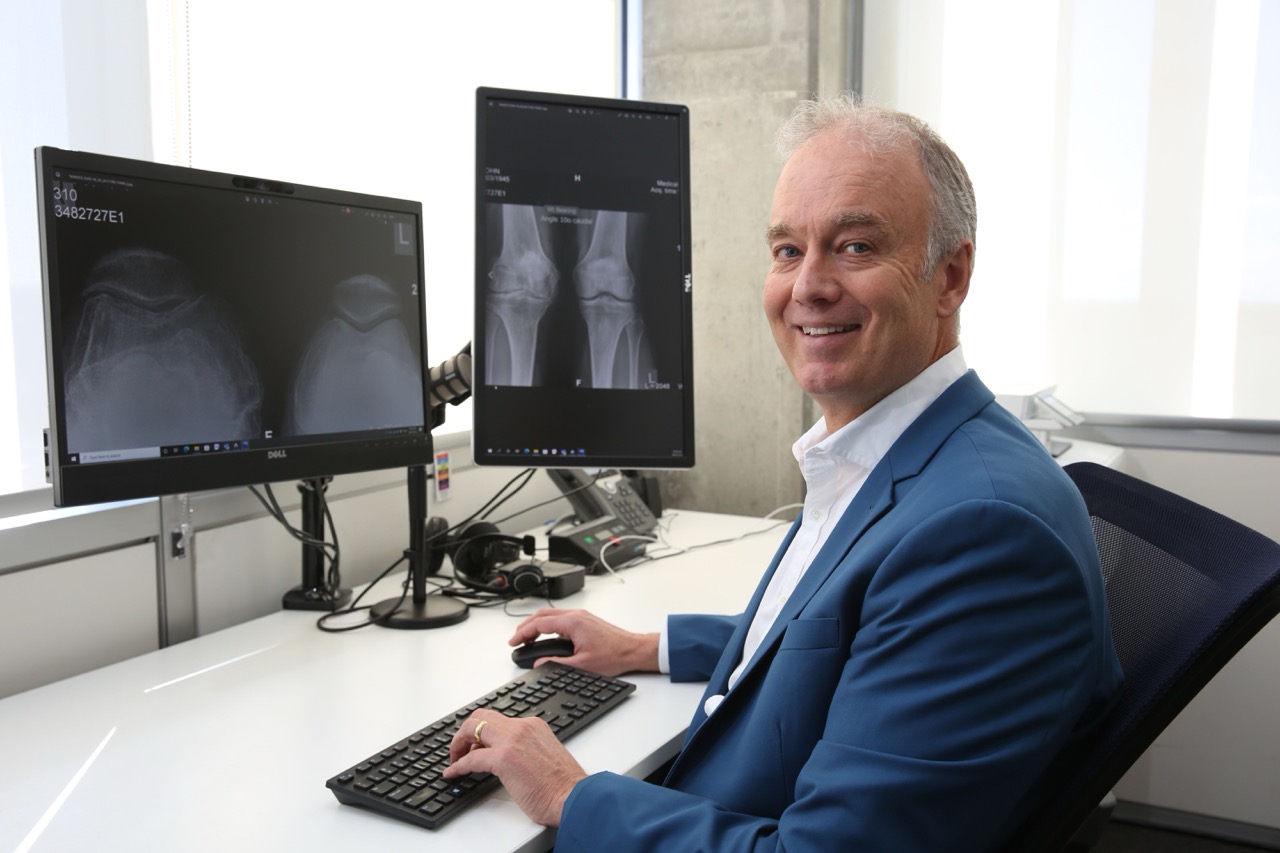
    Internationally recognised rheumatologist, leading University of Sydney researcher and Royal North Shore Hospital clinician Professor David Hunter said the study is one of the first prevention clinical trials which could help people with occasional knee pain reduce their risk of knee osteoarthritis.

    “Our trial has come at a time when an increasing number of people are turning to medications like Ozempic or GLP-1 agonists to assist with weight loss and the management of knee osteoarthritis,” he said

    “These weight-management medications are a feasible option for managing the condition, but questions remain around safety, cost-effectiveness and the likelihood of weight rebounding.

    “Recent investigations by our team indicate that despite the promising results from trials of GLP-1 agonists, lifestyle interventions remain the first-line, safest and most cost-effective approach for people who are overweight, obese or living with knee osteoarthritis.

    “Building on that research, our clinical trial will aim to confirm the most effective lifestyle strategies to actually prevent knee osteoarthritis before the condition develops.

    “We are looking forward to progressing this valuable area of research and establishing evidenced-based models of care to avoid this increasingly common, disabling condition.”

    The research team is now recruiting 320 women who are 50 years or over, who experience little to no knee pain, and who have a Body Mass Index of 30 or more.

    The study will involve screening visits over 2–4 weeks and yearly assessment visits over four years, as well as regular diet and exercise or healthy lifestyle classes. Participants will receive long-term support towards achieving a healthy lifestyle.

    “Classes are currently available on the Lower North Shore of Sydney and we encourage women who live or work in the area to apply to the program,” said Professor Hunter.

    “Depending on the interest, we could look to start classes in other areas of metropolitan Sydney as well,” he said.

    Funding has been provided by the National Institutes of Health, the Arthritis Foundation, the University of Missouri, Wake Forest University, and Rapid Nutrition PLC.

    This study has been approved by the Northern Sydney Local Health District Human Research Ethics Committee (Ref: 2023/ETH00669).

    You can contact the study team directly with any questions at tops.study@sydney.edu.au 

  • The Kolling hosts the brightest minds in optogenetics

    The Kolling hosts the brightest minds in optogenetics

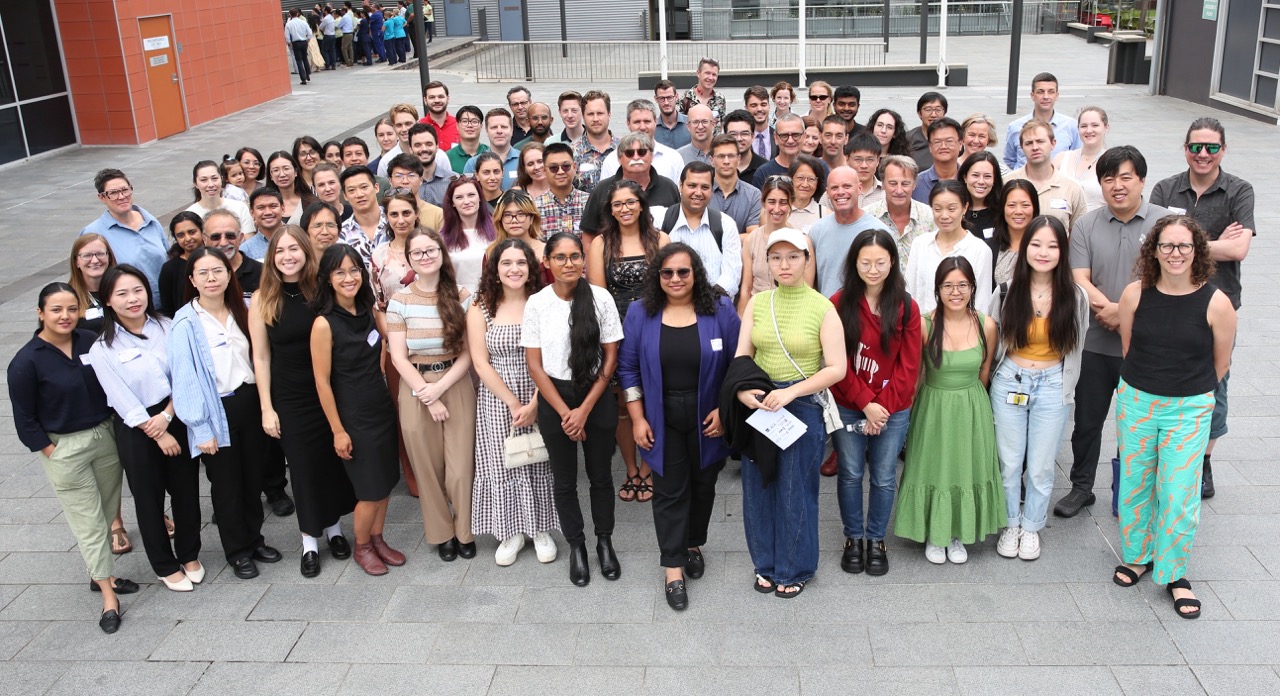
    More than 80 top national and international scientists converged on the Kolling Institute for the 4th Optogenetics Australia meeting, featuring the very latest light technologies driving research.

    The event attracted dynamic keynote speakers from the USA, Europe and China, and leading research institutions across Australia.

    Chair of Optogenetics Australia and senior Kolling Institute pain medicine researcher, Associate Professor Karin Aubrey said optogenetics is a range of technologies that allow researchers to use light to control biological processors.

    “New technologies often determine what is possible at the cutting edge of science, accelerating our understanding of what causes disease and how we diagnose, prevent and treat it,” she said.

    “The first human application of optogenetics, published in 2021, partially restored vision in a blind patient.

    “The technology is also being used to develop less invasive methods for sleep apnoea treatment, to reduce stroke effects and even to modify plants so that they can thrive in space.”

    Associate Professor Aubrey said optogenetics is a powerful tool in neuroscience, as it allows researchers to study individual components of brain circuits that cause neurological disease.

    “Australian researchers are using light-sensitive tools and other innovative techniques to study the brain’s stress, addiction, pain, memory and depression circuits.

    “Encouragingly, we have a depth of experience in optogenetics at the Kolling within the Pain Management Research Labs, and the event provided a great opportunity for collaboration and networking.

    “I would like to thank everyone involved in making the event a success, including leading international developers Professor Michael Bruchas from University of Washington, Professor Yulong Li from Beijing University, Deniz Dalkara from the Institute de la Vision in France and Assistant Professor Guosong Hong from Stanford University.

    “These researchers are producing some of the best new tools in the field and it was valuable to hear the latest progress.”

    The next Optogenetics Australia meeting will be staged in 2027. 

  • Researchers identify new gene linked to Meniere’s disease

    Researchers identify new gene linked to Meniere’s disease

    In a crucial step towards a better understanding of Meniere’s disease, researchers at the Kolling Institute and the University of Sydney have discovered a gene mutation which could greatly inform future treatment of the disease.

    Meniere’s is a rare inner ear disease associated with sensorineural hearing loss, vertigo and debilitating tinnitus. There is currently no cure with treatment largely aimed at managing symptoms.

    Meniere’s can be an inherited condition with approximately 10 per cent of patients having one or more relatives affected by it, but the latest research, led by world leading investigator Professor Jose Antonio Lopez-Escamez, indicates the inherited or genetic form of the disease may be more common than first realised.

    His team has discovered a rare mutation of the GJD3 gene in both patients with and without a genetic history of the disease.

    It is the first time this gene has been linked to any disease.

    More than 400 people with Meniere’s disease were involved in the study, with 18 people or 4.4 per cent of the group found to have the genetic mutation, a statistically significant percentage.

    Professor Lopez-Escamez said this new understanding could lead to a greater number of patients undergoing genetic testing.

    “Many people will say that they don’t have the genetic form of the disease, but this research indicates there are many more people whose disease is directly linked to their genetic make-up,” he said.

    “This is important as it will inform how we treat the disease going forward, particularly given the different forms of the disease and the exciting advances with gene therapy.

    “Groundbreaking gene therapy is already being adopted internationally to treat hearing loss, and we anticipate this approach will be developed further to treat Meniere’s disease in the years to come.”

    The latest research by Professor Lopez-Escamez and his team also identified a connexin (or connecting protein) linked to the GJD3 gene in the tectorial membrane of the organ of Corti – or the hearing organ.

    “This is the first time that a connexin has been found in this part of the ear, and it may support the view that connexins regulate the microenvironment in the ear and influence hearing,” he said.

    “We believe the mutated gene is impairing the function of the connexins within the ear and impacting hearing ability.

    “We are pleased to have made this exciting progress and we look forward to further investigating the role of this gene mutation in hearing function and Meniere’s disease.”

    The research has been published in the prestigious Genome Medicine journal.  

    For more details and to donate to the ground-breaking Meniere’s disease research, visit the NORTH Foundation.

  • Groundbreaking work in geriatric pharmacology

    Groundbreaking work in geriatric pharmacology

    For the past 20 years, Professor Sarah Hilmer has dedicated her career to optimising medicine use for older people and has achieved recognition as a national and world leader in geriatric pharmacology.

    Not only has the Royal North Shore Hospital clinical pharmacologist and geriatrician set about improving medication practices for older people, but she has long advocated for ‘age-friendly’ clinical trials.

    One of Sarah’s notable contributions has been the development of the Drug Burden Index (DBI), a risk assessment tool that measures an older person’s exposure to medications that slow them down physically and mentally.

    “Over the past 20 years or so, we have been validating the tool in populations around the world to show that the higher your Drug Burden Index, the worse your physical function and your cognition is, and the more likely you are to fall or wind up in a nursing home,” she says.

    Eager to put the initiative into clinical practice, Sarah and her colleagues developed a calculator that could measure a patient’s drug burden. They produced a way to integrate it into a hospital’s electronic medical record so that staff could use it when treating frail, elderly patients.

    In 2021 — at the height of the pandemic — Sarah ran a successful pilot study implementing the calculator at Royal North Shore. “We managed to show that we could really improve prescribing,” she says.

    For the past 18 months, she and her team have run a clinical trial in three hospitals in Northern Sydney and three on the Central Coast to see if this package of tools can help clinicians to identify patients who are not functioning optimally because of the medication they have been taking and to minimise medication related harm.

    The tools are now available for clinical care across the Northern Sydney and Central Coast health districts and are being implemented at other NSW health districts.

    Sarah is eager to see the tool as part of routine hospital care.

    Nurses regularly have a “huddle” to discuss patient issues, which can include falls or delirium. Her team has been encouraging nurses to look at the Drug Burden Index during a huddle, and if it is high, arrange for a medication review.

    “It might be that the medication is causing the falls or confusion,” she says.

    Sarah has long advocated for ‘age-friendly’ clinical trials that make it easier for frail, older people to be included.

    While the average older person takes up to eight prescription medications, globally, they are often underrepresented in clinical trials.

    “We have a situation where we test drugs in healthy, older people or in middle aged people, and then use them in frail, older people with a lot of different complex problems. We wind up with all sorts of interactions and unexpected effects.”

    “I think it’s really important that if we’re going to do clinical trials, we need to make sure that they’re inclusive of the people who are going to actually wind up using the drugs in clinical practice,” she says.

    Her advocacy in this space extends beyond Australia. The U.S. Food and Drug Administration recently designed a roadmap for drug evaluation for older adults, and Sarah was the only Australian on the project, representing the Geriatric Committee of International Union of Basic and Clinical Pharmacologists, which she chairs.

    Sarah’s work through development and implementation of the Drug Burden Index and her advocacy for age-friendly trials has significantly improved the quality of life for older adults. “We need to ensure our ageing population receives the best possible evidence-based care,” she says.  

  • Top pain specialist and researcher receives Australia Day gong

    Top pain specialist and researcher receives Australia Day gong

    Internationally respected clinical academic Professor Paul Glare has been named a Member of the Order of Australia for his significant service to medicine in the fields of pain management and palliative care.

    Professor Glare is a specialist physician in pain medicine and senior researcher with the Kolling Institute.

    He is the Director of the Michael J Cousins Pain Management Research Centre at Royal North Shore Hospital, the Chair of Pain Medicine with the Northern Clinical School and Head of Pain Medicine with the Sydney Medical School.

    Professor Glare has welcomed the accolade.

    “I am very honoured to receive this award, but more importantly, it recognises the importance of advancing the specialities of pain medicine and palliative care,” he said.

    “While precision medicine and technological advances are very important for saving lives, the relief of suffering should always be the objective of medicine and healthcare generally.

    “It has been rewarding to be part of the Northern Clinical School and the Northern Sydney Local Health District to be able to promote pain and palliative care through the pain management centre at Royal North Shore Hospital and to be able to teach the students from Northern.

    “The neuroscience and pain priority research group within the Kolling Institute has also given me great opportunities to continue my research on pain in cancer survivors and the use of mobile health in supporting pain management.”

  • Clinical Trials Champion

    Clinical Trials Champion

    As a clinical trials program lead at the Kolling Institute, Dr Karen Bracken has long been driven to help researchers conduct trials in the best way possible.

    “Researchers are passionate about their disease area and their patients, and they have so many unanswered questions,” she says.

    Karen comes from a family of clinicians, and while she didn’t want to practise medicine, she was still drawn to working in the health space. She has spent most of her career working on clinical trials.

    She says trials are a multidisciplinary activity that require collaboration between clinicians, statisticians, patients and the trial operations team. She sees her role in operations as the engine that makes the trial run.

    Recruiting patients for trials is a complex area, and Karen completed a PhD on the topic after struggling to recruit men for a diabetes study she was working on.

    “I really wanted to make that trial a success and I was casting around for ideas on how I could recruit,” she says.

    “I realised that everyone was running their recruitment in an evidence-free zone. We often use the kitchen sink method where we brainstorm every single possible thing we can do to recruit participants to our trials and, in the process, waste a lot of time and money.”

    Karen says she worked in a more intentional way, testing different strategies to understand why they did or did not work. They were eventually able to fully recruit for the trial.

    Karen advises colleagues to properly plan their recruitment.

    “Be realistic with yourself about how long it’s going to take and how much money it’s going to cost.”

    She also says it’s important to look at similar trials and speak to those who ran them.

    “There’s a whole world of people conducting trials, and there’s a lot of evidence out there. People just aren’t in the habit of looking for papers written about how to recruit participants.”

    Karen is eager to see greater diversity in trials, which includes recruiting more people who do not have English as their first language, as well as members of the LGBTQIA+ community.

    She says she wants everyone to be able to easily join a trial.

    “It’s important that we lead change in terms of inclusive health care.” 

  • Next generation of researchers streamlining complex medication choices

    Next generation of researchers streamlining complex medication choices

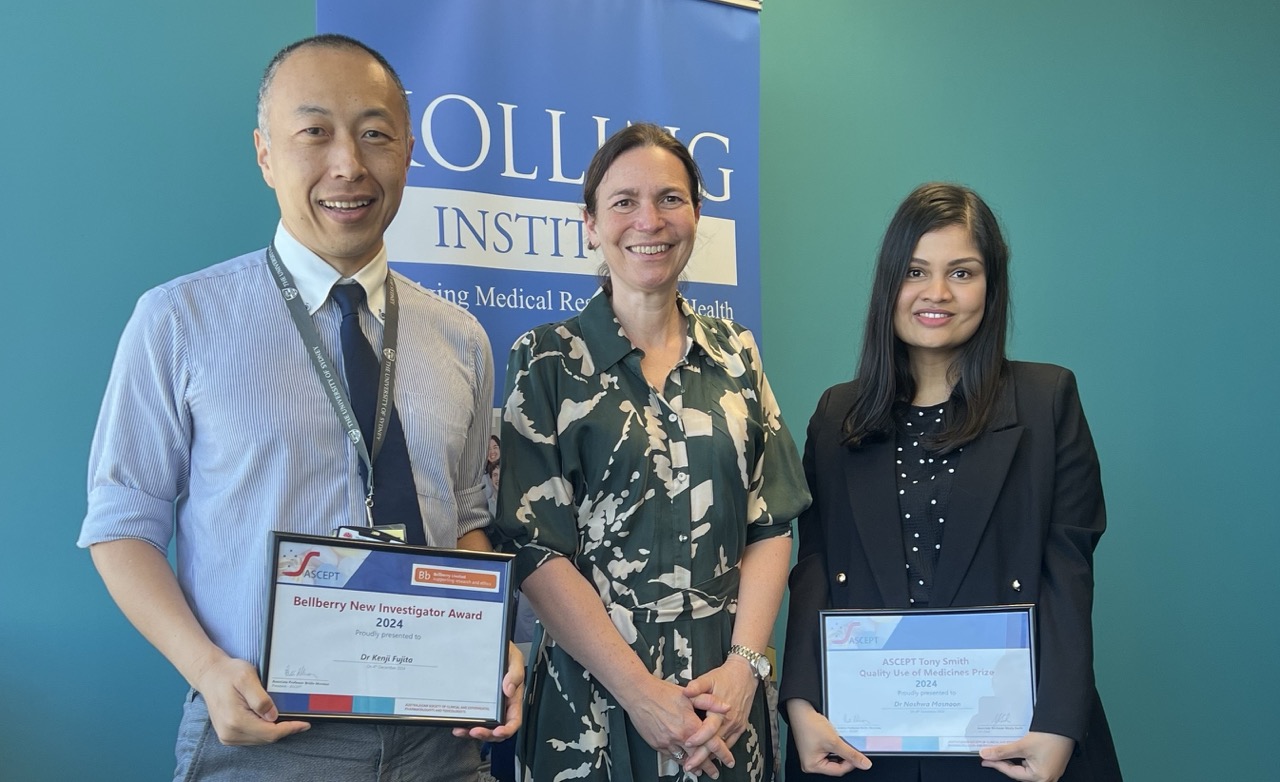
    Two emerging leaders within the Kolling Institute’s Ageing and Pharmacology Lab are gaining attention for their impressive work to improve the quality use of medications.

    Dr Nashwa Masnoon and Dr Kenji Fujita have received prestigious awards at the annual meeting of the Australasian Society of Clinical and Experimental Pharmacologists and Toxicologists (ASCEPT).

    Nashwa, who is also a pharmacist at Royal North Shore Hospital (RNSH), has been awarded the inaugural ASCEPT Tony Smith Quality Use of Medicines Prize.

    Head of the Ageing and Pharmacology Lab Professor Sarah Hilmer said this new prize is aimed at recognising influential researchers promoting the quality use of medicines.

    “Nashwa is well known to many across the Northern Sydney Local Health District as a previous Medication Safety Pharmacist and as the Drug Burden Index Stewardship Pharmacist at RNSH, Ryde and Hornsby hospitals during a recent clinical trial,” she said.

    “We are thrilled that she has been recognised for her work, which analysed data from hospital medication reviews of older patients in six hospitals across Sydney.

    “The award will give Nashwa an opportunity to participate in a Science Meets Parliament event next year where she will be able to discuss crucial research and healthcare issues with federal political leaders.”

    In another sign of the strength of the Ageing and Pharmacology research group, Dr Fujita was awarded the Belberry New Investigator Award, recognising him as an emerging leader in pharmacology.

    “This award was based on Kenji’s large body of research using big data analysis to understand geriatric pharmacology and improve the quality use of medicines in older adults,” said Professor Hilmer.

    “Kenji has applied his deep knowledge of pharmacy, pharmacology and data analysis to collaborative research spanning bench to bedside. His research findings will improve the use of medicines to enable healthy ageing.”

    Professor Hilmer said it was encouraging to see two members of her team honoured for their substantial research progress.

    The awards were presented at the annual scientific meeting of ASCEPT in Melbourne.  

  • Cancer experts going from strength to strength

    Cancer experts going from strength to strength

    A special visit by two international cancer specialists could mark the start of a valuable collaborative partnership.

    Professor Matthew Katz from the MD Anderson Cancer Centre in Houston Texas is recognised as a pioneer in the treatment of pancreatic cancer, while Professor Cynthia Sears from the Johns Hopkins University School of Medicine in Baltimore is a global leader in colorectal cancer research.

    The pair discussed the role of microbiome in colorectal cancer progression, and peri-operative treatment options for pancreatic cancer patients.

    Senior Kolling Institute cancer researcher Dr Sumit Sahni said the event focused on the clinical management of colorectal and pancreatic cancers, and recent advances in the development of organoid models for cancer.

    Dr Sumit said we also had the chance to present our promising data on the development of a urinary biomarker test for early detection of pancreatic cancer.

    “The day provided a wonderful chance to meet the two leading international experts and to explore collaborative opportunities between clinicians and scientists working in this field,” he said.

    “It was exciting to hear the latest research with these complex gastrointestinal cancers, including the role of microbiome in promoting colon cancer and influencing cancer immunotherapy responses.”  

    The event was co-ordinated by the University of Sydney’s Cancer Research Network and Northern Sydney Local Health District.

NSWGOV logo