Blog

  • Kolling Institute Newsletter May 2025

    Kolling Institute Newsletter May 2025

    Check out our latest newsletter

    • Researchers target sleep for muscle pain relief
    • Landmark clinical trial to improve lung cancer treatment
    • Pioneering Muscle Map project receives funding support
    • Travel awards for emerging research leaders
    • And much more: 

    Click here:

  • Kolling NEWS

    Kolling NEWS

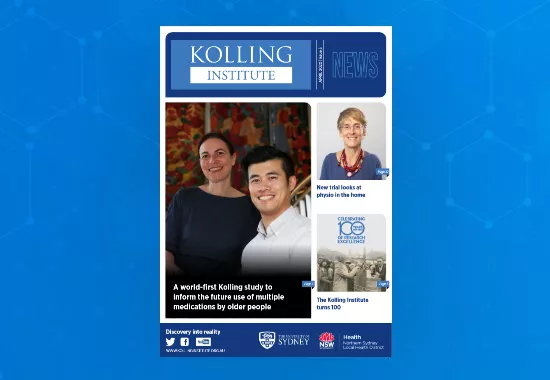
    Our Kolling Institute newsletter brings together a collection of profiles on our impressive researchers. Flip through our flipping book to discover more about our leading research into kidney disease, rare cancers and the use of supplements for osteoarthritis. There’s a focus too on the first steps towards gene therapy for Meniere’s disease, the latest research into treatments for dementia and an innovative program taking musculoskeletal care to the bush.

  • The latest update from the Kolling

    The latest update from the Kolling

    Here’s a snapshot of our latest research at the Kolling Institute and the impact it’s having across the community, from new national guidelines for physios helping those with life-changing spinal cord injuries to a new approach for those with debilitating chronic pain. There’s a focus too on our researchers reducing the physical toll of spaceflight and the latest care for osteoarthritis. 

    Flip through our flipping book for more:

  • Kolling NEWS

    Kolling NEWS

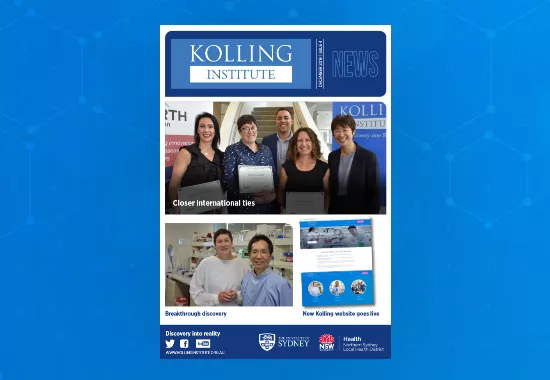
    We’re kicking off the year with plenty of encouraging research news.

    Read on for details about new funding, fascinating research into the link between heart disease and osteoarthritis and promising work into a new diabetes treatment.

    We also unveil the winners of our travel awards program, generously backed by philanthropic funding.

    Click here: Kolling NEWS

  • Kolling Institute NEWS

    Kolling Institute NEWS

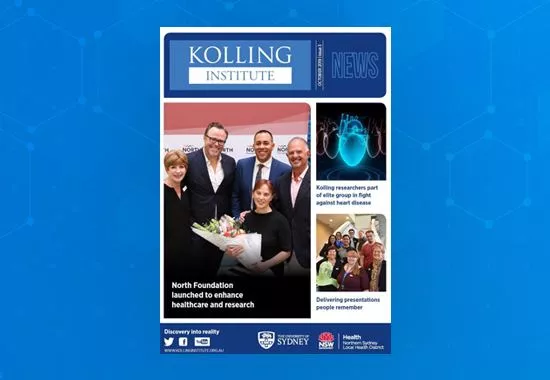
    The latest Kolling Institute NEWS is out … providing a snapshot of the wonderful research activity across our institute from our work into heart disease, pain, diabetes, cancer and musculoskeletal conditions. Check it out.

  • In the beginning – 100 years ago

    In the beginning – 100 years ago

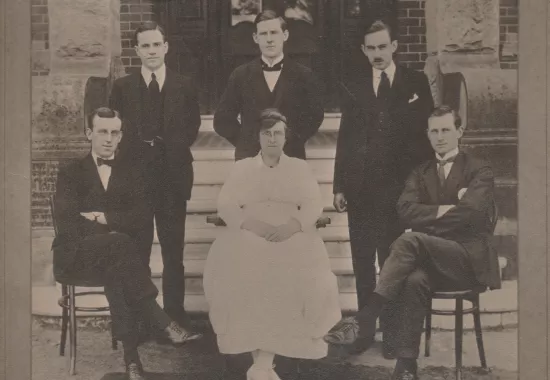
    Catherine Storey – Honorary Archivist, Royal North Shore Hospital

    One hundred years ago, in 1920, a group of distinguished citizens of NSW devised “a scheme of the utmost importance to NSW, and to the Commonwealth.” The world had just emerged from World War 1 and the Spanish flu pandemic of 1919, with a massive loss of life. Research into the common diseases of mankind was seen as a means to reverse this appalling human toll.

    The original prospectus proposed the establishment of the Institute of Pathological Research (the forerunner to the Kolling Institute), under the Royal North Shore Hospital of Sydney Act of Incorporation, 1910. An appeal was launched for the necessary funds to provide the facilities; facilities for the routine hospital pathology alongside the research activities. The hospital Board advertised for a resident pathologist, and the minutes of the Board show that unfortunately, there was only one applicant – a woman! Dr Emma Buckley, a well-qualified young Sydney University graduate (who resigned when she married in 1922) accepted the position.

    Before the Institute, the pathology technician took all routine pathology tests by ferry across the harbour to the Board of Health in Macquarie Street and returned with the previous day’s results. These commonly included urine samples and throat swabs testing for diphtheria.

    But now the hospital set aside a small ex-workman’s cottage Oakleigh, within the grounds to serve as a laboratory. In this, the first home of the Institute, three rooms were allocated for bacteriology, physiological and biochemical testing. This little cottage would be home to the Institute until the Charles Kolling Memorial Laboratory opened in 1931.

    The Hon Dugald Thomson donated the first £100. When Thomas Rofe, a member of the hospital board provided a cheque for £5000, matched with funds from the NSW Government, the Institute of Pathological Research was ready to proceed. His personal connection explained here.

    My wife and I have had the misfortune to lose our only son from diabetes which has long threatened his life…I have since felt that if it had been the special business of some qualified scientist to study that particular disease…some means might have been found to check diabetes.

    Thomas Rofe, 1920 

NSWGOV logo