Blog

  • Spotlight on clinical trials

    Spotlight on clinical trials

    Kolling Institute researcher and Royal North Shore Hospital endocrinologist Professor Rory Clifton-Bligh has been involved in clinical trials for more than 20 years, focusing on conditions such as osteoporosis, thyroid cancer and diabetes.

    Patients in the endocrinology clinic have sometimes accessed medication 10 years ahead of other Australians.

    Many of these drugs have gone on to be listed on the Pharmaceutical Benefits Scheme.

    “The trials have all been quite transformational in their areas,” he says.

    Addressing rare diseases

    Unfortunately, patients with rare diseases have often faced limited treatment options.

    However, over the past 10 to 15 years, Rory has seen a significant increase in the number of clinical trials for rare diseases, including some involving his department.

    The shift has flowed from the Orphan Drug Act, a US law passed in 1983 that incentivised drug development for rare diseases, making it easier for the US Food and Drug Administration to grant approvals.

    Current trials and recruitment challenges

    Rory and his team are currently enrolling participants for several trials spanning rare bone, thyroid cancer, cholesterol and lipid diseases.

    “It’s a fairly diverse portfolio of clinical trials in the rare disease space,” he says.

    Recruiting patients can be challenging but multi-centre study centres around the world help.

    Rare diseases are defined differently in parts of the world. In Australia, it is considered rare if five in 10,000 people have the condition while in the US, it’s rare if it affects fewer than 200,000 people.

    Paradoxically, rare diseases are not rare.

    Rory points out that rare diseases are more common than people think.

    He emphasises the broader importance of clinical trials for providing access to new therapeutics and enhancing clinical practice.

    “What we call best practice is yesterday’s medicine. Clinical trials are tomorrow’s medicine.” 

  • Leading new centre to strengthen cancer research and expertise

    Leading new centre to strengthen cancer research and expertise

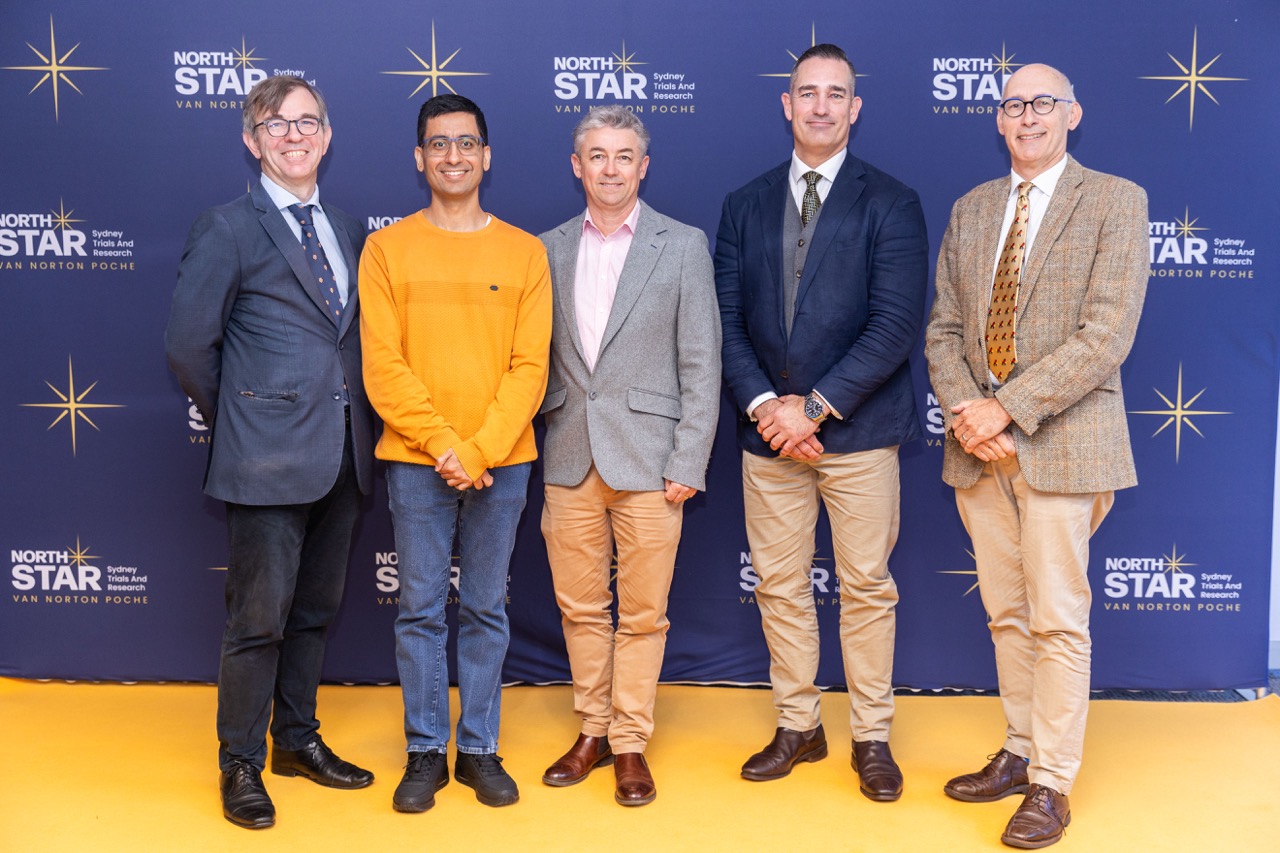
    Researchers at the Kolling Institute have welcomed the launch of Australia’s premier cancer clinical trials centre on the Royal North Shore Hospital campus.

    NORTH Sydney Trials and Research Van Norton Poche or NORTH STAR VNP has been made possible by a $20 million gift from the late Kay Van Norton Poche and her husband Greg.

    The centre is a ground-breaking partnership between Northern Sydney Local Health District and the world-renowned Memorial Sloan Kettering Cancer Centre in New York.

    NSLHD Chair of Research Professor Bruce Robinson said it will significantly expand access to the latest clinical trials for those in Sydney and across New South Wales, and then nationally.

    “We expect this wonderful new centre will offer hope to patients and their families across the country, improving treatments for cancer and even contributing to a cure.

    “It will mean communities, particularly those in rural and regional areas, will have access to the latest treatments and innovation, regardless of where they live.”

    Three initial clinical trials will be underway within months, aiming to improve outcomes for people with head and neck cancers, breast cancers and upper gastric cancers.

    Leading bowel cancer researcher Professor Mark Molloy said cancer researchers at the Kolling Institute are looking forward to collaborating with the NORTH STAR VNP clinical trials.

    “This is an exciting opportunity to work with patient specimens obtained during clinical trials, which will allow us to discover prognostic and drug response biomarkers,” he said.

    “Through these studies we will have a better understanding of the impact and function of new therapies, and how clinicians can optimise patient treatments.

    “It was encouraging to attend the launch of the new centre with so many national and international clinicians and researchers, and to witness the enthusiasm for this new partnership.

    “We look forward to it increasing research activity and the development of new targeted cancer treatments.”

    If you would like to build on this legacy, you can donate to our fundraising partner, the NORTH Foundation.

  • Innovative musculoskeletal program heads to the bush

    Innovative musculoskeletal program heads to the bush

    In a sign of the strength of the Kolling Institute’s research and clinical capabilities, Professor Trudy Rebbeck has been awarded a $2.5 million grant to offer a musculoskeletal care program in rural and remote parts of Australia.

    As a Professor of Allied Health and a physiotherapist, Trudy will lead the collaborative project involving University of Sydney, NSLHD and Kolling Institute researchers Michael Nicholas, Ian Cameron, Annette Kifley and Claire Ashton-James.

    She is excited to launch the initiative which has been funded as part of a $20 million boost for improved primary care and chronic pain treatment.

    Trudy said an increasing number of people are experiencing chronic musculoskeletal conditions like back, neck pain and arthritis, but few people in rural and regional areas are being offered evidence-informed care involving good advice and an exercise plan.

    “We know that people in these communities have poorer access to appropriate care and ultimately poorer musculoskeletal health,” she said.

    “Our large-scale program, named PACE RURAL, will be offered across the country for the first time, providing a high quality and yet low-cost solution.”

    It will involve a simple online tool at the point of care to identify people who may recover well and those who may not. Those who are likely to recover well can be guided by the online resource (Mypainhub.com) which provides accurate advice and exercises to aid recovery.

    People needing extra care will receive early virtual access to an expert allied health clinician.

    The allied-health specialist will work with the local GP through an advanced assessment of risk factors and develop an individualised treatment plan.

    “For many people living in rural and remote parts of Australia, one of the biggest challenges is access to specialised healthcare, so we hope that through this program, we will broaden access to evidenced-based, effective care and importantly, improve long-term musculoskeletal health,” she said.

    “We know from our work in metropolitan regions that increasing support from allied-health clinicians delivers better health outcomes for higher risk individuals, so we expect this project will now provide a cost-effective solution in rural and remote Australia too.” 

  • Kolling Institute researchers instrumental in Australian first guidelines

    Kolling Institute researchers instrumental in Australian first guidelines

    It has taken three years and many hours of careful work, but two researchers from the John Walsh Centre for Rehabilitation Research have developed the first clinical practice guidelines for physiotherapists to inform the care of people with life-changing spinal cord injuries.

    Physiotherapy is a key part of rehabilitation for people with a spinal cord injury, but until now, there has been no nationally consistent advice based on the best available evidence.

    The guidelines were driven by Professor Lisa Harvey and Associate Professor Joanne Glinsky, who worked with a team of physiotherapists, researchers, and people with a spinal cord injury across Australia and New Zealand.

    Professor Harvey said the recommendations provide up-to-date information on the most effective physiotherapy management.

    “Importantly, they are based on a rigorous evaluation of the available evidence, taking into account the opinions of clinical experts and people with a spinal cord injury,” she said.

    “We started the process by identifying over 100 clinical questions of importance to physiotherapists and those living with an injury, and each question was ultimately answered by way of an evidenced-based recommendation or a consensus statement.”

    Associate Professor Glinsky said we followed a very detailed and rigorous process with many meetings, discussions and reviews of the evidence.

    “It is this process that should give people confidence in the recommendations of the guidelines,” she said.

    Professor Harvey added that the work was only possible with the initial financial support from icare in NSW, and the support from organisations throughout Australia including the Transport Accident Commission, the National Insurance Scheme Queensland and the Lifetime Support Authority.

    “Their support for this important piece of work was critical to our success. We are tremendously grateful they shared our vision to create these first Australian recommendations.”

    The guidelines can be viewed at www.SCIPTguide.org 

  • Digital technology to support those with long-standing pain

    Digital technology to support those with long-standing pain

    Researchers based at the Kolling Institute have launched a clinical trial using digital health technology to help those with chronic pain reduce their use of opioids.

    Chief investigator and leading pain specialist at Royal North Shore Hospital Professor Paul Glare said many people with chronic pain are using opioid medications long-term, but research shows that in many cases, these medications are doing more harm than good.

    “We know that reducing the use of opioids not only minimises harm, but also leads to improvements in pain and quality of life,” he said.

    Professor Glare said many people who have been on long term opioids for pain find reducing their dose a daunting prospect, and unfortunately, many of them don’t have much social support either.

    As part of the clinical trial, participants will watch a video about pain and opioids and receive text messages, while their opioid medication dose is reduced under the supervision of the prescribing doctor.

    “The aim of this study is to see if we can provide more support via their mobile phone to make tapering easier.

    “The clinical trial follows a pilot study which showed that patients’ confidence to reduce their reliance on opioids improved when they received text messages.

    “It also found their pain reduced, and their mood and functioning was better.

    “We are now enrolling participants in a randomised control trial to test if the intervention leads to a greater reduction of their opioid dose.”

    You can join the study from anywhere in Australia where you have access to a phone network and the internet.

    If you would like to participate go to Support4Pain Study 

  • Combined digital interventions improve recovery following knee replacement surgery

    Combined digital interventions improve recovery following knee replacement surgery

    For the thousands of people who undergo a total knee replacement each year, a new technological approach may hold the key to a better recovery following surgery.

    Researchers from the Kolling Institute conducted a randomized clinical trial, investigating whether a digital technology package delivered remotely was effective in reducing pain and improving mobility after a knee replacement.

    Dr Vicky Duong from the Osteoarthritis Research Team said total knee replacement surgery is an increasingly common surgery for advanced, end-stage osteoarthritis.

    “We know however, that one in 10 people report dissatisfaction two years after surgery,” she said.

    In response to this trend, the team launched a clinical trial involving more than a hundred people, where they measured the impact of a combined digital program involving fortnightly health-coaching sessions, a Fitbit activity tracker and an exercise mobile app.

    Dr Duong said we found this approach aided recovery, and patients had improved pain and greater mobility three months after surgery compared to those who only received usual care.

    “Encouragingly, this positive trend was mirrored at six and 12 months,” she said.

    “We also found improvements in function, activity participation and quality of life as a result of the digital program.

    “For many people there is little post-operative care once a patient leaves rehabilitation, but our research indicates that delivering follow-up care with a combined digital package may give patients the support and encouragement they need to get back on their feet with confidence.

    “This approach could be particularly important for rural and remote communities as the program has the potential to extend access to care and improve equity.

    “We would also like to see future studies consider patient preferences and abilities.

    “Some participants, especially those who were older were hesitant to use unfamiliar devices. Overall however, the approach was well-accepted.”

    The study has been published in the prestigious JAMA Network Open journal. 

  • Kolling researchers leading the fight against diabetes

    Kolling researchers leading the fight against diabetes

    With a concerning rise in the number of people developing Type 2 diabetes, our researchers at the Kolling Institute are offering hope and an effective way forward to reduce the impact of the serious disease.

    Type 2 diabetes is the fastest growing chronic disease in the world, and if the current trend continues, it’s anticipated close to three million Australians will have the disease by 2025.

    It often occurs in those who are over 40, overweight or if there’s a genetic predisposition, but increasingly doctors are seeing young adults and adolescents with the condition.

    Sadly, many people may have the disease, and not realise it until the condition is well advanced.

    Kolling Institute researcher and Royal North Shore Hospital endocrinologist Associate Professor Sarah Glastras said Type 2 diabetes is a crippling condition which can increase your chance of kidney failure, heart attack and stroke.

    “There is no cure but it can be put into remission with lifestyle changes, with evidence suggesting that losing weight can help you manage your diabetes and return to normal blood sugar levels,” she said.

    “It is an encouraging time with a range of new drugs, innovations and clinical trials in the pipeline which will offer tools and strategies to manage diabetes.

    “In the next 12 months, there will be new combined medications which we expect will help with weight loss and the maintenance of glucose levels.

    “These drugs will have the potential to halt the march of diabetes.”

    For many people a combined approach of exercise, diet and medication will achieve significant results.

    “I often tell my patients you can’t change your age or your genes, but we do have control over what we eat and how much exercise we do. Exercise is crucial to improving the body’s metabolism.”

    New research is pointing to the benefits of a personalised diet program tailored to your individual gut microbiota.

    “Importantly, there also needs to be greater access to these promising new medications, and a greater focus on the condition.

    “Unlike cancer and heart disease, diabetes often doesn’t receive the attention and funding it deserves. There is a stigma associated with obesity and diabetes, a belief that people have brought it on themselves, neglecting the fact that it is a genetically driven disease.”

  • Technology delivering support to those with back pain anywhere, any time

    Technology delivering support to those with back pain anywhere, any time

    With the number of people living with low back pain escalating sharply, researchers are turning to widely-accessible technology to reduce the impact of the disabling condition.

    The team from the University of Sydney and the Kolling Institute has launched a study measuring the effectiveness of a mobile health program which offers self-management strategies via text messages.

    Study lead Professor Manuela Ferreira said broader options for care are needed given the number of people who experience the condition.

    “Low back pain is the greatest cause of disability worldwide, impacting social, family and work activities,” she said.

    “In Australia, it affects one in six people and is the main reason Australians miss work and retire involuntarily.

    “New modelling conducted by our team estimates more than 800 million people globally will be living with low back pain by 2050, a 36 percent increase from 2020.

    “People with low back pain need affordable interventions to help them manage their condition, and this health program provides practical, evidenced-based strategies.

    “Text messaging is an easy, accessible and affordable intervention that can empower those with low back pain to better manage their own symptoms.

    “It can be used to support people anywhere, at any time of the day.

    “Text messaging initiatives have been shown to help people with chronic diseases such as cardiovascular disease and diabetes, and we are working to determine if this approach can also be an effective tool for those with chronic back pain.”

    The study, named TEXT4myBACK, is assessing two formats of text message interventions, which differ in frequency and content.

    Researchers will then measure whether the text messages are improving function and back pain symptoms.

  • Australian researchers uniquely positioned to support upcoming space missions

    Australian researchers uniquely positioned to support upcoming space missions

    The expertise across Australia’s space medicine community was showcased during a special event co-ordinated by the Kolling Institute and the Australasian Society of Aerospace Medicine.

    Staged over two days, the colloquium involved national and international experts including representatives from the Australian Space Agency, the CSIRO, Boeing and the Australian Antarctic Program.

    Presenters discussed the specific medical, dental, and psychological needs of astronauts, Australian-designed space suits and opportunities for our space community in NASA’s Artemis exploration of the moon and ultimately Mars.

    Kolling Academic Director Professor Jim Elliott said Australia’s involvement in the Apollo Moon landings is well documented, but perhaps what is not well known is the depth of experience in Australia’s contemporary space industry.

    “We have a tremendous depth of medical, technological and research expertise in this field,” he said.

    “Australian clinicians and researchers have been collaborating with international space agencies for years. Our clinical experience and research have helped inform developments in space life sciences as our international partners recognise our unique scientific expertise.

    “Some research has specifically focused on clinical advances to improve the healthcare support to astronauts.

    “Our technological sector is also well placed to offer specialised support, with a consistent track record of driving innovation.

    “Australian experience has driven advances in radiation protection, wearable sensors and compression suits worn by astronauts to limit the musculoskeletal effects of microgravity.”

    Dr John Cherry, a director from the Australasian Society of Aerospace Medicine said Australia is in a strong position to support long duration human spaceflight missions.

    “We are world leaders in rural and remote healthcare, with experience delivering care in some of the most extreme and isolated environments on earth,” he said.

    “The Australian Antarctic Program for example has developed specialised training and technology to enable a generalist doctor to provide high quality medical, surgical, anaesthetic and dental care to an isolated team.

    “Many of the challenges faced in these settings will be experienced by astronauts and space agencies as human spaceflight extends further into space.”

    Professor Elliott said the Australian space medicine community is keen to see the medical progress as a result of the upcoming space explorations.

    “It’s anticipated that some of the lessons learned in space will deliver benefits back on earth and help to drive improvements in health outcomes.

    “For instance, the new knowledge around the deconditioning of astronauts in space could help doctors back home managing patients with deconditioning after long periods in hospital.” 

  • A simple yet smart approach to spinal cord injuries may offer a new way forward

    A simple yet smart approach to spinal cord injuries may offer a new way forward

    Researchers based at Royal North Shore Hospital have launched the first study of its kind in the world to support those with a spinal cord injury.

    The team from the Kolling Institute’s John Walsh Centre for Rehabilitation Research is now seeking recruits for the clinical trial which is investigating the benefits of an approach combining breathing techniques with heart rate feedback.

    Study lead Professor Ashley Craig said many of us don’t realise the wide-ranging impact of spinal cord injuries from unstable blood pressure, chronic pain and fatigue through to poor sleep, brain fog, confusion and low mood.

    “All these conditions can significantly compromise quality of life,” said Professor Craig, Professor of Rehabilitation Studies at the University of Sydney and the Kolling Institute.

    “Doctors currently rely on a host of pain management and treatment approaches, but our team has developed an innovative technique to support existing treatment strategies.

    “It follows increasing evidence around the positive impact of regulated breathing on the nervous system, blood pressure and stress.

    “Our study is investigating whether rhythmic breathing combined with heart function feedback can help people with a disrupted nervous system.

    “We know that a disrupted nervous system can be like a car without brakes, with limited moderation of the effects of the nervous system.

    “Our approach is using a specific type of breathing to regulate heart function to a point where it influences neural function and the autonomic nervous system.

    “The hope is this will in turn deliver wide ranging benefits for the brain, the gut, the heart, sleep and a host of other physical functions. Importantly, we hope it will improve quality of life for those taking part.”

    One of the first people to join the clinical trial is Dawn Miller-Argue. Dawn suffered a spinal cord injury in 2019 as result of radiation exposure to her spinal cord.

    She has welcomed the opportunity to be part of the trial, saying the strategies have helped her to manage her pain and gain more control over her body.

    “I have found my stress levels and my fatigue have decreased, while my sleeping is better and I’m more grounded and in control,” she said.

    “The technique has allowed me to be more productive during the day, and helped me to do more, be more active, and be more independent.

    “It has been really encouraging to see that I have control over how my body works, when I don’t have any control over some parts of my body.

    “Knowing how quickly I can affect change through something as automatic as breathing and being more conscious of it, has been extraordinary.”

    The Spinal cord injury, Mind and HeART or (SMART) study has been made possible by $3 million in combined funding from the NSW Ministry of Health and the University of Sydney.

    How to participate

    If you would like to take part in the clinical trial or find out more about the study, please email smart.trial@sydney.edu.au or call 0420 378 157 

NSWGOV logo