Blog

  • Digital technology to support those with long-standing pain

    Digital technology to support those with long-standing pain

    Researchers based at the Kolling Institute have launched a clinical trial using digital health technology to help those with chronic pain reduce their use of opioids.

    Chief investigator and leading pain specialist at Royal North Shore Hospital Professor Paul Glare said many people with chronic pain are using opioid medications long-term, but research shows that in many cases, these medications are doing more harm than good.

    “We know that reducing the use of opioids not only minimises harm, but also leads to improvements in pain and quality of life,” he said.

    Professor Glare said many people who have been on long term opioids for pain find reducing their dose a daunting prospect, and unfortunately, many of them don’t have much social support either.

    As part of the clinical trial, participants will watch a video about pain and opioids and receive text messages, while their opioid medication dose is reduced under the supervision of the prescribing doctor.

    “The aim of this study is to see if we can provide more support via their mobile phone to make tapering easier.

    “The clinical trial follows a pilot study which showed that patients’ confidence to reduce their reliance on opioids improved when they received text messages.

    “It also found their pain reduced, and their mood and functioning was better.

    “We are now enrolling participants in a randomised control trial to test if the intervention leads to a greater reduction of their opioid dose.”

    You can join the study from anywhere in Australia where you have access to a phone network and the internet.

    If you would like to participate go to Support4Pain Study 

  • 269 million people to experience neck pain by 2050

    269 million people to experience neck pain by 2050

    New research led by investigators from the Kolling Institute has identified a concerning global trend which will see the burden of neck pain dramatically increase over the next 30 years.

    The research analysed data from more than 200 countries, measuring the prevalence of neck pain from 1990 to 2020.

    It found 203 million people now experience neck pain across the globe, a figure which has remained stable over the last 30 years and not improved.

    More women than men live with neck pain, while the condition primarily affects people between 45 years and 74 years.

    Despite the high prevalence of neck pain, its causes have not been clearly defined across populations.

    Investigators say the evidence suggests a range of factors from muscle strains, work or sports related events through to degenerative conditions like osteoarthritis, car accidents, or neurological issues are contributing to the painful condition.

    Lead author and Kolling Institute Academic Director Professor James Elliott said the data points to a sharp rise in expected cases due to a rapidly ageing global population.

    “Concerningly, the projections indicate a 32 per cent increase in cases between 2020 and 2050, bringing the total number of cases of neck pain to 269 million,” he said.

    “This will lead to a tremendous burden on health systems across the globe, as well as a significant individual toll.

    “We know that neck pain has a considerable economic, social and personal cost, and we would like to see more effective interventions introduced on a large scale.

    “Currently, there is no gold standard diagnostic test for neck pain, no known pathophysiology and no universally effective treatment for it.

    “We need to shine a light on the condition and drive new technology, new assessments and new management options that are economically viable, effective and broadly available.

    “We hope that following this historic research there will be a renewed commitment to improving our understanding of the different causes and risk factors for neck pain, and an escalation in the collection of global neck pain data.”

    Senior author and leading rheumatologist Professor Lyn March has welcomed the focus on neck pain, saying this research represents a call to action for policy makers to strengthen the capacity of their health systems to deliver quality musculoskeletal care services.

    “It’s crucial the community has access to early detection, management and long-term care, and that greater resources are invested in research to reduce the global burden of neck pain,” she said.

    The research, which has been published in The Lancet Rheumatology, was funded by the Bill and Melinda Gates Foundation and Global Alliance for Musculoskeletal Health.

  • Kolling Institute Research Video

    Kolling Institute Research Video

    At the Kolling Institute, we are tremendously fortunate to work with so many skilled and dedicated researchers. Our Kolling video gives you an insight into some of our latest research and our inspirational teams.

  • Kolling researchers to inform best care for those with a spinal cord injury

    Kolling researchers to inform best care for those with a spinal cord injury

    The expertise of our rehabilitation researchers at the Kolling Institute has been recognised with a prestigious international competitive grant to investigate the impact length of stay has on rehabilitation outcomes following a spinal cord injury.

    The National Institute of Health in the US has awarded more than $9 million to the overall project, with more than $750,000 coming to Australia.

    The five-year research project will investigate the impact of length of stay for rehabilitation programs in different countries including the USA, UK, Netherlands, Australia, Brazil and Canada.

    It will assess international approaches to the management of these challenging injuries and associated rehabilitation programs.

    Professor Ashley Craig from the John Walsh Centre for Rehabilitation Research has been appointed the chief investigator lead in Australia, with support from colleagues Dr Ilaria Pozzato, Dr Mohit Arora and Professor James Middleton.

    Australian researchers will assist the chief lead in the USA Dr Allen Heinemann, Professor of Physical Medicine and Rehabilitation, Emergency Medicine and Medical Social Sciences at Feinberg School of Medicine, Northwestern University, Chicago.

    Professor Craig has welcomed this prestigious grant delivered through the National Institute on Disability, Independent Living and Rehabilitation Research scheme.

    “This is a very significant international collaborative grant win and I believe the first National Institute of Heath grant won by the John Walsh Centre for Rehabilitation Research,” he said.

    “It is wonderful to be working with colleagues in Australia and internationally to progress our research to determine the best care for those with a spinal cord injury, and to ensure that everyone who experiences this type of injury, can access the very latest evidenced-based care and support.”

    Spinal cord injuries often have a catastrophic impact, affecting multiple bodily systems and functions. In addition to sensory and motor loss, there is a high chance of secondary conditions including chronic pain, diabetes, cardiovascular and respiratory problems, as well as cognitive impairment and mental health challenges.

    Spinal cord injuries can also lead to reduced social autonomy, difficulties gaining and sustaining employment, weight gain and sleep disturbance.

    Professor Craig said given these complications, it’s crucial patients have access to an evidenced-based, multidisciplinary intensive rehabilitation program.

    “We know that currently there’s a big difference in the length of time patients spend in rehabilitation programs in NSW and around the world,” he said.

    “COVID has also negatively impacted the length of stay in rehabilitation.

    “There is an urgent need to investigate the impact that a short length of stay, say three of four weeks has compared with a longer stay, of up to 12 weeks.

    “We are pleased to be part of this large-scale, international project to determine the optimum length of stay, and deliver the best long-term health outcomes.” 

  • Putting science into practice

    Putting science into practice

    Practical ways to implement scientific research was the theme of this year’s John Walsh Centre for Rehabilitation Research Forum. 

    Around 300 people attended in person and online to hear a full day of presentations.

    The event was co-organised by Illaria Pozzato and Johnny Bourke, Research Fellows at the rehabilitation centre.

    Johnny said this year’s event involved getting policymakers, researchers and consumers to dive into how to best implement research.

    “By doing this, we are ensuring the research evidence that we use to inform health and rehabilitation services in New South Wales is built on a really solid foundation of research that’s rigorous and co-designed,” he said.

    “We can then look at how we work to implement that into practice.”

    Johnny is unique in that he comes from a research and consumer perspective and says there are a lot of questions when it comes to implementing science.

    “How do we do it? What does it involve? What are the outcomes? How do evaluate the whole process?”

    Based on the Royal North Shore Hospital campus, John Walsh is an interdisciplinary centre focusing on rehabilitation for people with injuries and disabilities.

    The one-day forum featured a variety of talks, including how to implement evidence-informed models for hip fracture management and revising guidelines for managing people with whiplash-associated disorders.

    Johnny led a panel discussion, where researcher Dr Leanne Rees and consumers Dr Steve Peterson, Antonio Vecchio and Elyse Barber explored the realities of engaging with one another, and how to achieve the best outcomes.

    The panellists discussed a range of challenges, including the difficulty some consumers had travelling to meet with researchers, and the need for the impact of the research to be well articulated.

    Dr Rees, a former physiotherapist, noted that her role as a researcher led to her having a much deeper understanding of the lived experience of people with spinal cord injuries.

    Johnny said while there are many ways to implement research, at heart, it’s about making sure scientists engage their audiences, and that they engage the right methods to have their research impact on practice.

    “It’s also about making sure that the research that is conducted, is done not only in rigorous ways with good methodology, but also conducted in partnership with consumers.” 

  • First of its kind tool providing support for people with spinal cord injuries

    First of its kind tool providing support for people with spinal cord injuries

    A valuable digital resource has been launched to help people with spinal cord injuries troubleshoot some of the complex health challenges that can arise after injury.

    The Spinal Cord Injury Health Maintenance Tool, which includes a website, smartphone app and hardcopy booklets, has been designed to empower people to self-manage their health-related needs and maintain a high quality of life.

    Launched by NSW Health Secretary Susan Pearce AM, the tool provides reliable, evidence-based and easy-to-understand information to help those with spinal cord injuries and their primary health care providers manage injury related concerns.

    It features interactive tools such as a quick health checker, collaborative care plans, symptom trackers and goal setting programs.

    The tool also offers self-management strategies focusing on mental health and wellbeing, as well as bladder, bowel, skin, pain and autonomic dysreflexia concerns.

    Kolling Institute and University of Sydney researcher Professor James Middleton, who was instrumental in the design of the resource, said the tool had been written through the lens of someone with a spinal cord injury, so individuals can learn what they need to do to stay well and what action to take when health issues arise.

    “The tool was developed following genuine, multi-method consultation with meaningful engagement with a diverse stakeholder group,” he said.

    “This process ensured the voices of individuals living with a spinal cord injury and their healthcare providers were incorporated into the design of this important new resource.

    “During the consultations for instance, we found there was a need to place a greater emphasis on mental health and wellness, so an additional component on mental health was included.

    “We are very proud of this resource which will provide practical and easily accessible information to those with a spinal cord injury.”

    Consumer reaction

    The resource has been welcomed by consumers. Brendan Gardiner lives with a spinal cord injury and spoke at the launch about his experiences using the tool.

    He says it provides information that keeps him ahead of the next problem.

    “It’s comforting to have an extra resource I can go to when I have a problem, and information that helps me avoid future problems.” Brendan said.

    Partnering for impact

    The freely available tool was developed in partnership between The University of Sydney, Royal Rehab, the State SCI Service, the NSW Agency for Clinical Innovation, and with funding provided by icare NSW.

    Group Executive of icare Lifetime Schemes Dr Nick Allsop has welcomed the development of the tool, particularly given the complex health needs of people living with a spinal cord injury.

    “The website and app empower people to expertly and proactively manage their health needs independently, and with their care team. We want people with a spinal cord injury to have improved quality of life and health outcomes.”

    To find out more about this comprehensive resource visit the Spinal Cord Injury Health Maintenance Tool website. 

  • Kolling Institute Year in Review 2022

    Kolling Institute Year in Review 2022

    Check out our Kolling Institute Year in Review 2022 celebrating our research success. It highlights our world-leading translational research and our impact across our priority research areas. Click on the link here.

  • New approach delivers breakthrough for pain researchers

    New approach delivers breakthrough for pain researchers

    Researchers at the Kolling Institute have made important progress towards the development of new treatments for chronic pain by identifying a small group of cells which can control pain responses.

    The breakthrough comes as approximately 20 per cent of the world’s population suffers from chronic pain, including around 3.4 million Australians.

    Dr Neda Assareh, a neuroscientist research fellow from the Pain Management Research Institute said medications and psychological support offer some relief, but many people continue to experience ongoing pain without effective treatments, and this often leads to depression and anxiety.

    She says a large number of people also continue to use opioids which can be addictive and ineffective.

    “Our team however, has been working to develop better and safer treatments for chronic pain by improving our understanding of which pain pathways shape the experience of pain,” she said.

    “In this ground-breaking study, we used an advanced bioengineering technique to investigate how the brain organises pain signals, and we found evidence that a never-investigated cell type can control pain.

    “The study relied on chemogenetics, a technique that allowed us to activate and inactivate a small population of glycinergic neurons in isolation.

    “These neurons are found in the midbrain periaqueductal gray, a part of the brain which influences pain responses and anxiety linked to pain.

    “Our study is the first to investigate the role of these neurons in setting pain thresholds, and we found that inhibiting the activity of the glycine-PAG neurons reduced pain responses in both sexes. It was important to test responses with both sexes as we know that pain affects men and women differently.”

    Senior researcher Dr Karin Aubrey has welcomed the discovery of this unique group of cells which control pain responses.

    “Importantly, there are only a small percentage of these neurons in the midbrain, so by targeting these cells, we may be able to develop medications which reduce pain with fewer side effects than existing medicines, “ she said.

    “In the next stage of the program, we will aim to determine how glycine-PAG neurons communicate with higher brain areas, and investigate their ability to alter pain and anxiety outcomes in chronic pain models.”

    “Our findings are the result of a strong collaborative effort also involving senior researcher Yo Otsu, PhD student Caitlin Fenech, and lab assistants Nazim Uddin and Rebecca Power.”

    The research has been published in the leading scientific journal eNeuro. 

    The project was made possible with the support of the Ernest Heine Family Foundation and the Pain Foundation.

  • World leading Meniere’s disease expert joins the Kolling

    World leading Meniere’s disease expert joins the Kolling

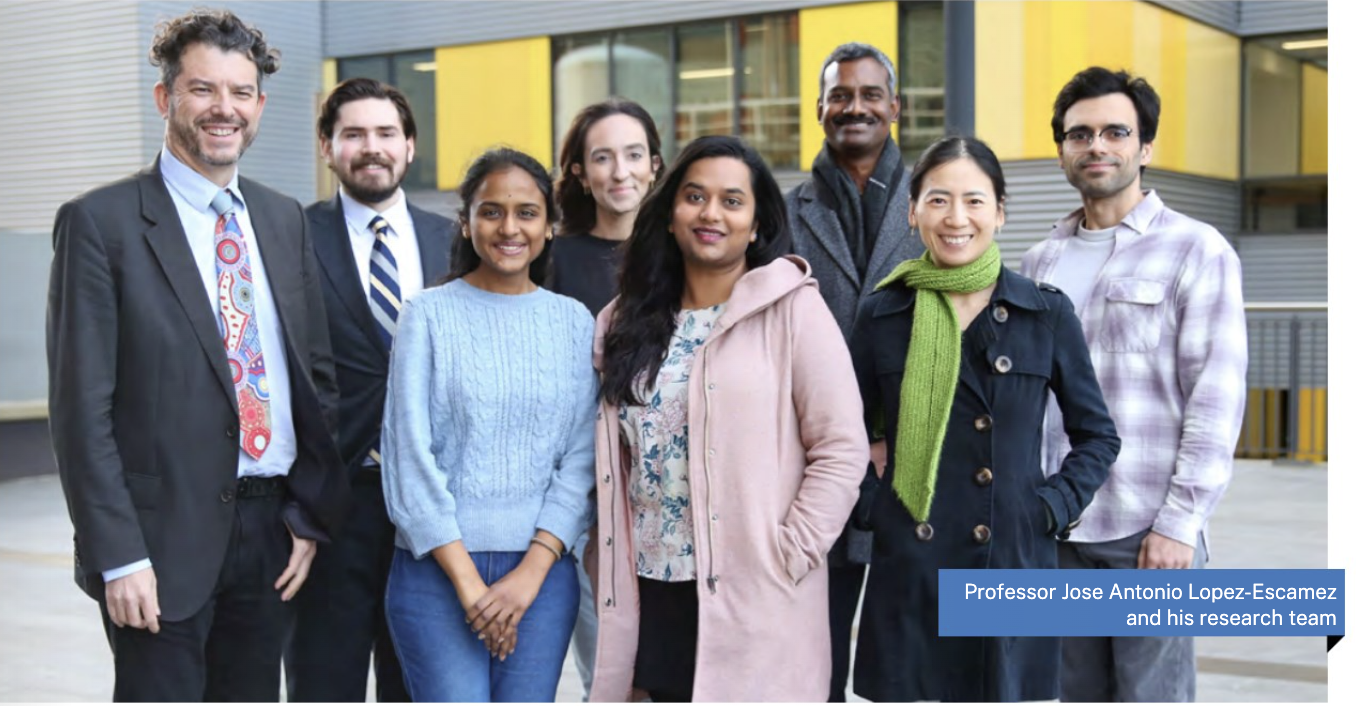
    In a sign of the growing neuroscience expertise at the Kolling Institute, internationally recognised Meniere’s disease expert Professor Jose Antonio Lopez Escamez has relocated from Spain to the institute.

    Professor Lopez Escamez has launched an exciting new international research program into the disease, extending his body of work in Europe. Meniere’s disease is a rare disease of the inner ear that causes vertigo, sensory neural hearing loss and tinnitus.

    Antonio will continue to collaborate with international partners in Europe, the US and the Centre for Genomics at the University of Granada, as well as new Australian-based partners.

    He has established the Meniere’s Disease Neuroscience Laboratory at the Kolling Institute where he will investigate the cellular and molecular basis of the disease, as well as the genetic factors contributing to severe tinnitus. His team will also work to identify molecular targets for personalised treatment.

    Antonio says his research focuses on the influence of family heritage in Meniere’s disease and new genes linked to the disease.

    His current project is aiming to broaden our understanding of the genetic and inflammatory basis of the disease and tinnitus by combining multi-omic data and 3D cellular models.

    “I am pleased to be starting this exciting international program to extend our understanding of the disease by studying new families with Meniere’s disease in Australia and East Asia. It’s hoped our work will ultimately help many people experiencing this condition,” he said.

    “We are expanding our group here at the Meniere’s disease Neuroscience Laboratory at the Kolling and I am looking for highly motivated PhD candidates to join my team.”

    Antonio comes to the Kolling Institute with a wealth of experience. He founded the Otology and Neurotology Group in Spain and is an international leader in neurotology and genetics of Meniere’s disease/tinnitus.

    His research has been disseminated through major international meetings including the Association for Research in Otolaryngology, and he is the recipient of several prestigious awards including the Frontiers Spotlight 2018 Award.

    Antonio is ranked among the top two per cent of researchers in the world according to the latest Stanford University study, and he has published more than 150 papers in top scientific journals in several categories including audiology, genetics and heredity, medicine, clinical and experimental and otorhinolaryngology.

  • Kolling awards unveiled

    Kolling awards unveiled

    We are pleased to announce the successful recipients of our annual Kolling Institute awards program.

    Launched in 2021, the program has been expanded to acknowledge a greater number of researchers and their individual contribution to the Kolling.

    The awards aim to recognise the many outstanding achievements across education, clinical practice and service, publications, research, as well as overall accomplishment.

    This year, seven researchers are being presented with awards across the following five categories:

    PhD impact (joint award winners)

    Dr Danielle Stone – Clinical Speech Pathologist, RNSH, and PhD candidate, Neuromuscular Imaging Research Lab

    Dr Michal Lubomski – Neurologist, RNSH and PhD Candidate, Neurogenetics Research

    Supervision impact (joint award winners)

    Associate Professor Sarah Glastras – Endocrinologist, RNSH and Postdoctoral Researcher, Renal Research Laboratory

    Dr Sumit Sahni – Senior Research Fellow, Bill Walsh Cancer Research Lab

    Best clinical output

    Dr Jillian Eyles – Physiotherapist, RNSH and SHPs Research Translation Fellow, Osteoarthritis Research

    Best EMCR basic science paper

    Dr Chia-chi Liu – Senior Research Fellow, Cardiac Membrane Biology Laboratory

    Best paper overall

    Dr Yandong Shen – Postdoctoral Researcher, Northern Blood Research Centre

    Kolling Institute Academic Director Professor Jim Elliott congratulated the researchers for their invaluable contribution over the past 12 months.

    “It’s encouraging that we have so many dynamic researchers working across the Kolling, and this impressive group has had an intrinsic role in our progress, impact and research success over the past year,” he said.

    “Each of these award winners is driving substantial improvements in their individual areas of expertise, and I’m pleased that through the Kolling awards program we’re able to direct the spotlight to their significant achievements.”

NSWGOV logo