Blog

  • Sydney Health Partners Roadshow heads North

    Sydney Health Partners Roadshow heads North

    Northern Sydney Local Health District hosted the latest stop on Sydney Health Partners’ 2025 roadshow, Translation in Action.

    More than 70 researchers and clinicians gathered at the Kolling Institute to hear presentations by colleagues involved in translational research projects, and to see how Sydney Health Partners is assisting research translation.

    The Kolling’s Academic Director Professor James Elliott said the district is proud to work with Sydney Health Partners to support the introduction of new approaches.

    “By introducing these better models of care on a bigger scale, we have the potential to reach large parts of the community within our district, and to test these approaches for a much larger population,” he said.

    He encouraged everyone to consider the research opportunities in their individual field.

    “We know that districts with an active research culture, where research is embedded as part of clinical care, deliver better patient experiences and better long-term health outcomes.”

    Acting Executive Director of Sydney Health Partners, Professor Andrew Baillie, described the research translation pipeline, from discovery to implementation.

    “The truth is that some great, evidence-based, interventions never make it to the other end of the pipe,” he said. “In that sense, Sydney Health Partners can be viewed as plumbers trying to fix a leaky and complicated set of pipes, and implementation science is one of our plumbing tools.”

    Leading medical oncologist Professor Stephen Clarke praised the efforts of everyone involved with SHP to embed research in the day-to-day operations of hospitals.

    “It used to be that research was almost regarded as the self-indulgence that interfered with core hospital business, and I think what we’re doing now is saying it’s an essential part of health services,” he said.

    Following the Roadshow NSLHD Executive Director of Research, Associate Professor Naomi Hammond said the information presented had been timely.

    “What I’m seeing is that there’s more and more people coming now to ask what they can do to get research happening in their area,” she said.

    “I think this is where Sydney HealthPartners comes in: an expert research group that can support clinician researchers to bring research into their practice.”  

  • Researchers urge caution around breakthrough Alzheimer’s drug

    Researchers urge caution around breakthrough Alzheimer’s drug

    As we live longer and there are more people living into old age, there is an increasing number of people developing dementia with more than 400,000 people currently living with the condition in Australia.

    Dementia is now the leading cause of death in Australia, and Alzheimer’s disease is the most common cause of dementia.

    Dementia Australia warns that in the absence of a significant medical breakthrough, more than 6.4 million Australians will be diagnosed with dementia in the next 40 years, at a cost of more than $1-trillion.

    Whilst there is still uncertainty about the cause of Alzheimer’s disease, there is hope for new drugs that may be effective in slowing the progress of the disease.

    The Therapeutic Goods Administration has recently approved the use of two monoclonal antibodies targeting the amyloid protein that is present in the brains of people with Alzheimer’s disease. These two drugs, donanemab and lecanemab, are approved for the treatment of mild cognitive impairment and early Alzheimer’s disease.

    Alzheimer’s results from genetic, environmental, and lifestyle factors and is characterised by amyloid plaque in the brain. These sticky clumps of protein build up between nerve cells, blocking communication and eventually killing cells, leading to memory loss and confusion.

    Donanemab is administered with a monthly intravenous infusion and lecanemab as a fortnightly intravenous infusion. Both drugs work to clear the amyloid plaque in the brain.

    Trials have demonstrated that these drugs can reduce the amyloid plaque and potentially improve quality-of-life and functional independency.

    Leading clinician/researcher Professor Sue Kurrle said the impact of the drugs is not straight forward.

    “Donanemab is not a cure, but studies over 18 months show that it does slow the progress of dementia by several months when compared with a placebo drug,” said the clinical director of the Northern Sydney Local Health District Rehabilitation and Aged Health Network.

    “These drugs are for the management of very early Alzheimer’s and they do not have the same effect in people with moderate Alzheimer’s disease, so are only suitable for a limited number of people,” she warns.

    “These drugs are not currently subsidised by our pharmaceutical benefits scheme, so they are expensive and require regular MRI brain scans due to the side effects of brain swelling or bleeding.”

    With each infusion costing around $4,700, an 18-month course will cost about $80,000. The Federal Government is currently reviewing an application to list the drug on the pharmaceutical benefits scheme.

    In the meantime, Professor Kurrle is encouraging the community to do what it can to reduce the impacts of the disease.

    “There is no single solution to preventing Alzheimer’s disease and other forms of dementia, but there are lots of small things you can adopt to greatly reduce your risk,” she said.

    “These include, looking after your physical and mental health, regular exercise, and health checks to capture in any changes.”

    Your local doctor can monitor the following key areas:

    • blood pressure and cholesterol, especially if you have a family history of cardiovascular conditions
    • blood glucose levels, especially if you have a family history of diabetes
    • weight
    • hearing and vision
    • cognitive function and memory
    • mood and mental health
    • any other conditions that need regular medical attention.

    Professor Kurrle said there are many resources available detailing specific diets and tips for brain health, and I would encourage the community to visit the Dementia Australia website for more information at: www.dementia.org.au

  • September 2025 Kolling NEWS

    September 2025 Kolling NEWS

    Our latest Kolling Institute newsletter is out detailing the very latest updates from our expert team of researchers, including some promising progress with our bowel cancer investigators. 

    There’s an opportunity to join a clinical trial to minimise the impact of osteoarthritis, a new approach to reduce spinal cord injury related pain and an international award recognising 40 years of service to health and research…. and much more:

    Click here to read through this edition.

  • Changing of the guard

    Changing of the guard

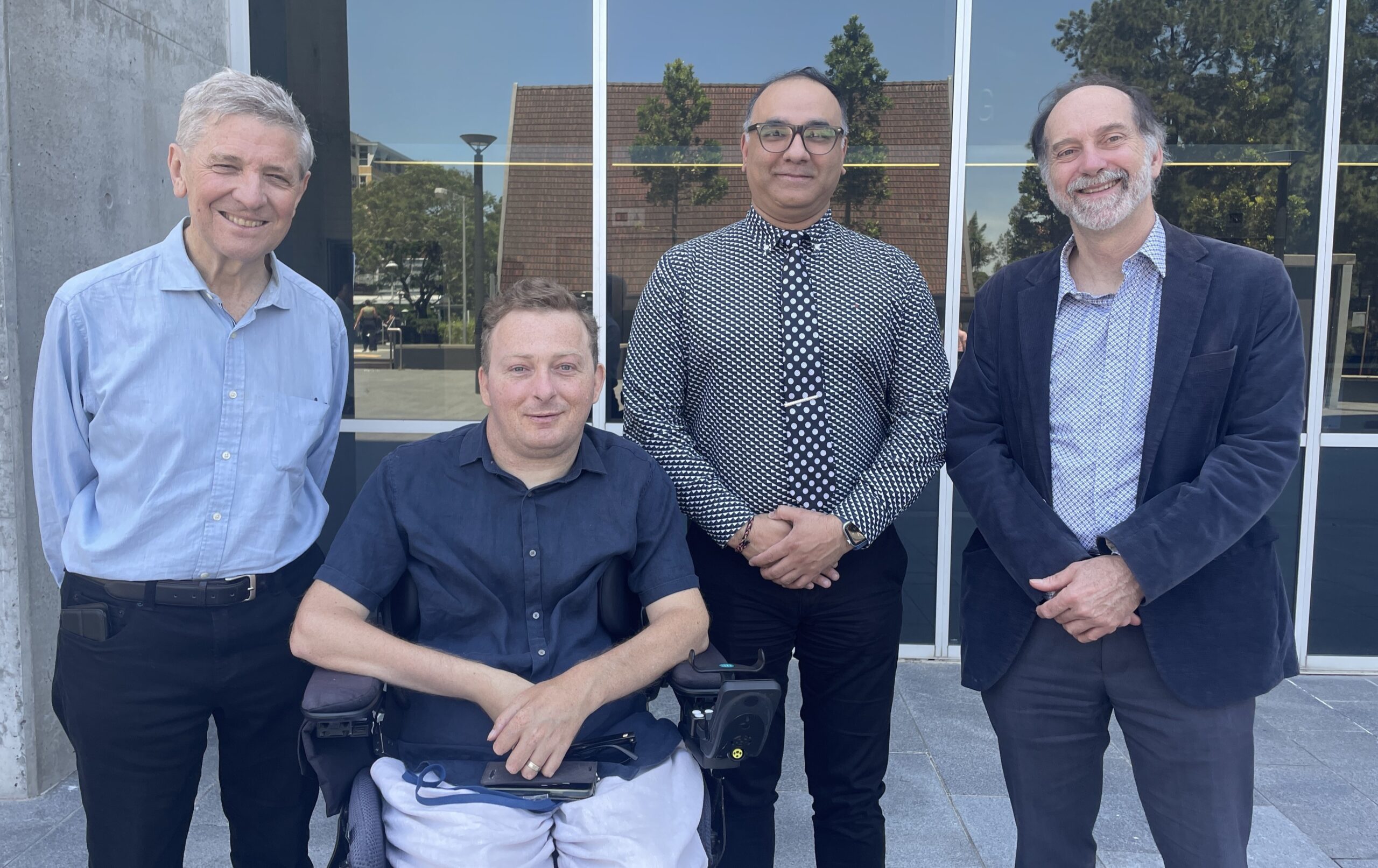
    After more than 25 years leading visionary research, Professor Ian Cameron has stepped down as the head of the internationally respected John Walsh Centre for Rehabilitation Research.

    Accomplished researcher, educator and clinician Professor Ashley Craig has been appointed to the role and will lead a large team of experienced and emerging investigators.

    Dr Mohit Arora steps into the new position of Deputy Head, with Dr Kishan Kariippanon the John Walsh Centre for Rehabilitation Research Manager.
    Professor Craig has paid tribute to his long-standing colleague.

    “Ian Cameron is one of Australia’s leading rehabilitation specialists and a world leader in complex injuries and physical outcomes, compensation issues, and ageing complications,” he said.

    “He was instrumental in the establishment and growth of the John Walsh Centre and has long advocated for rehabilitation to be recognised as a specific research area.

    “He has led many clinical trials related to rehabilitation, disability and ageing, while fostering a new generation of researchers, and encouraging them to develop their research careers.”

    Professor Cameron also played a key role in driving reforms within the CTP injury compensation scheme in NSW and developing best practice guidelines.

    Pioneering Rehabilitation Research

    Appointed in 1997, Professor Cameron’s vision was to develop an interdisciplinary research centre focusing on injury related disability and rehabilitation. The centre was to have both research and education roles, and these strengths were realised over time.

    NSW government funding supported the appointment of academic staff with backgrounds in rehabilitation medicine, neuropsychology, physiotherapy, occupational therapy and clinical psychology and psychophysiology.

    As part of Sydney University’s Faculty of Medicine, the centre had strong links with local, interstate and international researchers. The ties with the university also enabled the establishment of a rehabilitation stream in the Sydney Medical Program.

    Significant research support continues to be received from core funders icare NSW and the NSW State Insurance Regulatory Authority or SIRA. The centre has also been successful in achieving multiple National Health and Medical Research Council/ MRFF grants. Its research focus centres on musculoskeletal injury, spinal cord injury, traumatic brain injury, and psychological injury.

    Many PhD and other higher degree students have been supervised, and some have become leaders in health and related areas. Two are now mid-career researchers in the centre.

    The centre was located at Royal Rehab at Ryde until 2015 when it was renamed the John Walsh Centre for Rehabilitation Research and moved to the Kolling Institute. Increased funding for academic salaries was achieved in 2021 from icare and SIRA, which allowed the appointment of the next generation of researchers and educators.

    A new era

    Today, the centre continues to increase its research impact.

    Professor Craig said that in recent months, researchers have received several top international awards, including the International Spinal Cord Society gold medal, which was presented to Professor Lisa Harvey for her remarkable services to spinal cord injury research over many years.

    “There have been some major publications, including a breakthrough paper on the cumulative health burden following road traffic injuries in BMC Medicine, and Hannah Withers’ award for the best paper at the World Physiotherapy Conference,” he said.

    “The centre continues to encourage the next generation of early and middle-career researchers, with senior rehabilitation researchers holding leadership roles within the Kolling Institute.

    “Our investigators are also strengthening our research and educational collaborations with The University of Sydney, the Northern Sydney Local Health District, the NSW Health Agency for Clinical Innovation and through professional networks.

    “This is crucial as we work to extend our impact, support the community and improve long-term health outcomes.”  

  • Kolling Institute Year in Review

    Kolling Institute Year in Review

    The Kolling Institute Year in Review profiles our impressive and unique teams, and the impact of their crucial research.

    Our investigators are driving world-leading research into some of the most significant health challenges, from heart and kidney disease, chronic pain and cancer, to musculoskeletal, neurological and age-related conditions.

    With a large share of our researchers named amongst the top two per cent in the world, the Kolling Institute continues to build on its research success.

    As you read through the Year in Review, we would like to extend our thanks to our dedicated researchers and the many wonderful donors who help us deliver real improvements to the care we receive.

    Click here to check it out:

  • Spine Health Focus

    Spine Health Focus

    As we mark Spinal Cord Injuries Awareness week, we would like to highlight the clinicians, researchers and members of the community working to improve outcomes for people living with a spinal cord injury.

    Research improving spinal care

    At the Kolling Institute, we have a large number of people driving innovative and potentially life-changing research, including the expert team at the John Walsh Centre for Rehabilitation Research.

    Here, investigators are using the very latest and promising therapies to reduce the disabling pain often experienced by people with a spinal cord injury. They’ve developed national healthcare guidelines and they’re improving crucial resources. Our researchers are also providing valuable information about the best rehabilitation techniques.

    More than 50 years of spinal care and research at Royal North Shore Hospital

    Royal North Shore has a long history of advancing clinical care and research in spinal injury and spinal disease.

    This was driven by Professor Tom Taylor, who was appointed the inaugural Professor of Orthopaedic and Traumatic Surgery at the University of Sydney in 1969. He was a true clinical scientist, well before the term gained common parlance.

    Tom was a specialist spine surgeon and internationally recognised authority on spinal trauma and paediatric spinal pathology.

    In his position as head of Orthopaedics at RNSH, Professor Taylor not only grew the clinical spine service but also founded the Raymond Purves and the Murray Maxwell Biomechanics Labs. These are now part of the Kolling Institute and continue to conduct research into spine injury and disease.

    Research at the Raymond Purves Lab continues Professor Taylor’s legacy, with over 100 publications related to disc disease. These have made extraordinary contributions to our understanding of the cellular and molecular mechanisms of this condition, and advanced new treatment approaches using stem cells.

    SpineCare Foundation offering strong support

    Professor Taylor’s impact in spinal injury and disease extends beyond RNSH, through the SpineCare Foundation. It cares for children with spinal cord disease or injury, and initiated the schools’ scoliosis testing program for adolescent girls.

    The SpineCare Foundation continues today as part of Northcott, and in 2025, is celebrating 40 years of support for research, new resources and education for children with spinal cord injury and dysfunction.

    SpineCare is currently supporting two PhD projects at Western Sydney University, and every year funds multiple scholarships to support students with a spine associated disability to attend tertiary education and pursue a higher degree.

    This wonderful program reflects Professor Taylor’s firm belief in the importance and power of education.

    Continuing the RNSH and Kolling connection, Professor Chris Little, the current director of the Raymond Purves Research Lab, sits on the Board of the SpineCare Foundation.

    “I’m so pleased to be able to support research and education in spinal injury and disease, both through the discovery science we do in the lab and the opportunities made possible through the SpineCare Foundation,” he said.

    “Having even a small part in helping extraordinarily talented people with spinal injuries and conditions achieve their higher education goals through the SpineCare Scholarships is really humbling.”

    “I’m excited to publicise and support Spinal Cord Injuries awareness week this week.

    “Fittingly, on World Spinal Cord Injury Awareness Day (Sept 5), I will be co-hosting with Professor Ashish Diwan (Chair of Spinal Surgery University of Adelaide) and Prof Chris Maher (Director of the Institute for Musculoskeletal Health University of Sydney) the 7th Annual Sydney Spinal Symposium. The symposium aims to foster collaboration and knowledge exchange among professionals dedicated to improving spinal care.”

  • Researchers work to reduce debilitating spinal cord injury pain

    Researchers work to reduce debilitating spinal cord injury pain

    When we think of the impact of a spinal cord injury, we tend to focus on the significant limitations with the loss of mobility, but for a large share of people living with this injury, it’s actually the chronic pain which is one of the most challenging issues to manage long-term.

    Neuropathic pain affects about 60 per cent of people with a spinal cord injury. It’s generally felt at or below the zone of injury and is often described as sharp, burning, unbearable and even terrifying.

    It can lead to a range of challenges like depression, catastrophizing or panic thinking, poor sleep, social isolation and reduced physical activity.

    Professor of Rehabilitation Ashley Craig said medications like antidepressants, antiepileptics and opioids are used to treat neuropathic pain, but they offer limited relief and come with a host of side effects.

    “Most medications provide only a third of patients with up to a 30 per cent reduction in their pain, while other non-medication approaches have failed to have any real impact,” he said.

    However, an exciting clinical trial will shortly get underway as a result of a $2.2 million grant through the Medical Research Future Fund.

    The team from the Kolling Institute’s John Walsh Centre for Rehabilitation Research will work with national and international experts to investigate the impact of an innovative approach targeting pain pathways in the brain.

    This new approach will combine direct brain stimulation with an advanced interactive brain-computer neuromodulation therapy.

    Professor Craig said both these interventions are showing some promising results, and we are looking forward to measuring the impact of their combined approach.

    “Our research will aim to confirm if these therapies will offer significant and consistent improvements in neuropathic pain for people living with a spinal cord injury,” he said. 

    “Chronic pain after a spinal cord injury results in an altered cortical neurochemistry and blood flow resulting in cortical dysrhythmia.

    “This is where brain neuromodulation therapy can really help. It involves a non-invasive approach to correcting the dysrhythmia and improving pain.

    “Interactive brain computer therapy is an extension of established treatments, while direct brain stimulation is a well-tolerated form of non-invasive brain stimulation to promote brain plasticity.

    “We are keen to test these approaches through the clinical trial and help provide evidenced based guidelines to relieve neuropathic pain and improve outcomes for those living with a chronic spinal cord injury.”

    This clinical trial will also help researchers at the John Walsh Centre for Rehabilitation Research pursue other innovative psychological interventions to reduce catastrophizing thinking and subsequently neuropathic pain.

  • Combining medication and exercise could greatly reduce osteoporosis risk

    Combining medication and exercise could greatly reduce osteoporosis risk

    Researchers from the Kolling Institute and Royal North Shore Hospital are inviting women aged 50-80 to join a study to assess the effectiveness of combining exercise with medication for better bone and muscle health in postmenopausal women.

    Endocrinologist and researcher Dr Shejil Kumar said we know that exercise has benefits for bone and muscle health, and there are effective treatments available to strengthen bones.

    “However, what we don’t know is whether combining exercise plus medication at the same time can lead to even greater improvements in bone and muscle health than either approach on its own,” he said.

    The study will use a medication which is registered and approved in Australia and has been shown to increase bone density and reduce fracture risk in large international studies.

    The research team will aim to assess how different combinations of treatment improve bone density, muscle strength, body composition, physical function and risk of falls.

    Participants will be randomly assigned to different treatment groups, including a supervised group class focusing on weightbearing exercises and a home-based exercise program concentrating on mobility and balance.

    “We believe this combination will be more effective and could dramatically change the way we treat and prevent osteoporosis going forward,” Dr Kumar said.

    Researchers have recruited 45 women into the study and are hoping to reach a target of 75 by 2026.

    For further information email Shejil.Kumar@health.nsw.gov.au.

    (The study has been approved by the NSLHD Ethics Committee (2022/ETH01794)  

  • Unique online resource launched for Menière disease

    Unique online resource launched for Menière disease

    Researchers from the Kolling Institute and the University of Sydney have joined with international collaborators from Spain, America, South Korea and Brazil to develop a website to improve the genetic diagnosis and management of Menière disease.

    The Menière Disease Atlas of Genes and Cells is a free, open resource which can be used by researchers and clinicians globally as a reference dataset for diagnosis and personalised medicine.

    It can be used by researchers to better understand the molecular basis of hearing loss.

    The web portal hosts the reference multi-omic dataset which includes genomics, epigenomics and transcriptomic information.

    Kiana Bagheri, computer science research associate in the Kolling Institute’s Menière Disease Neuroscience Lab, and several Masters students in data science at Macquarie University designed the web portal.

    World leading researcher and head of the lab, Professor Jose Antonio Lopez Escamez said the resource will provide information for diagnosis and management of triggers for the condition.

    “Our collaboration means it will be possible to generate data from patients from across the world to support the genetic diagnosis of the disease.

    “We are working to incorporate data from more countries so we have a broader representation of the population.”

    Inflammation key indicator

    The genomic dataset lists all variants and genes found in 425 patients with Menière disease.

    “By examining the gene expression data through blood samples, we are able to determine the immune response in Menière disease patients.

    “This is a way to understand if the patient has a persistent inflammation associated with the disease, a finding observed in 50 to 60 per cent of patients.”

    He said researchers and doctors could search for genes and immune dysfunction, comparing data from one patient with the dataset to see if other patients have the same genetic mutations and type of immune response.

    In future, this may assist with tailoring therapy to each patient based on their genetic profile to reduce symptoms or cure the disease.

    “This is our goal, a personalised approach,” said Prof Lopez Escamez.

    “Practice can change quickly once most doctors perform genetic and immunological testing.”

    Patients who would like to have their genetic profile assessed can email meniereaustralia@sydney.edu.au

    The web portal can be accessed here: 

    If you have any questions, feedback, or suggestions about the portal, feel free to reach out at mdnl.atlas@sydney.edu.au 

  • International honour for Kolling researcher after 40-year service to spinal cord injury care

    International honour for Kolling researcher after 40-year service to spinal cord injury care

    A career dedicated to improving the physiotherapy management of people with spinal cord injury has been recognised with the highest honour by the International Spinal Cord Society.

    Leading physiotherapist and researcher Professor Lisa Harvey was presented with the gold medal in front of the world’s best spinal cord injury clinicians and researchers in Belgium.

    Professor Harvey, who works at the John Walsh Centre for Rehabilitation Research in close collaboration with the Spinal Unit at Royal North Shore Hospital, received the award for her outstanding contribution to the field of spinal cord injuries.

    Lisa has held many positions with the international society over the last three decades, including chair of the Education Committee, Editor-in-Chief of the society’s official publication, Spinal Cord, board member and now chair of the Science and Research Committee.

    She has been instrumental in the development of online training for healthcare professionals treating people with spinal cord injuries and has overseen the development of freely available software to support physiotherapists prescribing exercises.

    These resources can be found at www.elearnSCI.org and www.physiotherapyexercises.com

    Lisa has taught physiotherapy management for people with a spinal cord injury in most corners of the world and has authored the leading textbook in the field. Along with colleague, Joanne Glinsky, Lisa runs online courses for up to 25,000 students.

    She is also an active researcher, publishing widely and supervising PhD students. She is currently leading one of the largest international clinical trials to examine the effectiveness of a type of physiotherapy in the early days after injury.

    Lisa said she was very grateful to receive the top honour which brings an invitation to deliver a plenary lecture at the society’s conference in Sweden in November.

    “I feel particularly proud to have received the International Spinal Cord Society gold medal on behalf of allied health professionals, especially physiotherapists everywhere who have never been recognised in this way,” she said.

    “I would like to pay particular tribute to Associate Professor Joanne Glinsky who has been instrumental to my career and who, along with Claire Boswell Ruys, nominated me for this award.”  

NSWGOV logo