Blog

  • Researchers develop test to identify the severity of kidney disease

    Researchers develop test to identify the severity of kidney disease

    We may soon have a safer approach to diagnosing and measuring the progression of chronic kidney disease following new research by the team from the Kolling Institute’s Renal Research Laboratory.

    The condition is a global health issue, which now affects more than 13 per cent of the worldwide population.

    Chronic kidney disease is a progressive disease that leads to end-stage kidney failure, which is fatal without dialysis or a kidney transplant.

    Currently there are tests to detect advanced stages of the disease, but early detection is not possible.

    Biopsies are performed to confirm a diagnosis of chronic kidney disease, but this approach brings with it inherent risks such as bleeding, pain and hospitalisation.

    Encouragingly, researchers from the Kolling Institute and the University of New South Wales have now developed biomedical technology to provide accurate information around early diagnosis and prognosis, without the risks of an invasive biopsy procedure.

    Head of the Kolling’s Renal Research Laboratory Professor Carol Pollock said this exciting new technology provides clear information about kidney pathology by examining kidney cells in urine.

    “Having the ability to diagnose patients with a simple urine test represents a significant step forward for those with chronic kidney disease,” she said.

    “Importantly, this enables early intervention and effective management.”

    Project co-lead Associate Professor Sonia Saad said that being able to assess kidney pathology in a non-invasive way brings a host of benefits.

    “It will enable clinicians to examine the effects of new drugs on the kidney and monitor kidney pathology over time. This will provide valuable information on the effectiveness of treatments.”

    PhD student Dr Henry Wu has welcomed the chance to be involved in the project.

    “It’s been rewarding to have been part of the development of this important new technology. We would like to see it applied broadly across clinical practice given the health and economic benefits of this approach,” he said.

    The study is being led by Professor Pollock and Associate Professor Saad from the University of Sydney in collaboration with Professor Ewa Goldys and her team from the University of New South Wales.

  • Masters players committed to the team, ignore heart health

    Masters players committed to the team, ignore heart health

    Research from the University of Sydney and Royal North Shore Hospital provides insights into cardiac risk among footballers of masters age (35 years and older), an increasingly popular pastime.

    In what is believed to be the first study to assess cardiac knowledge and beliefs in this higher-risk amateur football group, researchers have found that one in five players experienced one or more potential cardiac symptoms while playing in the past year, but only one in four of them sought medical attention.

    The findings from the survey were published today in the Royal Australasian College of Physicians’ peer-reviewed journal The Internal Medicine Journal.

    Associate Professor Tom Buckley from the University of Sydney’s Faculty of Medicine and Health explained although regular exercise improves health, he and others have shown previously that strenuous exercise can cause a temporary increase in risk of heart attack and sudden death.

    “Although events during sport may be rare, each death is a tragedy and insight into motivations and health behaviours of masters’ players helps plan preventative approaches,” he said.

    “It is important for people to recognise and act quickly on symptoms when participating in sports events,” Associate Professor Buckley said.

    “Our research is also relevant for other sports besides football, which is the most common masters team sport.”

    Professor Geoffrey Tofler, senior author of the paper, and Professor of Preventative Cardiology at Sydney Medical School and cardiologist at Royal North Shore Hospital, says:

    “Although regular exercise improves health, the temporary increase in cardiac risk during strenuous exercise reinforces that it is important to recognise the warning signs of an impending cardiac event.

    “If a cardiac arrest occurs, acting promptly with CPR and defibrillator availability is critical.”

    “Our research provides insights for masters football players and other masters players so that they can continue to enjoy the benefits of weekend amateur sport but know when to seek help if required.”

    Some key findings include:

    • 21.6 percent experienced at least one potential cardiac symptom during physical activity in the preceding 12 months, but only 24.2 percent of them sought medical advice.
    • Almost half (49.6 percent) had little or no confidence that they would recognise a heart attack in themselves, with even less expressing confidence in recognising one in others.
    • In response to a hypothetical episode of chest pain while playing, less than half (46.6 percent) would leave the field immediately, while 49 percent would stay on the field for 5-10 minutes to see if the pain eased, and several A grade (16.6 percent) and B grade (2.2 percent) players would continue playing until their performance became unsatisfactory or until the end of the game.
    • Three quarters (76.5 percent) said they would use the internet for information about their symptoms before seeing a doctor.
    • Although knowledge of typical heart attack symptoms was high (>80 percent) it was lower (<40 percent) for less typical symptoms.
    • One high-risk attitude was that nearly half (45 percent) said if they thought they were having a heart attack, they would prefer someone to drive them to the hospital rather than have an ambulance come to their home.
    • While most (81.7 percent) would see a doctor within one week of experiencing a health problem such as chest pain, 18.3 percent would wait longer or not go.
    • A positive response was that prevention strategies were strongly supported by participants, in particular, defibrillator availability at games and training in their use, and educational information about cardiac health and warning symptoms.

    About the study

    Lead author Dr Matthew Francis said the Masters Football and Cardiovascular Risk survey collected self-reported, anonymous data via a web-based questionnaire, which sampled 153 amateur masters footballers from Sydney.

    Participants were of average age 49.3 ± 7.5 years, mainly male (92 percent), and from A -grade competition, B- or lower-grade competition and social games. Competitive drive and intensity of emotions while playing was greatest in the competition players.

    Dr Francis said that almost three quarters (73.3 percent) had played football for at least five years since 35 years of age, and participants exercised or played sport an average of 3.6 days per week.

    The most popular reasons for playing football were social interaction and enjoyment (93.5 percent), health and exercise (89.5 percent) and love of football (79.7 per cent).

    Co-author Mr Alexander Tofler, a student at the Susan Wakil School of Nursing and Midwifery, said players were invited to participate through researcher attendance at team sessions, or telephone and email communication with team and area coordinators who distributed study information.

    Because the level of education was high in survey participants (75 percent had university degrees), the findings may be a best-case scenario, assuming those with a lower educational level may have less awareness about cardiac issues.

    To find out more about heart-attack causes, warning signs and what to do, people are encouraged to visit the Heart Foundation resource page.  

  • Study confirms deadly risk of COVID-19 for those with heart failure

    Study confirms deadly risk of COVID-19 for those with heart failure

    The largest study of its kind in Australia has found patients with a history of heart failure are three times more likely to die from COVID-19.

    Launched last year at the outset of the pandemic, the AUS-COVID trial is investigating those who are most at risk from COVID-19 in Australia. To date, it has assessed hundreds of patients in 21 hospitals across the country.

    The study confirmed earlier concerns by clinicians and demonstrated that patients with pre-existing heart failure are three times more likely to die from COVID-19. Over 100,000 Australians live with heart failure according to data from the Australian Bureau of Statistics.

    The study found that patients with chronic kidney disease are twice are likely to die from COVID-19, while patients with chronic lung disease such as emphysema or chronic bronchitis are also around twice as likely to die from the virus.

    Kolling researcher and Head of Cardiology at Royal North Shore Hospital Professor Ravinay Bhindi said the findings have provided valuable data to assist in the treatment of new cases of COVID-19.

    “The research is providing timely advice for clinicians, helping them identify the patients most likely to deteriorate and therefore in need of a higher level of care,” he said.

    “These patient outcomes and emerging trends are also underpinning the importance of vaccination.

    “It’s critical that all patients with heart failure and other chronic conditions are vaccinated against COVID-19. We now have the data to show that if you have one of these chronic conditions and you’re not vaccinated when you get COVID-19, you are much more likely to die.

    “Our research is based on hundreds of cases across Australia, many with tragic outcomes. It’s important that we use this information to inform the care we provide for patients, and address any vaccine hesitancy with real-life experience.”

  • Life after cardiac arrest

    Life after cardiac arrest

    Just over two years ago, Ian Hutchinson (Hutch) was cycling with a friend on Sydney’s northern beaches, taking part in an activity he regularly enjoyed with his mate. But that morning was to have a life-changing impact, with Hutch suffering a sudden cardiac arrest midway through the ride.

    It was only the quick thinking of his friend Don MacKee and a group of bystanders who called triple 0 and immediately began CPR, that saved Hutch’s life.

    He was treated at Royal North Shore Hospital by interventional cardiologist and Kolling researcher Professor Gemma Figtree, and despite being clinically dead for a remarkable 19 minutes, Hutch survived, recovered and is today fit and healthy.

    “I am very lucky to be here and enjoying my life. 91 per cent of people who have an out-of-hospital sudden cardiac arrest don’t make it, so I realise how fortunate I am.

    “I had never experienced any problems with my heart, I exercised most days and looked after my health, so the cardiac arrest was completely out of the blue. We still don’t know the cause.

    “I now have an internal cardiac defibrillator in my chest in case there are any further problems or irregularities. For me it’s an insurance policy, giving me confidence to embark on exercise and most of the activities I used to enjoy.

    “I am now an advocate for CPR and founded CPRfriendly.org to raise awareness and public access to defibrillators. This is my way of trying to pay it forward and help others.”

    Hutch says he is indebted to the team at Royal North Shore Hospital and Professor Gemma Figtree, a leading cardiologist, internationally respected researcher and president of the Australian Cardiovascular Alliance.

    “Gemma and the team have been excellent all the way through. There’s nothing I could fault.

    “I not only benefited from her expertise and experience during those critical moments straight after my sudden cardiac arrest, but two years later Gemma is monitoring my condition and adjusting my medication where necessary.

    “It gives you peace of mind and confidence when you have someone like her as your specialist, knowing you are receiving the best care, backed by science and clinical expertise.” 

  • Kolling researchers identifying COVID-19 impact on heart health

    Kolling researchers identifying COVID-19 impact on heart health

    The largest study of its type in Australia will investigate the impact of COVID-19 on younger patients with new trends emerging around the cardiac complications from the Delta strain of the virus.

    Launched last year, the AUS-COVID trial assessed more than 640 patients in 21 hospitals across Australia, recording cardiovascular complications.

    From this group, 125 were people were admitted to intensive care units, 70 required intubation and 92 patients died.

    Initial study results indicate one in twenty five patients admitted to hospital with COVID-19 developed atrial fibrillation or abnormal heart rhythm, and this occurred more frequently in those over 65, in 1 in 16 patients. Abnormal heart rhythm can lead to stroke and requires prompt treatment.

    Kolling researcher Professor Ravinay Bhindi, and Head of the Cardiology Department at Royal North Shore Hospital, said the trial found that other concerning complications of COVID-19 such as heart failure and heart inflammation (myopericarditis) were not as common as expected, with one in fifty patients experiencing heart failure, and one person in one hundred suffering clinically significant heart inflammation.

    “The initial results of the AUS-COVID study demonstrate that cardiac complications from COVID-19 while concerning are not as common as we initially feared they would be,” he said.

    “The rates of complications were reassuringly lower than those published in other countries across Europe and North America.”

    As the Delta strain of COVID-19 continues to spread in parts of Australia, researchers will now shift their focus towards assessing the cardiac complications of this highly-contagious strain.

    “We are seeing initial reports of an increase in cardiac complications, including a rise in the number of younger patients experiencing significant cardiac events, such as myocarditis, or inflammation of the heart.

    “These preliminary indications point to a concerning new trend for a group which has until now, largely escaped significant health complications from COVID-19.”

    Professor Bhindi said the rising number of cases demonstrates the importance of the study to help inform clinicians around the likely outcomes and best models of care for these patients.

    “As the largest registry of cardiac complications from COVID-19 in Australia, it will have a key role in improving health outcomes, and potentially saving lives.”

    The initial results of the study are being published in the Medical Journal of Australia and Heart, Lung and Circulation.

  • Recognition for a remarkable career

    Recognition for a remarkable career

    Kolling Institute researcher and Royal North Shore Hospital clinician Professor Carol Pollock has been recognised for her extraordinary contribution to healthcare in this year’s Queen’s birthday honour roll.

    Professor Pollock has been appointed an officer of the order of Australia for her distinguished service to medical research, education and science, nephrology, and clinical practice and governance.

    As a renal medicine specialist and internationally respected academic, Prof Pollock has had a remarkable career as a clinician, researcher, lecturer, mentor and advocate.

    She has published over 390 papers in clinical medicine and basic science, and is an inaugural Fellow of the Australian Academy of Health and Medical Sciences.

    Prof Pollock has had an extensive range of health leadership roles, and is currently the Chair of Kidney Health Australia, Chair of the NSW Bureau of Health Information and Deputy Chair of the Australian Organ, Tissue and Transplant Authority. She was chair of the NSLHD board from 2010-2016.

    She is a member of the Australian National Health and Medical Research Council, on several industry boards, and an Ambassador of Business Events Sydney.

    Her dedication to her clinical and research endeavours have been recognised with many accolades, including a ministerial award for excellence in cardiovascular research and a Vice Chancellors award for research supervision from the University of Sydney.

    Prof Pollock has welcomed the Queen’s birthday award, saying it is an honour and a privilege to be recognised with an order of Australia.

    “It’s important to note that I have a team who has contributed to this recognition so I am immensely grateful to all those who have supported me in my endeavours,” she said.

    “A really positive aspect of receiving this award has been reconnecting with people that I haven’t seen in a very long time, including school and university friends, many colleagues who have retired from the health system and in some cases partners of colleagues who have passed away.

    “I didn’t realise so many people read the honour lists. The award has rekindled friendships and collaborations for which I am grateful.”

  • Kolling researchers join global effort to reduce heart disease in women

    Kolling researchers join global effort to reduce heart disease in women

    Two leading cardiovascular experts have been appointed to a prestigious world expert panel to reduce rates of cardiovascular disease in women.

    Royal North Shore Hospital (RNSH) interventional cardiologist and Kolling Institute researcher, Professor Gemma Figtree, and RNSH senior hospital scientist and Kolling Institute researcher, Dr Anastasia Mihailidou, have been appointed commissioners of The Lancet women and cardiovascular disease Commission.

    The pair joins the all-female panel of 17 experts who are calling for urgent action on cardiovascular disease (CVD) in women in a report recently released.

    Both Gemma and Anastasia were invited to join the commission, along with 15 other leading female CVD experts to provide recommendations on how to reduce the burden of the disease – which is the leading cause of death among women.

    “The Commission Report released in The Lancet is the result of three years of work to collect and collate the different sources of data and research, as well as numerous regional parallel efforts underway to provide recommendations to reduce the global burden of cardiovascular disease in women by 2030,” Anastasia said.

    “It provides the starting point for a global strategy for call to action to mobilise and energise the many key stakeholders, health-care professionals, policy makers, and women themselves for a healthier future.

    “The Commission will continue to observe trends, evaluate the effect of current recommendations, and suggest actionable key initiatives to combat cardiovascular disease in women during the next decade.”

    The Commission aims to help reduce the global burden of cardiovascular conditions – including heart disease and stroke by 2030. Cardiovascular disease is responsible for 35 per cent of deaths in women each year.

    High blood pressure is the greatest risk factor contributing to years of lost life from CVD in women, followed by high body mass index and high low density lipoproteins (LDL) cholesterol.

    Gemma said while these well-established risk factors might affect women differently than men, there are sex-specific risk factors such as premature menopause and pregnancy related-disorders that must be more widely recognised and prioritised as part of treatment and prevention efforts worldwide.

    “This report lays out the gaps and challenges, and identifies strategies required to begin to improve the health of women’s hearts around the world,” she said.

    “The commissioners are committed to work with researchers from across the translational pipeline to unravel novel mechanisms, best prevention and treatment strategies, and to improve equitable access.”

  • Researchers drive global call to action to tackle world’s leading cause of death

    Researchers drive global call to action to tackle world’s leading cause of death

    A team of researchers from the Kolling Institute, The University of Sydney, Monash University and La Trobe University have led a global call to action to accelerate new approaches for cardiovascular disease (CVD) drug solutions.

    CVD is the leading cause of death globally. Since the start of the pandemic approximately 18 million people have died of CVD, with the majority from low- and middle-income countries.

    The epidemic of CVD is a global phenomenon, however equitable access to effective therapies continues to be an international challenge. The COVID-19 pandemic has demonstrated what can be achieved when the world is faced with an acute health problem in urgent need of solutions. In the special feature article, co-published in leading journals European Heart Journal and Circulation, the authors argue that we must approach the fight against CVD, the world’s greatest killer, with the same level of gumption.

    Kolling Institute researcher Professor Gemma Figtree, Professor Rebecca Ritchie from the Monash Institute of Pharmaceutical Sciences and La Trobe University’s Professor Grant Drummond who leads the La Trobe Centre for Cardiovascular Biology and Disease Research, have led the call to action through their shared affiliation with the Australian Cardiovascular Alliance (ACvA) – Australia’s peak leadership body for the advancement of heart, stroke and vascular disease research.

    The University of Sydney’s Professor Figtree, who is also President of the ACvA, said: “As we continue to wrestle with the immense challenge of implementing equitable access to established evidence-based treatments for CVD, substantial gaps remain – particularly in low- and middle-income countries.”

    “Much like we’ve seen with COVID-19, we’re calling for the global mobilisation of researchers, clinicians, industry leaders and policy makers to accelerate discovery, translation and impact in CVD medicine.”

    Professor Rebecca Ritchie, Drug Discovery Biology Theme Leader at MIPS said: “Developing a global approach to transform drug discovery for cardiovascular disease, whilst maintaining efforts towards equitable access to established effective treatments, is an imperative not an option.”

    “Since the start of the pandemic, the extent of collaboration between researchers, industry, government and the community has been unprecedented – let’s continue the momentum applied to address COVID-19 and commit to taking similar steps in the fight against CVD, the world’s biggest killer.”

    The authors have outlined the most urgent challenges and potential solutions for accelerating drug discovery and translation in the cardiovascular space, along with the next steps required to drive global collaboration to tackle CVD drug solutions.

    The international roundtable identified a number of priority areas across how patients are classified beyond the traditional risk factors such as high blood pressure and cholesterol, smoking, lack of physical activity, obesity and comorbidities such as diabetes, for cardiovascular disease. Using this as a platform to discover new biological mechanisms that cause diseases such as heart attack and heart failure and hinder recovery and quality of life, the authors recommend then targeting these mechanisms to develop precision (personalised) medicine for affected patients.

    “The plan is to establish collaborative preclinical and clinical trial networks to enable faster development of new treatments for cardiovascular disease. Together, the international team is now working on progressing these priority areas, engaging with industry, regulatory bodies, governments and the community on a global scale,” said Professor Ritchie. 

  • Our researchers secure highly competitive national funding

    Our researchers secure highly competitive national funding

    Two of our leading researchers will drive key Australian projects following a funding announcement from the National Health and Medical Research Council. (NHMRC)

    More than $1.4 million from the partnership grant program will go to Kolling researcher and RNSH interventional cardiologist Professor Gemma Figtree and her team for a study to reduce coronary artery disease. The world-first project will receive an additional $2 million from industry and health partners.

    Professor Figtree and her team will assess a new way to identify the risk of coronary artery disease – the most common form of heart disease which can lead to heart attacks.

    Professor Figtree said our current assessment is based on the well-documented risk factors of smoking, hypertension, diabetes and high blood cholesterol.

    However, between 15 and 30 per cent of people who experience a heart attack don’t have these traditional risk factors, so a new early detection test, called a polygenic risk score has been developed.

    “As part of our research, we will be providing some robust data to measure the effectiveness of this new test using genetic markers to predict heart health,” she said.

    “If it proves effective, we anticipate the new early warning test will directly inform clinical guidelines and government policy.

    “It will help us identify those at risk of coronary artery disease so they can receive preventative treatment, similar to that received by those with the traditional risk factors.

    “We anticipate this approach will reduce heart attacks and prevent deaths.”

    An NHMRC partnership grant of $1.5 million will also go towards a study to improve the safety and quality of emergency nursing care. More than $3.6 million will be granted in total.

    The NSLHD’s Nursing and Midwifery Director of Research Professor Margaret Fry will help lead the national project, examining a standardised assessment and management approach for all emergency care nurses.

    Professor Fry said the evidenced-based system is needed with more than eight million people attending Australia’s 287 emergency departments each year.

    “Emergency nurses are the first and sometimes only clinicians that patients see, so the quality of this initial assessment and ongoing treatment is vital. Patient safety is contingent on accurate assessment, intervention and escalation,” she said.

    “There is currently no standardised way that Australia’s 29,000 emergency nurses are taught to assess and manage their patients, so the research will examine the HIRAID system, a validated framework developed by the research team.

    “More than 30 NSW, Victorian and Queensland hospitals will be involved in the trial over the next five years, and if this approach proves effective, it’s likely to be adopted not only in Australia but internationally as well, across Fiji, Sri Lanka and Nepal.

    “We are anticipating a positive response, and expect the training will lead to a 20 per cent reduction in inpatient deterioration events and an increase in patients reporting a good ED experience,” she said.

  • Every week counts in the lead up to birth

    Every week counts in the lead up to birth

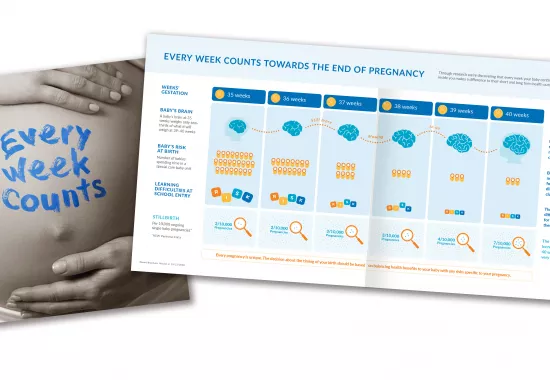
    The Kolling’s Women and Babies Research team is calling for a reduction in the number of early births, with the latest research highlighting the benefits of labour as close to 40 weeks as possible.

    Twenty years ago, the majority of women gave birth at 40 weeks. Today it’s between 38 and 39 weeks and continuing to get earlier.

    This trend is due to the growing number of planned early births at 36, 37 and 38 weeks, either by induction of labour or by planned caesarean section prior to the onset of labour.

    Women and Babies Research Director Professor Jonathan Morris said we now have increasing evidence around the benefits of babies being born as close to 40 weeks as possible.

    “There’s very important development in the last few weeks of pregnancy,” he said.

    “A baby’s brain for instance increases in weight by 50% in the last 4-5 weeks of pregnancy.

    “For every week that a baby is born earlier than 39 weeks, there is a small but significant increase in the risk of the child performing less well in school assessments.

    “Our research indicates that for every week a baby can remain safely inside their mother’s womb, their short and long-term health and developmental outcomes improve.”

    Professor Morris acknowledges the circumstances around each birth need to be considered.

    “Any benefits of prolonging pregnancy need balancing against the small risk of stillbirth which increases with gestational age from 2 per 10,000 ongoing pregnancies at 35 weeks of gestation up to 7 per 10,000 ongoing pregnancies at 40 weeks of gestation.

    “With new research data now available, we would like to see women offered additional information around the risks of stillbirth, and we have now reviewed the information provided by our research team across Australia.

    “It’s important for women and their healthcare providers to be able to make informed decisions based on the latest evidenced-based data and research.”

    Further information is available through the ‘Every Week Counts’ campaign brochures and website. www.everyweekcounts.com.au

NSWGOV logo