Check out our Kolling Institute Year in Review 2022 celebrating our research success. It highlights our world-leading translational research and our impact across our priority research areas. Click on the link here.


Check out our Kolling Institute Year in Review 2022 celebrating our research success. It highlights our world-leading translational research and our impact across our priority research areas. Click on the link here.
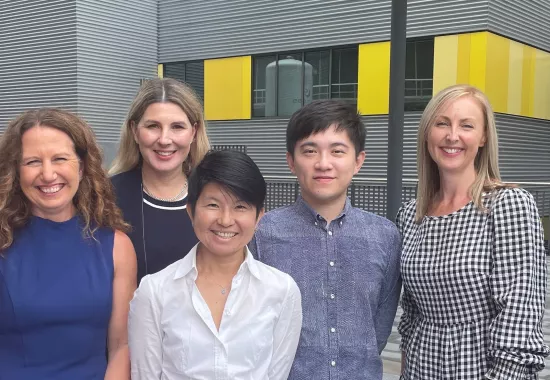
We are pleased to announce the successful recipients of our annual Kolling Institute awards program.
Launched in 2021, the program has been expanded to acknowledge a greater number of researchers and their individual contribution to the Kolling.
The awards aim to recognise the many outstanding achievements across education, clinical practice and service, publications, research, as well as overall accomplishment.
This year, seven researchers are being presented with awards across the following five categories:
PhD impact (joint award winners)
Dr Danielle Stone – Clinical Speech Pathologist, RNSH, and PhD candidate, Neuromuscular Imaging Research Lab
Dr Michal Lubomski – Neurologist, RNSH and PhD Candidate, Neurogenetics Research
Supervision impact (joint award winners)
Associate Professor Sarah Glastras – Endocrinologist, RNSH and Postdoctoral Researcher, Renal Research Laboratory
Dr Sumit Sahni – Senior Research Fellow, Bill Walsh Cancer Research Lab
Best clinical output
Dr Jillian Eyles – Physiotherapist, RNSH and SHPs Research Translation Fellow, Osteoarthritis Research
Best EMCR basic science paper
Dr Chia-chi Liu – Senior Research Fellow, Cardiac Membrane Biology Laboratory
Best paper overall
Dr Yandong Shen – Postdoctoral Researcher, Northern Blood Research Centre
Kolling Institute Academic Director Professor Jim Elliott congratulated the researchers for their invaluable contribution over the past 12 months.
“It’s encouraging that we have so many dynamic researchers working across the Kolling, and this impressive group has had an intrinsic role in our progress, impact and research success over the past year,” he said.
“Each of these award winners is driving substantial improvements in their individual areas of expertise, and I’m pleased that through the Kolling awards program we’re able to direct the spotlight to their significant achievements.”
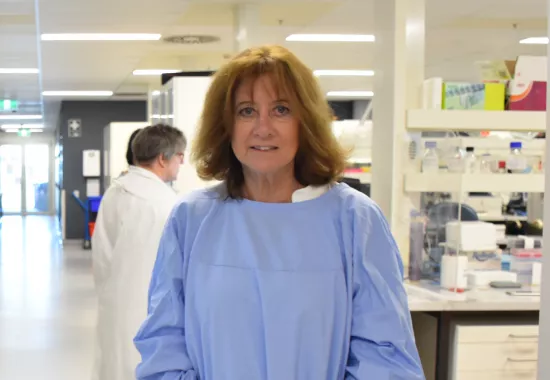
We would like to congratulate Professor Carol Pollock who has received a highly prestigious award for her extraordinary commitment to research.
The International Society of Nephrology has announced Professor Pollock is the 2023 recipient of the Alfred Newton Richards award for outstanding research in the field of nephrology.
Carol has welcomed the news.
“I am extremely honoured to be recognised by the ISN for the research my team and I have done over many years,” she said.
“Prior recipients of the Alfred Newton Richards Award are exceptional and I am proud to be included in this relatively small group of nephrology researchers internationally.”
As a renal medicine specialist and internationally respected academic, Professor Pollock has had a remarkable career as a clinician, researcher, lecturer, mentor and advocate.
Carol has published over 440 papers in clinical medicine and basic science. She has over 32,000 citations and is an inaugural Fellow of the Australian Academy of Health and Medical Sciences.
Carol has had an extensive range of health leadership roles, and is currently the Chair of Kidney Health Australia, Chair of the NSW Bureau of Health Information and Deputy Chair of the Australian Organ, Tissue and Transplant Authority. She was chair of the NSLHD Board from 2010-2016.
Carol is on several industry boards and is an ambassador of Business Events Sydney.
Her dedication to her clinical and research endeavours have been recognised with many accolades, including a ministerial award for excellence in cardiovascular research and a Vice Chancellors award for research supervision from the University of Sydney.
In 2021, Carol received the Haiyan Wang Award which recognises individuals who have made substantial contributions to the clinical or translational science and development of nephrology service and education in the Asia Pacific Region.
In that year, Carol was also appointed an officer of the Order of Australia (AO) for her distinguished service to medical research, education and science, nephrology and clinical practice.
Congratulations to Kolling Institute researcher and Royal North Shore Hospital cardiologist Dr Steve Vernon who’s been awarded a highly sought-after postdoctoral fellowship by the Heart Foundation.
The fellowship is designed to support talented early career researchers and emerging leaders.
Dr Vernon has welcomed the award.
“I am delighted to receive this postdoctoral funding from the Heart Foundation as it will allow me to expand upon the work I completed during my PhD studies at the Kolling Institute and the University of Sydney.”
Dr Vernon is a clinician researcher working to identify new risk factors and blood markers of early heart disease to help improve risk prediction and prevent heart attacks.
The Heart Foundation fellowship will allow Dr Vernon to continue his work with the BioHEART study, which is using advanced imaging, risk factor and blood marker assessments to identify new signs of heart disease.
This will be particularly important for people who are susceptible to heart disease, without the traditional risk factors.
Dr Vernon will also be working on a study using a new genetic risk score, incorporating thousands of genetic markers, to identify people at risk of heart disease.
This study will focus on designing a new pathway using the genetic risk score for people who are found to have a low or intermediate risk after a traditional heart health check.
Currently, this group is offered counselling to modify their lifestyle, but they’re not offered medications to reduce their risk of heart disease.
It’s estimated up to 20 per cent of this group may be at high risk of developing coronary artery disease in their lifetime based on their genetic risk.
Dr Vernon plans to use the genetic risk score to identify patients at increased risk so that further investigations can be carried out using a CT scan coronary artery calcium score.
This research has the potential to identify a group of people who will benefit from more proactive prevention strategies including targeted medications.
“In my clinical practice as an Interventional Cardiologist, patients diagnosed with life-threatening heart attacks or unexpected cardiovascular disease commonly ask ‘why me?’
“Inspired by my patients, this program of research aims to broaden our knowledge base to answer this question, but more importantly, it has the potential to identify people at risk well before they develop symptomatic heart disease so that we can implement effective preventative therapies.”

Generous funding provided through the Douglas and Lola Douglas scholarship is strengthening evidence around the long term impacts on children born to mothers with obesity and gestational diabetes.
Endocrinologist and Kolling Institute researcher Dr Tessa Weir has been able to continue her valuable research as a result of being awarded the scholarship.
“I am incredibly grateful for the support provided through the Douglas and Lola Douglas scholarship,” she said.
“It has meant I’ve been able to pursue my postgraduate studies and support improvements in the care of women with obesity and gestational diabetes, and their babies.
“My hope is to fill the gaps in evidence and generate guidelines and policy to extend prenatal and perinatal obstetric care, particularly for women managing these health challenges.
“Our research will involve a systematic review to detail how maternal obesity and gestational diabetes directly affects neonatal outcomes. We will also be using new artificial intelligence techniques to develop a personalised risk predictive tool for perinatal outcomes.
“This will also consider the timing of births, with early births linked to many adverse impacts such as developmental delays.”
Dr Weir said this is such an important field of research, with maternal obesity and gestational diabetes contributing to significant, long-term health challenges for unborn children.
“We know from earlier research by fellow Kolling researchers Associate Professor Sarah Glastras and Professor Carol Pollock that these maternal factors can influence foetal programming, and alter an unborn child’s future metabolic risk. This in turn increases the likelihood of ongoing weight issues.
“The prevalence of child and adolescent obesity is increasing, with an alarming 25 per cent of children in Australia over the healthy weight range.
“Childhood obesity is associated with an increased risk of developing cardiovascular disease, chronic kidney disease, diabetes and psychological conditions.
“All of these issues can have a life-long impact, compromising quality and even length of life, so it’s tremendously important we drive research progress in this area and broadly improve the quality of care provided to women and their babies.
“Overall, this scholarship is not only helping me complete my PhD studies, and broaden my experience as a clinician-researcher, it will also hopefully improve the future health of countless children born to women with gestational diabetes and obesity.”
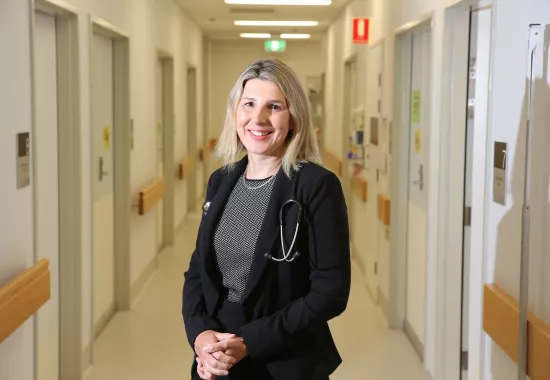
Kolling researcher and Royal North Shore Hospital endocrinologist Associate Professor Sarah Glastras will have a key role in a national effort to improve long-term outcomes for those with diabetes.
The initiative has brought dozens of experts from across the country together under the banner of the Australian Centre for Accelerating Diabetes Innovations Research.
International collaborators will also be involved, providing crucial research data and supporting advances in the delivery of care.
The centre, which has been made possible with Federal Government funding, will drive improvements in the care of those with diabetes from diagnosis through to its devastating complications.
Importantly, the program will aim to support Indigenous and non-Indigenous Australians, addressing inequities in care and increasing life expectancy for all Australians. Targeted programs will ensure equal access to new products and clinical trials regardless of cultural backgrounds or remote locations.
Associate Professor Glastras is the training lead for the project, and will oversee the program along with a team of training advisors from each state and territory.
“This is a tremendously exciting program bringing the brightest minds in the country together to deliver new models of care for the diagnosis, prevention and treatment of diabetes and its complications,” she said.
“I’m thrilled to have been appointed the ACADI training lead and I look forward to providing much needed support to trainees, especially in the areas of research translation – making sure that the research that we do leads to important benefits and outcomes for our patients.
“The ACADI training program will leverage the expertise from the medical and research community, government and related agencies, commercial partners and people with diabetes.”
The national initiative has identified three priority areas, including a focus on diabetic kidney disease, diabetic foot syndrome and complications from hyperglycaemic hyperosmolar syndrome.
A third of people with diabetes develop diabetic kidney disease, which is the leading cause of end-stage kidney disease, and a major risk factor for cardiovascular disease and premature death.
“Sadly, current interventions only slow the progression of diabetic kidney disease.
“It’s anticipated there will be an increasing demand for kidney replacement therapy with our ageing population and an increasing prevalence of diabetes in younger age groups.
“We are very hopeful that this national initiative will accelerate innovations to improve the lives of people with the disease and at risk of developing the condition.
“Our research will focus on the early identification of people at risk, improvements in diagnosis, prognosis and management. We hope that this collaborative approach will deliver real improvements in the care offered to all communities.”
In further encouraging news, Sydney Health Partners has established a Diabetes and Obesity Clinical Academic Group. Associate Professor Glastras will be part of this new collaborative group which will explore research gaps in obesity, pre-diabetes and diabetes treatment.

Kolling Institute researcher and RNSH Senior Hospital Scientist Dr Anastasia Mihailidou says she was delighted to showcase the district’s work in blood pressure management on the world stage.
Dr Mihailidou, who is head of the Kolling’s Cardiovascular and Hormonal Research Lab, presented at the recent International Society of Hypertension Scientific Meeting in Japan.
Globally renowned academics and clinicians were among those who attended the event, which profiled the latest clinical and biomedical research into the treatment of hypertension.
“I was excited to talk about my professional passion about accurate blood pressure measurement,” said Dr Mihailidou, who presented on Hypertension Therapy Using Diagnostic Service for Ambulatory Blood Pressure Monitoring.
“I am proud that my work was considered of interest to the international community involved with this meeting.
“Outlining some of the work being done in this area locally was a great honour not only for myself, but for Royal North Shore Hospital and the Northern Sydney Local Health District.”
This was the ISH’s 29th Scientific Meeting, which this year had the theme, ‘The Wisdom for Conquering Hypertension.’
The five-day event, which took place in the Japanese city of Kyoto, featured several presentations on issues including technological developments and the impact of diet and COVID-19 on cardiovascular health.
Presenting at the event was the latest accolade for Dr Mihailidou, who has previously been appointed by The Lancet to the Commission on Cardiovascular Disease in Women.
Her work has informed clinical practice nationally through the development of the Australian Guidelines for Ambulatory Blood Pressure Monitoring.
Dr Mihailidou, who is also Education Portfolio Executive Member with the High Blood Pressure Research Council, said it had been terrific to present at the meeting.
“I felt it was important to address some of the misinformation that has come from different sources but also confirm what I believe to be the most accurate method in the management and detection of blood pressure,” she said.
“To present was a great honour for myself personally, but I’m ecstatic that a global audience was exposed to the work being done here in the District.”
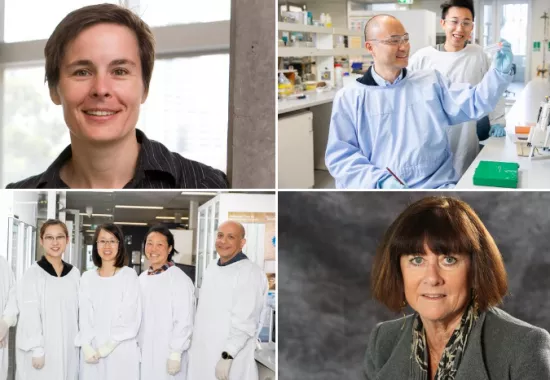
We would like to congratulate Professors Carol Pollock and Gemma Figtree who have received significant National Health and Medical Research Council Investigator Grants.
Despite a tremendously competitive field, both clinician/researchers have been awarded $2 million to progress their world-leading research and improve long-term patient outcomes.
The announcement highlights the experience and expertise at the Kolling Institute, with Professors Pollock and Figtree joint leaders of our Cardiovascular and Renal Priority Research Area.
Professor Figtree’s research will investigate innovative solutions to reduce heart attacks for those without the typical risk factors.
Professor Figtree, an interventional cardiologist at Royal North Shore Hospital, said approximately one-quarter of first-time heart attack patients do not have any of the typical risk factors of coronary artery disease, and yet they have developed what is regarded as silent coronary artery disease without any symptoms.
Gemma and her team will use this group to extend their understanding of the disease and identify markers relevant to all patients at risk of a heart attack.
Her program will drive the discovery of new biomarkers for the early detection and treatment of coronary artery disease. This will lead to improved knowledge and health outcomes, and importantly, earlier diagnosis and treatment of the disease.
“I am enormously grateful to the NHMRC for this support. It will help my team follow exciting leads towards clinical translation, and help develop a new way of detecting coronary artery disease and preventing heart attacks,” she said.
Professor Carol Pollock’s program of research will work to reduce the personal and societal impact of kidney disease.
Carol is a renal medicine specialist at Royal North Shore Hospital and an internationally respected academic at the Kolling Institute.
Chronic kidney disease currently affects over 13 per cent of the global population and 10 per cent of Australians. End-stage kidney disease is escalating and directly costing the Australian economy around $1.8 billion a year.
Professor Pollock says despite our treatment strategies, a progressive loss of renal function is inevitable.
Our program will involve three main components, including an assessment of new strategies to prevent or slow the development of kidney disease for which we currently have some positive preliminary data. These include ibody therapeutics, and the delivery of mesenchymal stem cells.
We will also expand our program promoting the regenerative capacity of kidney fibroblasts, and finally, we will thoroughly analyse the models involved kidney disease that spontaneously recover from kidney injury compared with the models that progress to irreversible fibrosis.
“I’m really thrilled to have secured this funding to undertake our work and develop our research which we hope will have transformational benefits for patients with kidney disease,” she said.
“While early-stage research requires several years to translate to clinical benefit, we are well placed at the Kolling to speed-up improvements in patient care.
“For a clinician researcher, the Kolling Institute, a partnership between the University of Sydney and the Northern Sydney Local Health District, provides the ideal environment to take basic research to clinical trials.
“Our Renal Research Laboratory has researchers from diverse professional backgrounds and this will facilitate the successful delivery of the research.
“Importantly, we are also well supported by partners in the biotech and pharma industries to accelerate our research into practice.
“The security that five years funding brings is welcomed by my exceptional scientific staff and I would also like to acknowledge the philanthropic support we have received.
“I fully recognise that without seed funding from philanthropists this funding would not have occurred.
“I am grateful for the untied funding that has allowed me and my laboratory to develop preliminary data, which has in turn paved the way for these funds.
“We look forward to progressing our work and sharing some amazing results over the next five years.”

Improved accessibility to a treatment for kidney disease has been welcomed by Kolling Institute researcher and Royal North Shore Hospital clinician Professor Carol Pollock.
Forxiga (dapagliflozin), an oral medicine which can help slow the progression of proteinuric chronic kidney disease, has now been listed on the Pharmaceutical Benefits Scheme.
The listing aims to help those with the condition by slowing the progression to kidney transplantation and dialysis.
Professor Pollock, who is also Chair of Kidney Health Australia, said the PBS listing should give clinicians more options to help manage the condition.
“Patients diagnosed with proteinuric chronic kidney disease currently have few treatment avenues,” she said.
“The priority is to slow the progression to dialysis and kidney transplantation, so it’s encouraging this option will now be available.
“This medicine has been used to manage type 2 diabetes and heart failure, and it is pleasing to see that it will be an accessible option supporting the treatment of patients diagnosed with this type of kidney disease.”
Chronic kidney disease is a serious, progressive condition defined by decreased kidney function. It is often associated with an increased risk of heart disease or stroke.
The recent Australian Institute of Health and Welfare Chronic Kidney Disease report found that the condition contributed to about 18,000 deaths in Australia in 2020.
“It is essential that Australians living with chronic kidney disease have access to innovative treatments so they can better manage their condition,” Chris Forbes, CEO of Kidney Health Australia, said.
“More broadly, we need to encourage Australians to understand if they are at risk of chronic kidney disease and if so, to speak with their GP to seek an early diagnosis.
“An early diagnosis together with education, treatment and support will improve the health of the many Australians affected by the disease.”
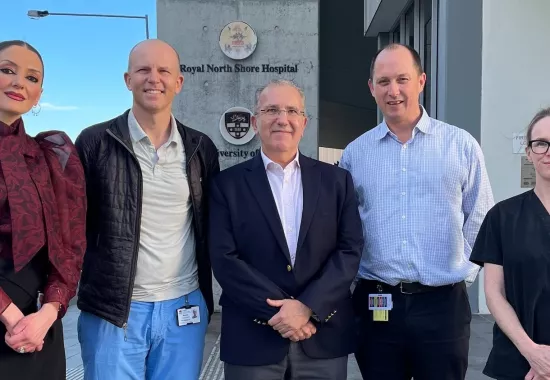
With a disturbing number of people losing their lives to heart disease each year, researchers have launched the first study of its kind using MRI technology to broaden our understanding of the link between cardiovascular disease and sleep apnoea.
The project has been made possible following funding from the Ramsay Research Grant Program, and will involve clinician researchers from Northern Sydney Local Health District and the University of Sydney.
It follows the latest figures showing cardiovascular disease is the leading cause of death worldwide, killing one Australian every 12 minutes.
This makes the research important and timely, especially given that obstructive sleep apnoea is also increasing, and is now affecting around a billion people. Known as the silent killer, this chronic disease causes low oxygen levels, sleep disturbance and dangerous pressure inside the chest.
Royal North Shore Hospital respiratory and sleep medicine specialist Professor Peter Cistulli will lead the study, collaborating with RNSH Head of Respiratory and Sleep Medicine Dr Ben Harris, and Kolling Institute researchers Professor Martin Ugander and Dr Rebecca Kozor, who are experts in cardiac imaging.
Professor Cistulli said obstructive sleep apnoea has been linked to the development of cardiovascular disease, including hypertension, heart attack, atrial fibrillation and stroke – but there have been no randomised controlled trials confirming a causal link between the two.
“Our CardioSleep Program will be unique, uniting three major disciplines of cardiology, respiratory and sleep medicine, and radiology to develop a precision medicine approach. This would define which patients are at greatest risk and require personalised treatment,” he said.
“We hope our project will provide definitive evidence of the relationship between sleep apnoea and cardiovascular disease, closing our existing gaps in knowledge and informing future treatment approaches.
“We would like to see this valuable research program drive a new approach, and one which will dramatically reduce the number of number of people who lose their lives prematurely with a combination of sleep apnoea and cardiovascular disease.”


Copyright © 2025 Kolling Institute
All rights reserved