Blog

  • Kolling Research Symposium 2024

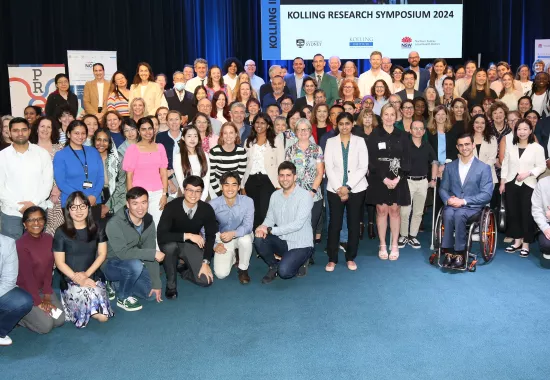
    Kolling Research Symposium 2024

    We would like to thank everyone involved in the 2024 Kolling Institute Symposium.

    During the event, a diverse collection of researchers detailed the latest progress with their ground-breaking work into kidney and heart disease treatments, bone and muscle conditions, rare cancers, and neurological challenges. There was a focus too on the innovative work to develop a unique wellbeing index.

    Researchers discussed how they’re tapping into technology to deliver care to large numbers of patients, improving outcomes with the latest heart valve devices and investigating the benefits of reducing multiple medications for older patients.

    The symposium brought together researchers, representatives from our joint venture partners (Northern Sydney Local Health District and the University of Sydney) and a growing network of community partners to celebrate our impactful work.

    Academic Director Professor James Elliott said the event featured thoughtful presentations, panel discussions, poster presentations, and an Oxford Debate on the impact of AI on healthcare. 

    “I would like to thank our guest speakers Professor Susan Morton, Director of INSIGHT at the University of Technology and Lifeline Australia ambassador and wellbeing advocate Matt Caruana who shared his personal experience and inspiring perspective,” he said.

    “The symposium provided an opportunity to hear how our researchers are extending our understanding of complex conditions and improving therapies and outcomes.  

    “It also offered the chance to highlight some special awards for a group committed to increasing access to high-quality care, and improving the health and wellbeing of our broader community.

    “I would like to congratulate the 2024 Kolling Institute award recipients for their remarkable commitment to our research success.” They include:

    PhD Supervision Award
    Associate Professor Sonia Saad
    Department of Medicine, Renal Research Laboratory

    HDR Student Award
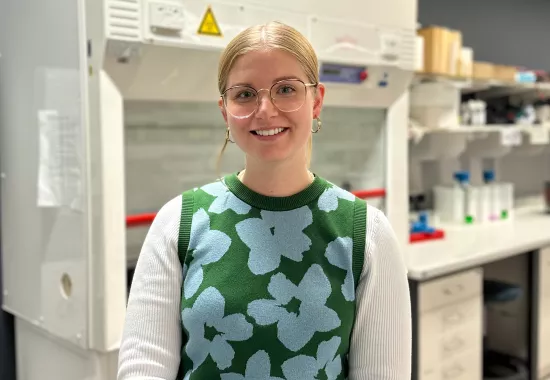
    Amanda Purcell
    Renal Research Laboratory

    Discovery Science Award Category A
    Dr Nunki Hassan
    Cancer Stem Cell and Biology Laboratory

    Discovery Science Award Category B
    Dr Sumit Sahni
    Bill Walsh Translational Cancer Research Laboratory

    Professional Staff Award Category A
    Susan Smith
    Raymond Purves Bone and Joint Research Laboratory
    Kolling Histology Core Facility

    Professional Staff Award Category B
    Annette McCook
    Research Development Officer 

    Excellence in poster presentation
    Claire Wong

    Excellence in oral presentation 
    Dr Karan Rao

    “Thank you to the many people involved in bringing this large-scale event together to highlight the remarkable and life changing work underway at the Kolling Institute,” said Professor Elliott.
  • Researchers develop urine test based on kidney cell colour and AI to diagnose chronic kidney disease

    Researchers develop urine test based on kidney cell colour and AI to diagnose chronic kidney disease

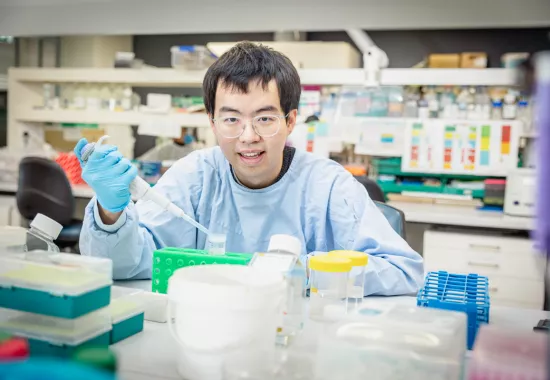
    We may soon have a convenient and painless approach to diagnose chronic kidney disease following research by the team from the Kolling Institute’s Renal Research Laboratory.

    Chronic kidney disease is an emerging global health issue, currently affecting more than 11 per cent of Australians and 13 per cent of the worldwide population. By 2032, it’s estimated up to 125 million people will have the condition.

    Chronic kidney disease is a progressive disease which eventually leads to kidney failure. It is fatal without dialysis or a kidney transplant.

    Currently, a kidney biopsy is required to confirm a diagnosis, but this procedure brings inherent risks such as bleeding and pain. A non-invasive approach to diagnose chronic kidney disease is critically needed.

    There are some blood and urine tests available which can detect advanced stages of the disease, but early detection through these means remains challenging.

    Researchers from the Kolling Institute and the Australian Centre of Excellence for Nanoscale Biophotonics at the University of New South Wales have developed and continue to improve a urine test which provides accurate information for early diagnosis.

    This novel test is based on assessing colour properties of kidney cells exfoliated from the kidney into urine. An individual’s disease status is determined by observing colour patterns with artificial intelligence-based analysis.

    Encouragingly, this exciting new technology avoids the risk of an invasive biopsy procedure.

    Head of the Kolling’s Renal Research Laboratory Professor Carol Pollock said this approach provides clear information about kidney pathology by examining kidney cells in urine through a “liquid biopsy”.

    “Having the ability to diagnose chronic kidney disease with a simple urine test represents a major step forward,” she said.

    “It means patients with chronic kidney disease or those who have a high risk of disease can receive timely management.”

    Project co-lead Associate Professor Sonia Saad said the non-invasive test would also provide information on the effectiveness of drugs and other treatments over time.

    “We look forward to applying our test for wider use within the nephrology setting, such as monitoring complications in patients who receive a kidney transplant.”

    PhD student Dr Henry Wu welcomed the chance to apply artificial intelligence to their research.

    “It’s been rewarding to help develop this important diagnostic test and progress the use of AI within the nephrology field.” 

  • Special Research Feature – Year in Review 2023

    Special Research Feature – Year in Review 2023

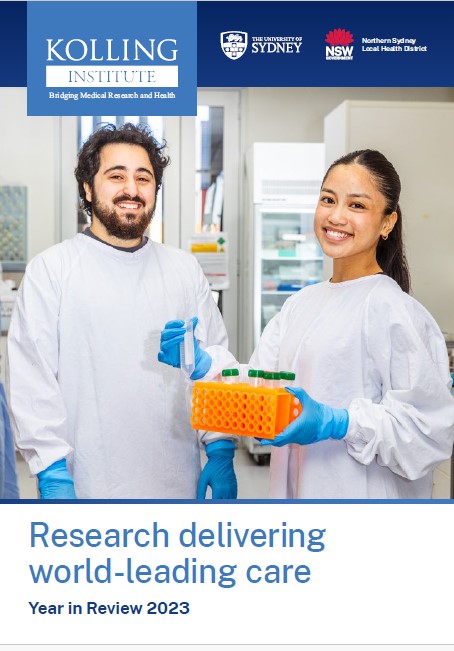
    Our Kolling Institute Year in Review profiles our innovative and life-changing research across the Kolling Institute.

    Our researchers are driving investigations into some of the most challenging health conditions from heart and kidney disease to musculoskeletal conditions, chronic pain, cancer and neurodegenerative disorders.

    Our teams have continued to increase their research impact, while forging significant new collaborations. They have maintained a commitment to research excellence, while securing large-scale funding, receiving high profile awards and publishing impactful studies.

    We hope this feature will give you a better insight into our impressive and unique teams, and their ground-breaking research. We would like to extend our thanks to our many wonderful donors who help us deliver real improvements to the care we all receive. Click here to read the feature:

  • Running for game-changing research

    Running for game-changing research

    Less than two years after a breast cancer diagnosis, Professor Gemma Figtree has completed the prestigious Boston Marathon while raising significant funds for cancer research.

    Gemma crossed the finish line in a sub four hour time as part of the talented team running for the internationally renowned Dana Farber Cancer Institute.

    Gemma ran her first marathon just after completing six months of chemotherapy in 2022, so to be accepted into the Boston event was a remarkable achievement.

    “I was really excited to have the opportunity to run in the marathon, but it was particularly an honour to run for the Dana Farber Cancer Institute,” she said.

    “For me to come through chemotherapy, and then qualify to run Boston was a major milestone in itself, and then to be able to run for one of the world’s best cancer research institute’s fundraising teams, was a perfect combination.

    “Running was a crucial part of my recovery, and there’s now increasing evidence around the benefits of exercise for cancer patients from reductions in recurrence, improved mental health and a reduction in the side effects of chemotherapy.”

    Gemma is tremendously thankful to her donors who helped her raise more than $30,000.

    “Philanthropic funding is so important as it often supports early to mid-career researchers or early stage ideas, where there may not necessarily be all the data to succeed with a highly competitive national funding grant. It can be a crucial component in advancing medical research.”

    Gemma hopes there will be further philanthropic funds for her own research program into heart disease and the rise in cases of coronary artery disease and heart attack in patients without the traditional risk factors, like blood pressure, diabetes, high cholesterol and smoking.

    “I’m sure we can learn from some of our cancer colleagues about the drugs that can target specific biological pathways that are driving an individual’s susceptibility or resilience to common disease.

    “This could be particularly relevant for heart disease, with 25 per cent of heart attack patients developing ticking time bomb coronary plaque without the traditional risk factors.

    “We are developing new biomarkers in the blood to help detect early coronary artery plaque before a heart attack, enabling all patients to benefit from effective treatments. These markers are designed to be integrated into clinical pathways that take a stepwise approach to imaging using advanced CT coronary angiography.

    “This would have a game changing impact on reducing heart attacks – because, if we can detect the disease, we can treat it.”

    Imaging of coronary plaque also has an important role in providing a new pathway for novel drugs to prevent heart attack. Gemma is leading an international initiative through the CAD Frontiers not-for-profit: the Atherosclerotic CT Imaging Outcome Consortium: Accelerating Atherosclerosis Drug Development.

    This initiative aims to develop and support a research consortium dedicated to applying advanced computed tomography (CT) imaging to atherosclerosis quantification and responses to therapeutic intervention. Consortium goals are for coronary CT to become an accepted susceptibility biomarker (diagnostic, prognostic and monitoring) and a predictive biomarker (pharmacodynamic and surrogate endpoints) in cardiovascular clinical trials. This would dramatically reduce the cost and time required to develop much needed new coronary artery drugs without reducing the rigor.

  • Strong research pipeline flags positive trend

    Strong research pipeline flags positive trend

    With an increasing focus on our research activity, the Royal North Shore Hospital Scientific Staff Council is keen to celebrate the efforts of some of our emerging leaders.

    It has presented four awards recognising an outstanding commitment to research excellence.

    Kolling Institute musculoskeletal researchers Dylan Ashton and Dr Carina Blaker were joint winners of the best publication award for their paper which identified new tendon allograft options for knee injuries. 

    Carina also took out the outstanding early to mid-career researcher award in the basic science category, while fellow Kolling researcher Associate Professor Rebecca Kozor clinched the outstanding clinical researcher award for her work using high resolution imaging to help diagnose and treat heart disease.

    Dr Katherine Bates received the outstanding research student award for her work on the identification of new biomarkers and risk factors for heart disease.

    Chair of the Scientific Staff Council Dr Sumit Sahni said he was pleased to be able to present the awards to this impressive group.

    “A huge amount of important work goes on behind the scenes,” he said.

    “Many of our researchers are quietly making crucial progress with their research, and it’s wonderful to be able to recognise their remarkable efforts extending our understanding of particular conditions and lifting the standard of care we all receive.

    “The quality of nominations we received was particularly high, making the decisions difficult and highlighting the expertise we have on the Royal North Shore Hospital campus.”

    Carina welcomed the announcement.

    “I was really honoured to receive the award recognising our research and I’m very grateful to the Scientific Staff Council for their ongoing support,” she said.

    “Our research is aimed at broadening our understanding of different tissues so that we can personalise treatment options.

    “We are increasingly seeing that a tailored approach will deliver a better individual fit and a better outcome for patients.

    “I hope this award helps to draw attention to the steady progress we’re making in this field.”

  • New grant announced for up-and-coming Kolling Institute researcher

    New grant announced for up-and-coming Kolling Institute researcher

    One of our impressive researchers has taken out a prestigious national award to broaden treatment options for diabetes.

    Despite tough competition, Cameron Evans from the Cardiovascular Discovery Group has been awarded the 2024 Australian Centre for Accelerating Diabetes Innovation (ACADI) PhD grant.

    The funding means Cameron will be able to progress his research investigating the use of a new medication for diabetic foot ulcers and peripheral arterial disease.

    Mirabegron is currently used to treat overactive bladder syndrome, but this research will help determine if it could be a suitable option for diabetic foot ulcers and vascular disease, where dysfunctional blood vessels reduce oxygen and nutrients in the tissue, and cause chronic wounds.

    “Our use of Mirabegron works by improving blood flow to the lower limbs and increasing levels of nitric oxide, one of the body’s natural antioxidants,” Cameron said.

    “This will help blood vessels and diabetic tissue function normally and heal ulcers.

    “Current treatments include a cocktail of medications or vascular surgery which are invasive, costly and risky.

    “So we hope our research will confirm if Mirabegron will reduce amputation, improve quality of life and increase life expectancy.”

    Diabetes is continuing to escalate globally, with around 650 million people likely to have the disease by 2040.

    “It’s anticipated, one in five of those with diabetes is likely to develop an ulcer, so we could potentially be helping more than 130 million people with our research.

    “I am tremendously grateful for the ACADI PhD grant, which will greatly boost our project.

    “Working weekends and researching five days is a tough slog, so receiving this grant is an incredible help.

    “It’s a weight off my shoulders, and will give me dedicated time to progress our valuable investigations.”

  • Kolling Institute Research Video

    Kolling Institute Research Video

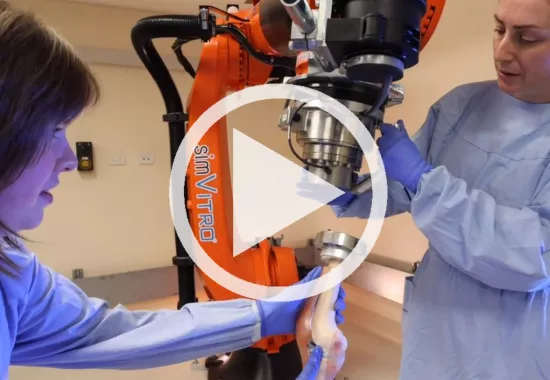
    At the Kolling Institute, we are tremendously fortunate to work with so many skilled and dedicated researchers. Our Kolling video gives you an insight into some of our latest research and our inspirational teams.

  • Researchers saving those with silent heart disease

    Researchers saving those with silent heart disease

    For many years we’ve understood that heart disease is linked to unhealthy habits and underlying health issues, but our researchers at the Kolling Institute are pioneering a new approach to identify and treat those with the disease without the traditional risk factors.

    In Australia, a heart attack occurs every nine minutes, often with a tragic outcome or lifelong consequences.

    Many of these attacks are associated with smoking, high blood pressure, diabetes and high cholesterol, where arteries have been damaged and obstructed by plaque.

    But our researchers are turning their focus to a group of patients who have developed silent cardiovascular disease, without any warning signs.

    This group accounts for an alarming 25 per cent of people who have had a heart attack without any of the standard modifiable risk factors.

    Internationally recognised researcher and Royal North Shore Hospital interventional cardiologist Professor Gemma Figtree said we’ve seen an increase in patients like this over the last 10 years, and worryingly, many fared poorly after initial hospital treatment.

    “A greater number of them died within 30 days of the initial heart attack compared to patients with traditional risk factors, and women were disproportionately affected,” she said.

    “This group has until now, not been the focus of research or disease management, but we are working to gain a better understanding of how the disease develops in these patients and how we can capture them early and save lives.

    “It’s estimated 1.3 million people worldwide die each year due to heart attacks without the usual risk factors. These patients have no current way of accessing effective treatment for their underlying plaque as it silently develops.”

    In response to these challenges, Professor Figtree is spearheading a new approach and working with physicians, scientists and industry experts to support this group.

    Researchers are developing a series of blood tests to identify biomarkers of the underlying disease itself in its silent phase, and confirm whether they point to potential new therapeutic targets.

    They say if a marker could identify even 50 per cent of people with plaque independently of the risk factor profile, it would allow intervention with effective treatments that stabilise plaque and dramatically reduce the number of heart attacks.

    Professor Figtree said this will be a crucial step forward, revolutionising heart attack prevention.

    “Most current medications for heart disease target the known risk factors like high cholesterol and high blood pressure, however we are working to develop medications which could benefit all those at risk of heart disease, not just those with the obvious risk factors,” she said.

    “It’s important that this cohort, which has been largely invisible until now, is given the focus they need.

    “We know the development of new drugs can take many years, but we’ve seen with the success of the COVID-19 vaccines that progress can be made in a short period of time, and we’re convinced that by bringing together the best minds from across the globe, we’re in a strong position to effect change and reduce preventable deaths.” 

  • Scholarship supports the next generation of top researchers

    Scholarship supports the next generation of top researchers

    We would like to congratulate Kolling Institute researcher Amanda Purcell who has received a Juvenile Diabetes Research Foundation scholarship.

    Amanda is part of our Renal Research Laboratory, working to improve treatment for those with diabetes and kidney disease.

    She has been awarded a top-up scholarship aimed at supporting PhD students pursuing type 1 diabetes research in line with the foundation’s mission to treat, prevent and cure the disease. The competitive scholarship selects the best and brightest scientists in the field to ensure the next generation of researchers can carry out their ground-breaking work.

    Amanda has welcomed the news.

    “The Juvenile Diabetes Research Foundation PhD scholarship represents an opportunity to create meaningful change and gives me the privilege to be part of a community dedicated to making a difference in the lives of people with type 1 diabetes,” she said.

    “This support will give me the chance to attend conferences and workshops, helping me connect with experts in the field and share my research findings.”

    Amanda will investigate if a medication can be used to treat diabetic kidney disease in those with type 1 diabetes and obesity. Type 1 diabetes often leads to complications, including diabetic kidney disease which can be life-threatening.

    “The medication is widely used in type 2 diabetes for weight loss and to improve how cells respond to insulin.

    “It is also used to delay progression of diabetic kidney disease in those with type 2 diabetes, but it is not known whether it would have these same benefits in those with type 1 diabetes.

    “Using a pre-clinical model, my project aims to determine if using the medication for those with type 1 diabetes and obesity can improve kidney health.

    “We hope the findings from this work will influence preventative care for diabetic kidney disease in people with type 1 diabetes and obesity.”

    Dr Dorota Pawlak, Chief Scientific Officer, JDRF Australia said we are passionate about not only supporting well established scientists who are leading the field, but also the best early career researchers to foster the pipeline and to ensure breakthroughs continue to happen.

    The scholarships allow PhD scholars to attend scientific conferences, present their findings and establish critical networks with both national and international researchers. 

  • Kolling researchers leading the fight against diabetes

    Kolling researchers leading the fight against diabetes

    With a concerning rise in the number of people developing Type 2 diabetes, our researchers at the Kolling Institute are offering hope and an effective way forward to reduce the impact of the serious disease.

    Type 2 diabetes is the fastest growing chronic disease in the world, and if the current trend continues, it’s anticipated close to three million Australians will have the disease by 2025.

    It often occurs in those who are over 40, overweight or if there’s a genetic predisposition, but increasingly doctors are seeing young adults and adolescents with the condition.

    Sadly, many people may have the disease, and not realise it until the condition is well advanced.

    Kolling Institute researcher and Royal North Shore Hospital endocrinologist Associate Professor Sarah Glastras said Type 2 diabetes is a crippling condition which can increase your chance of kidney failure, heart attack and stroke.

    “There is no cure but it can be put into remission with lifestyle changes, with evidence suggesting that losing weight can help you manage your diabetes and return to normal blood sugar levels,” she said.

    “It is an encouraging time with a range of new drugs, innovations and clinical trials in the pipeline which will offer tools and strategies to manage diabetes.

    “In the next 12 months, there will be new combined medications which we expect will help with weight loss and the maintenance of glucose levels.

    “These drugs will have the potential to halt the march of diabetes.”

    For many people a combined approach of exercise, diet and medication will achieve significant results.

    “I often tell my patients you can’t change your age or your genes, but we do have control over what we eat and how much exercise we do. Exercise is crucial to improving the body’s metabolism.”

    New research is pointing to the benefits of a personalised diet program tailored to your individual gut microbiota.

    “Importantly, there also needs to be greater access to these promising new medications, and a greater focus on the condition.

    “Unlike cancer and heart disease, diabetes often doesn’t receive the attention and funding it deserves. There is a stigma associated with obesity and diabetes, a belief that people have brought it on themselves, neglecting the fact that it is a genetically driven disease.”

NSWGOV logo