
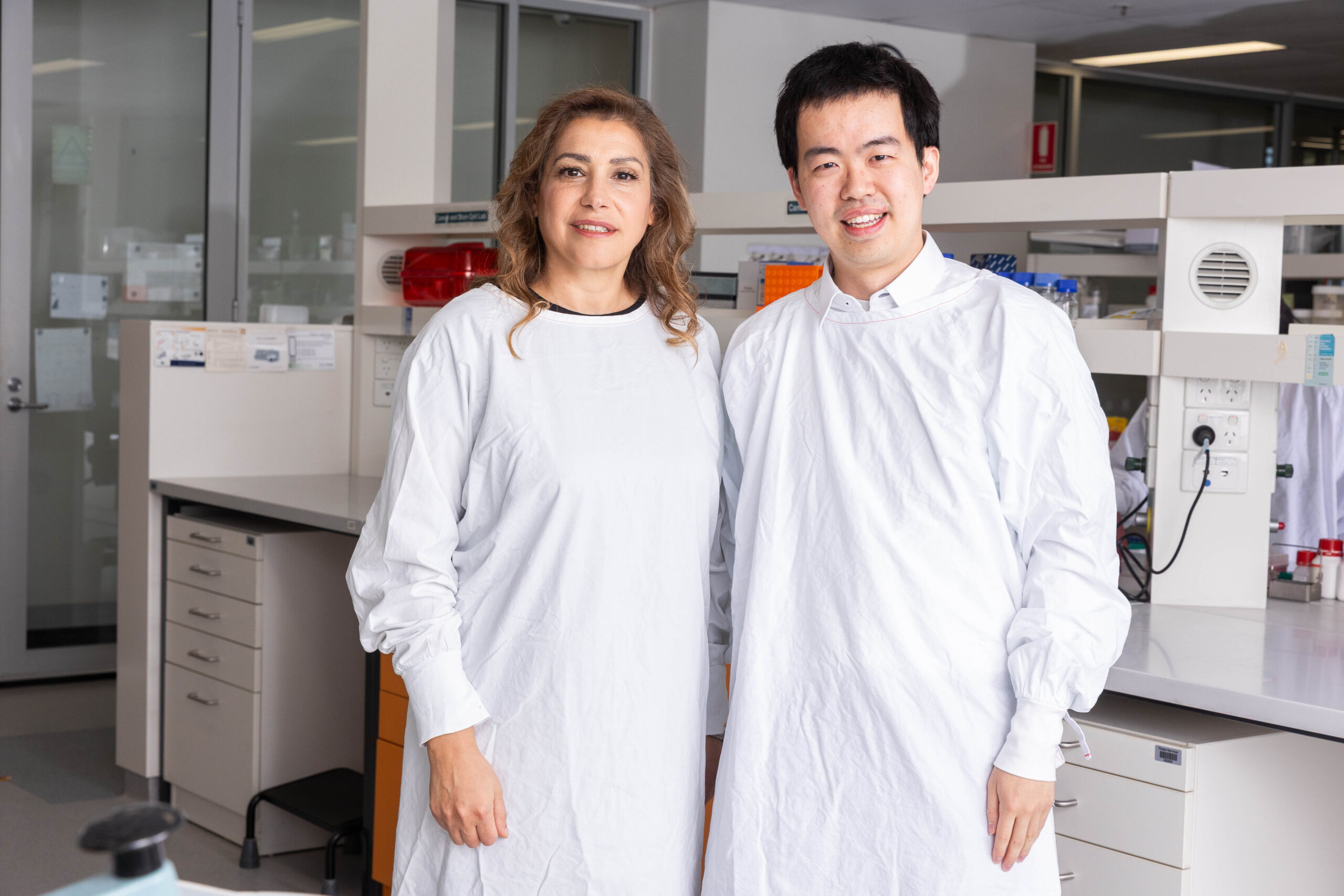
We may soon have a safer approach to diagnosing the cause of kidney transplant complications following new research by the team from the Kolling Institute’s Renal Research Laboratory.
Kidney transplantation is the preferred treatment for kidney failure, but it can lead to both short and long-term complications.
With an estimated 30–50 per cent of transplant recipients experiencing complications, clinicians and researchers are calling for better ways to diagnose the cause of graft dysfunction.
Currently, biopsy is the only validated way to identify the cause, but the procedure carries risks including bleeding, pain and hospitalisation.
Encouragingly, researchers from the Kolling Institute and the University of New South Wales have now developed a urine test which can determine the causes of graft dysfunction without the risks of an invasive biopsy procedure.
Head of the Kolling’s Renal Research Laboratory Professor Carol Pollock said this exciting new technology provides clear information about kidney pathology by examining kidney cells in urine.
Those comments have been supported by laboratory-based investigator Associate Professor Sonia Saad.
“The use of urine as a source of kidney cells has a significant advantage compared to kidney biopsy in that it is non-invasive, carries no risk to the patient, and avoids inevitable hospital admission,” she said.
Ongoing research by former PhD student and current postdoctoral clinician-researcher Dr Henry Wu is helping to advance the technology and incorporate it into patient care.
“Having the ability to diagnose patients with a simple urine test represents a significant step forward for those with kidney transplantation,” he said.
“If we can identify the risks early, we can support targeted interventions and better transplant outcomes.”
This valuable work has been recognised with Professor Pollock and Dr Wu recently receiving the International Basic and Translational Science Mentor-Mentee Award at the Transplantation Society International Congress in Sydney.
Dr Wu also received a young investigator award for his contribution to the investigations at the recent Australia and New Zealand Society of Nephrology Meeting.
The research is being led by Professor Pollock and Associate Professor Saad from the University of Sydney in collaboration with Professor Ewa Goldys and her team from the University of New South Wales.

