
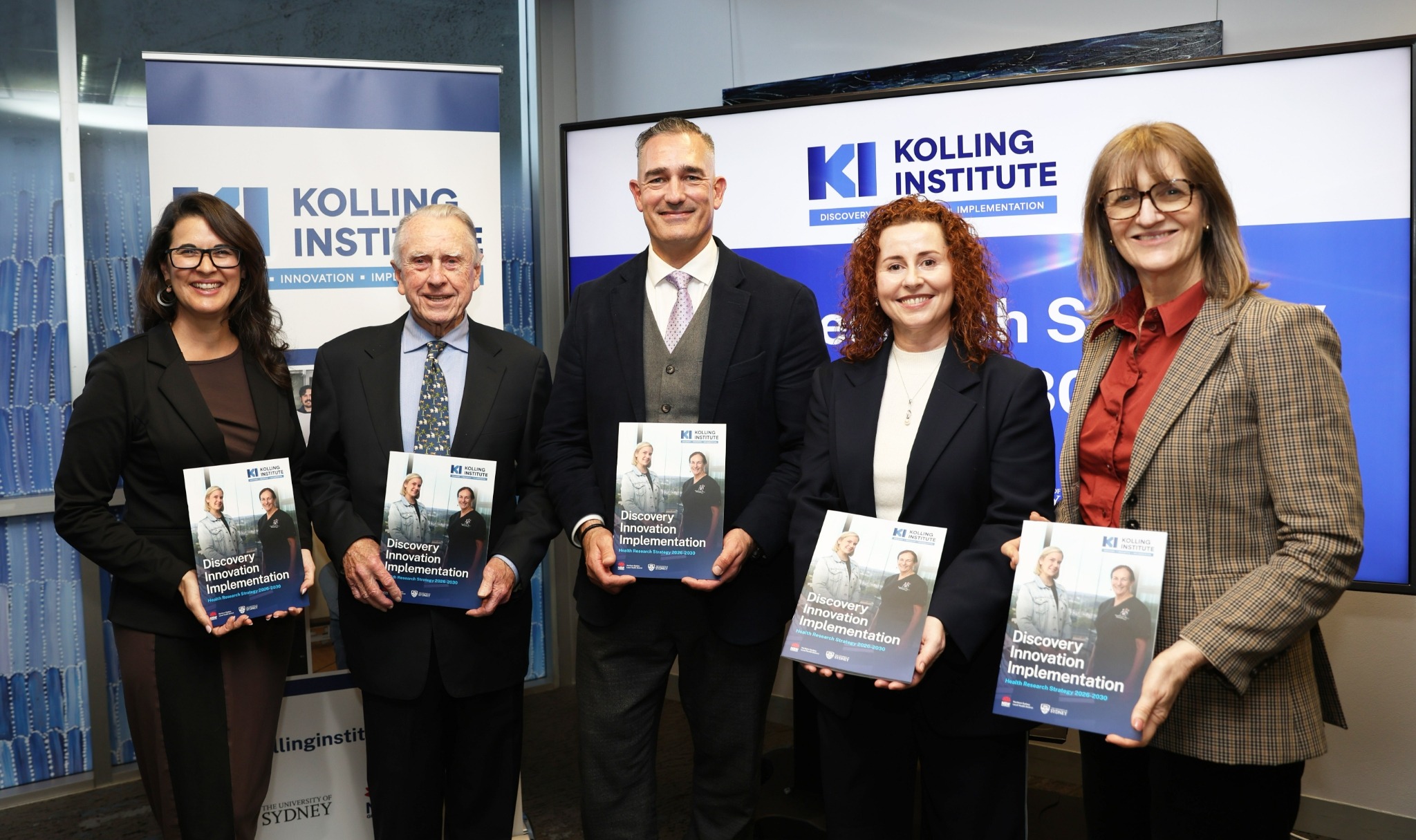
More than 150 people came together for the launch of the Kolling Institute’s Research Strategy 2026-2030, a roadmap to strengthen research expertise and expand access to high-value care.
Developed through extensive consultation with researchers, clinicians, consumers, and partners, the strategy provides a framework to guide future growth, innovation and impact.
Academic Director Professor James Elliott unveiled the strategic blueprint saying it would build on the Kolling’s strengths while positioning the institute to respond to emerging healthcare challenges and opportunities.
“I am thrilled to share this new strategy which will deliver tangible outcomes well beyond the next five years, escalating the impact of our work and strengthening our ability to drive high-quality research that improves the health of our local, national and international communities,” he said.
A key feature of the new strategy is the inclusion of cancer as the institute’s fourth focus area of research, reflecting the growing importance of cancer research and the opportunities to improve outcomes for patients through prevention and personalised treatment.
As well as cancer, researchers will continue to drive investigations into heart and kidney disease, chronic pain and neurological conditions, as well as musculoskeletal conditions.
With a focus on discovery, innovation and implementation research, the new strategy will strengthen community partnerships, expand collaboration across the institute and beyond, and improve workforce and environmental sustainability.
NSLHD Chief Executive Anthony Schembri welcomed the strategy saying we are building a culture of innovation that positions us as a leader in research excellence.
“By bringing together researchers, clinicians, consumers, and partners, we are shaping the future of healthcare through research, and delivering meaningful benefits for our community,” he said.
The University of Sydney’s Professor Camille Raynes-Greenow highlighted the discovery and translational research strength at the Kolling, and said a focus on innovation would help realise more effective treatments, better diagnostics and new models of care.
“The strategy will ensure researchers are well positioned to advance their discoveries and broaden access to the latest medications, approaches and technologies,” she said.
The strategy aligns with the goals of NSW Health, the Sydney North HealthCARE Innovation Precinct and the institute’s joint venture partners, ensuring research priorities, investment and implementation efforts are coordinated to maximise impact across the healthcare system.
To read through the strategy click here:

