
The Kolling Institute, Northern Clinical School, Faculty of Medicine and Health, University of Sydney
Founded in 1961, the Sutton Lab is Australia’s first laboratory dedicated to researching inflammatory arthritis. We focus primarily on rheumatoid arthritis, a condition that affects 2% of Australians, nearly half of whom still lack adequate treatment. For over six decades, our mission has remained the same: to move beyond simply managing symptoms and find ways to prevent and cure the disease.
Our Work
- Discovering Targets and Biomarkers: We identify and test new biological markers and treatment targets to help detect the disease earlier and tailor therapies to individual patients.
- Translating Research into Medicine: We bridge the gap between laboratory science and patient care. By taking laboratory discoveries, such as new proteins that stop or prevent joint damage, we work to turn them into practical therapies for patients and healthcare systems.
- Leading Biobanking Efforts: We serve as the operational headquarters for the Australian Arthritis and Autoimmune Biobank Collaborative. This is Australia’s first open-access biobank network dedicated entirely to musculoskeletal diseases.

Musculoskeletal and Rehabilitation
Team Lead

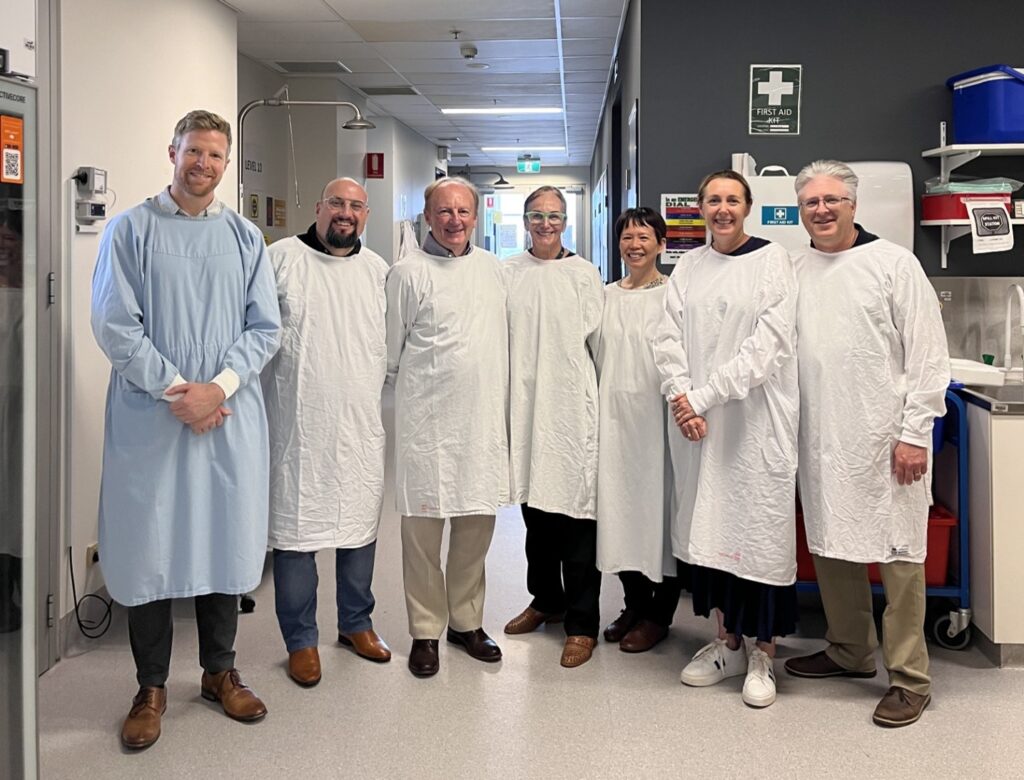
Associate Professor Meilang Xue
Sutton Arthritis Research Laboratory
Medicine, Northern Clinical School
Team Members
Honorary Professor Chris Jackson
Retired

Zachary O’Hehir
Research Project Student
Frida Campos
Visiting Student
Tatyana (Tanya) Fedorova
Clinical Trial Coordinator
Hui (Vanessa) Wang
PhD Student
Siwen(Amy) Han
Master Student
- The Problem: In rheumatoid arthritis, abnormal immune cells and joint tissues change how they process energy. They consume excessive energy to fuel aggressive joint damage.
- Our Approach: We are investigating a specific cell receptor called the Endothelial protein C receptor. It acts as a master switch that may control this harmful cellular energy shift.
- The Impact: This research highlights a new target to stop joint damage.
- The Problem: Up to 40% of patients do not respond to their first biologic treatment. This trial-and-error process prolongs patient pain and costs healthcare systems millions of dollars each year.
- Our Approach: We combine genetic and immune data using machine learning and advanced blood screening to map individual patient profiles.
- The Impact: This work will create a toolkit to predict whether a treatment will work before it is prescribed.
- The Problem: Many patients with psoriatic arthritis do not respond to standard treatments, leaving them with severe, ongoing joint inflammation and few alternatives.
- Our Approach: We are studying how specific genetic variations in a blood-clotting receptor connect blood vessel biology to immune system inflammation. We use advanced, patient-derived data models for this research.
- The Impact and Collaboration: By understanding how to control this inflammatory pathway, we can open new avenues for targeted treatments. We invite academic collaborators and philanthropic funders to help us scale this research and find solutions for treatment-resistant disease.

