
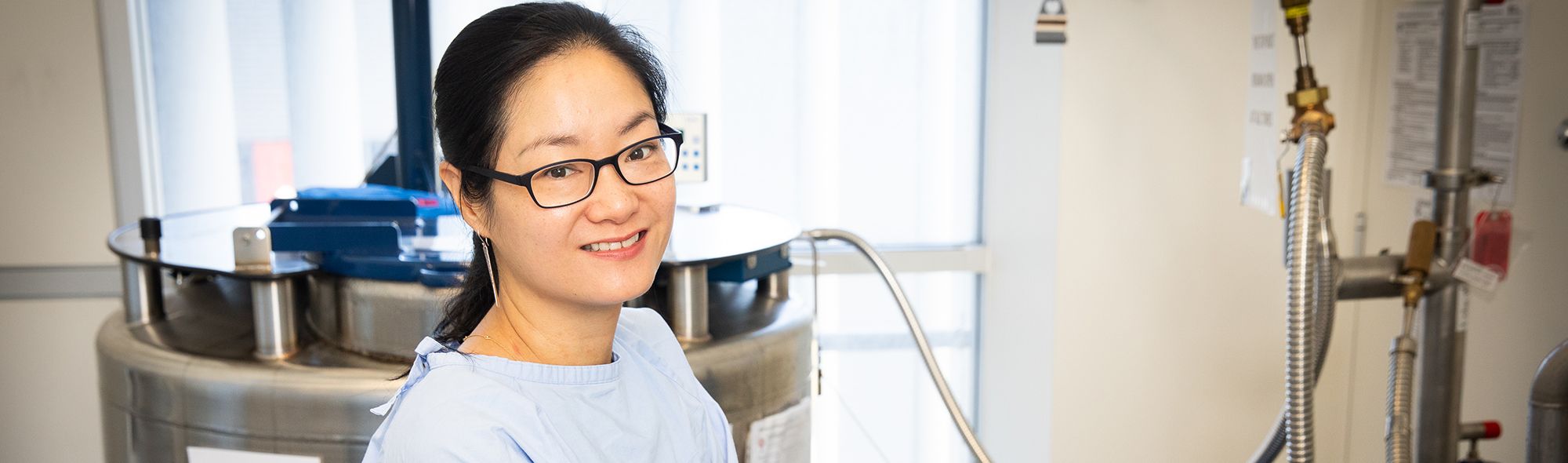
The University of Sydney Raymond Purves Bone and Joint Research Laboratory, leads Australia in research into some of the key musculoskeletal diseases affecting our population. This includes osteoarthritis, tendon and ligament injury and intervertebral disc degeneration.
There is currently no cure for these common, chronic disabling conditions and long-term management options are limited. It is only through a better understanding of the cellular and molecular mechanisms of disease, tissue breakdown and associated pain, that we will be able to develop effective preventions and treatments.
Working in close collaboration with orthopaedic surgeons and rheumatologists at Royal North Shore Hospital, and national and international industry partners, our latest research developments can be efficiently incorporated into future clinical care, to improve the health of patients with musculoskeletal disease.
Team Lead

Professor Chris Little
Director Raymond Purves Bone and Joint Research Lab
Surgery, Faculty of Medicine and Health, Northern Clinical School
Team Members
Dr Jiao Jiao Li
Honorary Associate
Dr Cindy Shu
Research Fellow
Associate Professor Sanaa Zaki
Co-Chair, Neuroscience and Pain
Postdoctoral Scientist
Raymond Purves Bone and Joint Research

Dr James Melrose
Honorary Senior Research Fellow
Daniel Burkhardt
Research Officer
Susan Smith
Technical Officer
Jiarong (Devina) Li – PhD Student
Harrison Johansen
Honours Student
Kate Hoare
Honours Student
Sidharth Aravind
PhD Student
Ye (Janey) Zhang
Visiting Researcher
Roshana Vander Wall
Research Assistant
Jiaqi (Yancy) Chen
Honours Student
Zhiyu Mu
Masters Student
Sofia Drakoulis
Honours Student
Thai Khang (Ken) Hy
PhD Student
Renee Nayager
Research Student
Jasmine Faddis
Honours Student
It has long been known that individuals with osteoarthritis have a nearly two-fold greater risk of cardiovascular disease. This connection has been associated with shared risk factors such as ageing, obesity and osteoarthritis reducing physical activity. Our novel research, funded by an National Health and Medical Research Council Ideas Grant and the Hillcrest Foundation through Perpetual Philanthropies, is defining a new pathway where molecules released from injured and diseased osteoarthritis joint tissues enter the blood and directly damage heart cells. Identifying these factors and defining how they injure and affect heart cells, will open new avenues to diagnose and manage cardiovascular disease risk.
Despite active injury prevention programs Australia leads the world in rising rates of anterior cruciate ligament ruptures. Our research has revealed that this increasing burden reflects two key limiting factors: unresolved biological risk whereby prior mild or non-rupture knee injuries cause a progressive remodelling of the anterior cruciate ligament, silently eroding tissue strength until failure occurs during normal activity, absence of widely accessible prognostic tools to identify individuals with silent, load-induced anterior cruciate ligament weakening and elevated rupture risk who would benefit from targeted injury-prevention efforts. In studies funded by the Hillcrest Foundation Arthritis Australia and Sydney Musculoskeletal Health, we are defining the sex-specific biological tissue changes driving load-induced anterior cruciate ligament weakening. We aim to translate mechanistic insights into real-world solutions by defining blood-based biomarkers to identify individuals whose anterior cruciate ligament’s are on a trajectory toward rupture; and with colleagues in Melbourne develop enhanced quantitative measures of anterior cruciate ligament loads in people to enable detection of injury-inducing events. This work will critically advance anterior cruciate ligament injury prevention by enabling the right individuals to be targeted at the right time.
Progressive joint breakdown and chronic pain following joint injury is known as post-traumatic osteoarthritis. Current treatments including surgery and bracing can restore joint biomechanics and return individuals to activity, but they fail to prevent long-term consequences with 50% of individuals developing post-traumatic osteoarthritis within 15 years irrespective of intervention. Our research funded by National Health and Medical Research Council, Arthritis Australia and the Hillcrest Foundation, has identified specific inflammatory and immune cell responses that occur in the joint acutely after post-traumatic osteoarthritis-inducing but not non-osteoarthritis-inducing knee injuries. Critically, inhibiting these immune cell changes just in the immediate 3-5 day peri-injury period modifies long-term joint inflammation and most importantly post-traumatic osteoarthritis joint pathology. We are now defining the optimal therapeutic agents and treatment window for joint immune reprogramming by repurposing already available immune-therapeutics to enable rapid clinical implementation. Targeting the rising prevalence of knee post-traumatic osteoarthritis in a younger active population is a critical research priority to prevent lifelong disability. Our research program will shift clinical practice from post-traumatic osteoarthritis management towards prevention.
- Professor Anthony Ashton, Lankenau Institute for Medical Research, Pennsylvania; discovery research academic partnership Professor Adam Bryant and Dr Scott Starkey, University of Melbourne; discovery research academic partnership
- Professor Farshid Guilak, Washington University, St Louis Missouri; discovery research academic partnership
- Professor Paul Hodges, University of Queensland; discovery research academic partnership
- Dr Sohel Julovi and Professor Natasha Rogers, Westmead Institute of Medical Research; discovery research academic partnership.
- Professor Mohit Kapoor, University of Toronto and Schroeder Arthritis Institute, University Health Network; discovery research academic partnership
- Professor Shireen Lamande, Murdoch Children’s Research Institute; discovery research academic partnership
- Dr Anastasia Mihailidou, Cardiovascular and Hormonal Research Laboratory Department of Cardiology, Royal North Shore Hospital; discovery research academic partnership
- Professor Babak Moradi, Orthopedic Research Center, Kiel University; discovery research academic partnership
- Professor Carla Scanzello, University of Pennsylvania, Institute for Immunology and Immune Health, Perelman School of Medicine; discovery research academic partnership
- Professor Aaron Schindler, The Children’s Hospital Westmead; discovery research academic partnership
- Fidia Farmaceutici S.p.A., Abano Terme, Italy; industry collaboration and engagement
- Interpath, Ballarat, Victoria; industry collaboration and engagement
- Taiwan Liposome Company, Taipei, Taiwan, industry engagement

