
The Orthopaedic Surgery Department brings together clinicians and engineers from different specialties with a common interest in improving the diagnosis and management of musculoskeletal diseases and injuries.
The research team is conducting research into hip and knee replacement, frozen shoulder, rotator cuff tendon disease, acute spinal injuries, musculoskeletal trauma and hand tendon dysfunction and repair.
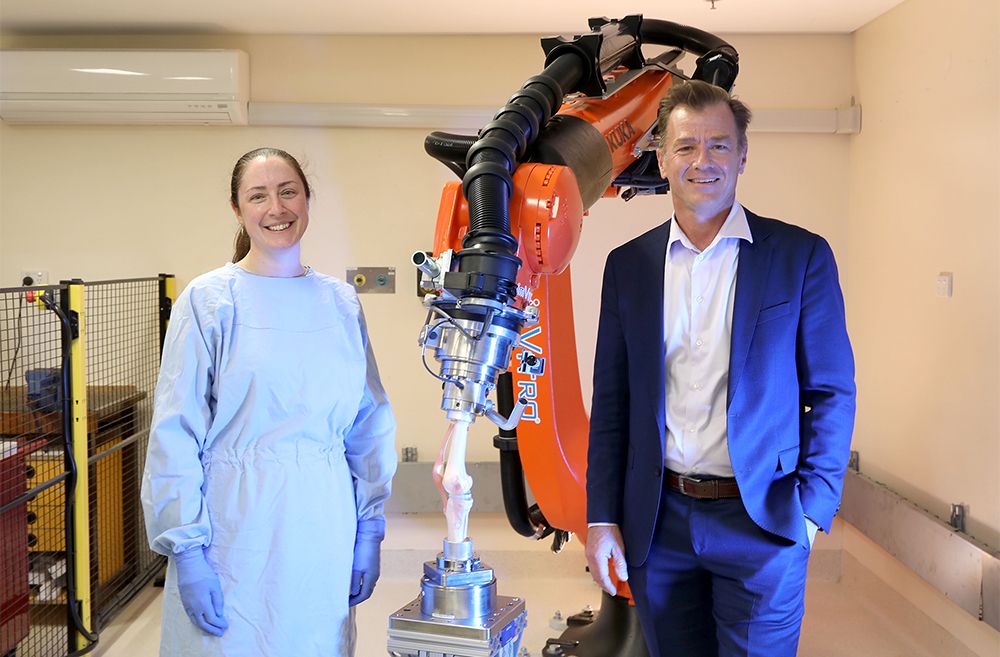
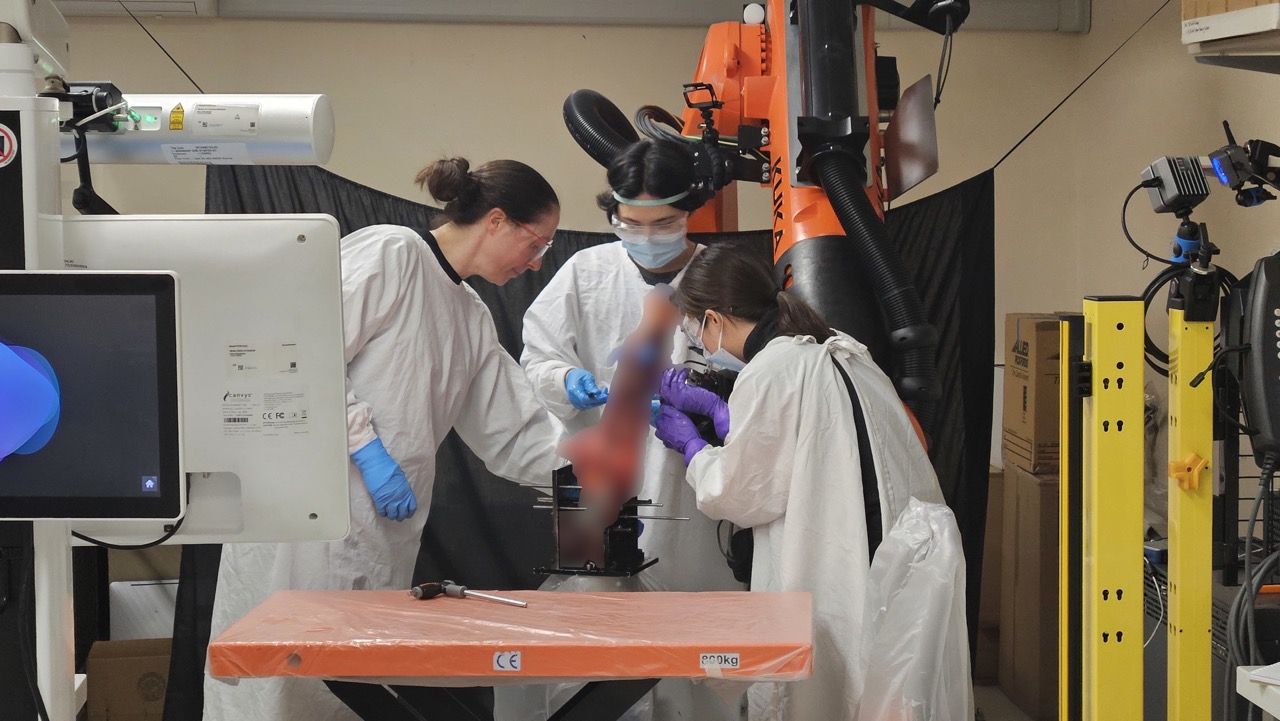
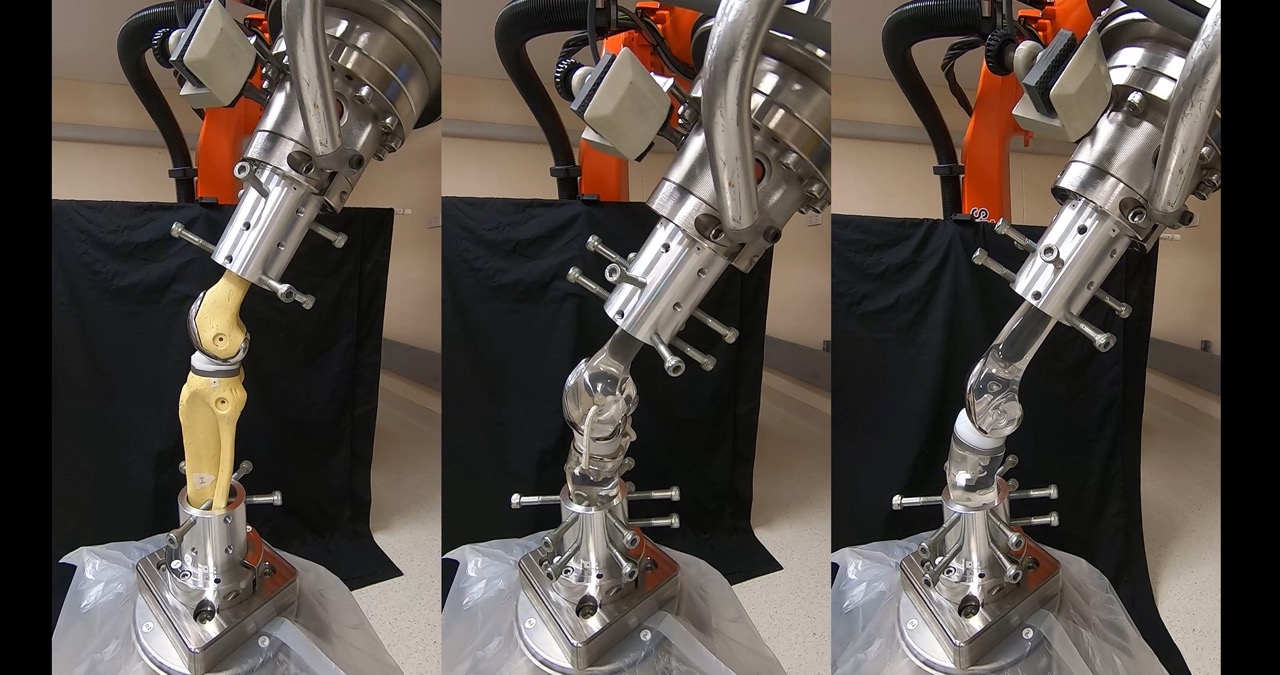
Using an advanced robotic platform – The Kolling Orthopaedic Biomechanics Robotic Arm, we conduct biomechanical testing studies on cadaver tissue, bone models, and custom testing platforms to help better understand how the joints move. Our research aims to:
- Gain a better understanding of the kinetics and kinematics of joints, bone segments, and soft tissue structures
- Assess performance of implants and improve their design
- Improve surgical procedures and determine their impact on joint functions
- Design surgical tools to improve surgical procedures
Musculoskeletal and Rehabilitation
Team Lead
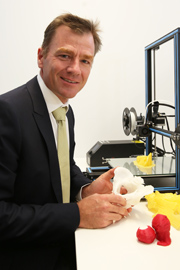
Professor Bill Walter
Professor of Orthopaedics and Traumatic
Chair of Institute of Bone and Joint Research
Surgery, The University of Sydney & Northern Sydney Local Health District (Royal North Shore Hospital)
Team Members
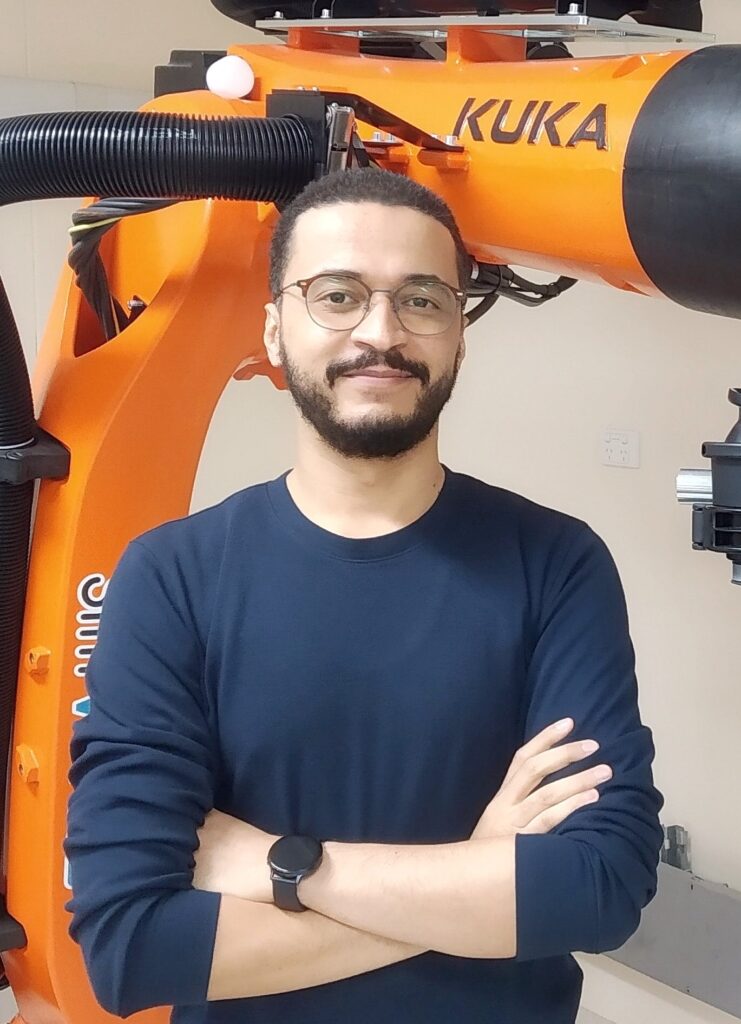
Dr Mounir Boudali
Researcher
Murray Maxwell Biomechanics Laboratory
Orthopaedics

Dr Nathan Hartin
Orthopaedic Surgeon
Dr Benjamin Cass
Orthopaedic Surgeon
Dr Andrew Ellis
Orthopaedic Surgeon
Dr Dimitri Papadimitriou
Orthopaedic Surgeon
Dr Sean Suttor
Orthopaedic Surgeon
Dr Michael Symes
Orthopaedic Surgeon
Dr Myles Coolican
Orthopaedic Surgeon
Dr Joseph Issacs
Orthopaedic Surgeon
Dr Andrew Cree
Orthopaedic Surgeon
Dr Randolf Gray
Orthopaedic Surgeon
Dr David Parker
Orthopaedic Surgeon
Dr Andrew Wines
Orthopaedic Surgeon
Dr Terence Moopanar
Orthopaedic Surgeon
Lyn McDonald
Research Nurse
Goal: Total knee replacement may be stable or unstable in the sagittal plane. Sagittal stability can be measured by Lachman test, anterior drawer KT1000. Sagittal stability is an important factor determining reported outcomes and function.
Comparison of kinematics of two different implant designs after total knee arthroplasty.
Kinematics of a medial ball and socket and a single radius cruciate retaining total knee arthroplasty designs were compared using KneeKG in this study.
Amongst other parameters pertaining to the kinetics and kinematics changes that occur post knee replacement surgery, this study investigated the effect of patella sizing; femoral condyle lengthening; femoral component medialisation; and implant design on the patellofemoral forces and the patella tracking.
This project investigates the potential factors that influence the implant size disagreement between the pre-operative planning and the actual implant selected intraoperatively. The 3D assisted pre-operative planning and implant simulation method are involved in this project.
A cadaveric, biomechanical comparison of generations of suspensory fixation with internal brace for Rockwood grade V acromioclavicular joint injuries.
In partnership with Smith+Nephew, the reasearch team determined the impact of THA on the range of motion as well as the contribution of the soft tissue structures to restraining motion and providing stability in this hip joint. Daily life activities with high risk of hip impingement, subluxation and dislocation were simulated to help better understand the mechanisms leading to joint replacement failure.

