
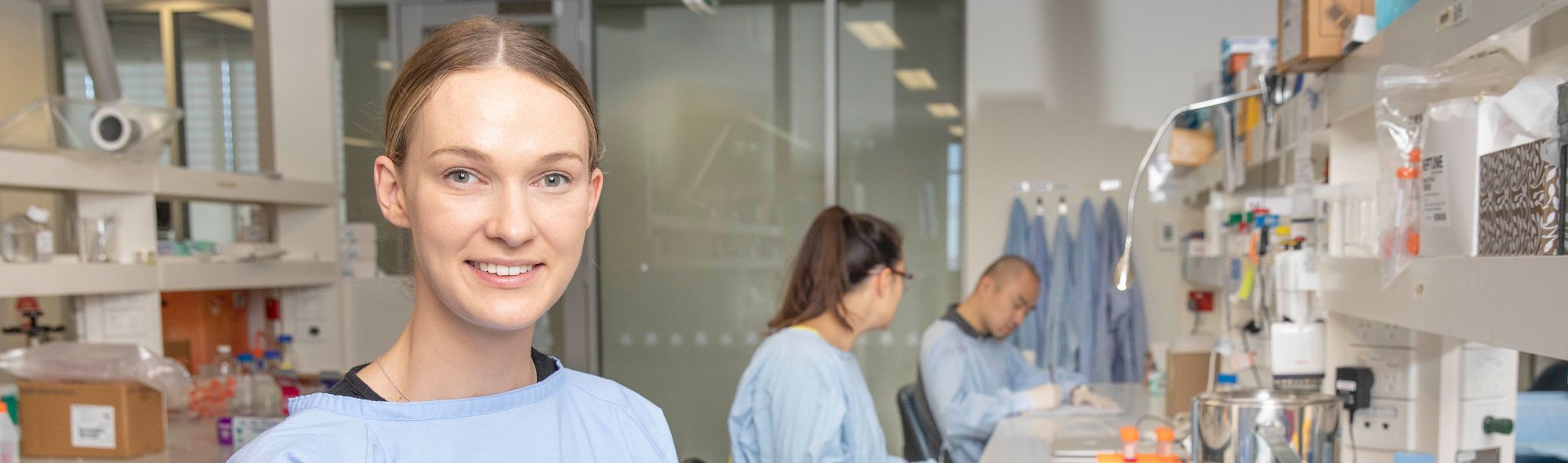
The Cardiac Membrane Biology Laboratory investigates how oxidative stress and molecular signalling pathways contribute to cardiovascular and pregnancy-related diseases. Our research focuses on the sodium-potassium pump, a critical membrane protein required for maintaining normal cellular function, and how oxidative damage and small molecule changes disrupt these pathways during disease progression.
We study the molecular mechanisms underlying conditions including heart disease, hypertension, gestational diabetes, and preeclampsia. By combining basic laboratory research with clinical collaboration, our work aims to identify novel biomarkers, improve disease detection, and develop translational therapeutic strategies.
A major focus of the laboratory is the development of simple and clinically relevant diagnostic tools for the early detection and monitoring of disease. We are also investigating the repurposing of approved medicines as potential therapies for early-onset preeclampsia, with the goal of improving maternal and fetal outcomes and reducing complications associated with premature delivery.
With more than 20 years of expertise in oxidative stress and membrane biology research, the laboratory has contributed to advancing understanding of how cellular redox signalling and membrane protein dysfunction drive disease. We work closely with clinicians, hospitals, research institutes, and industry partners to translate scientific discoveries into practical healthcare applications that support improved patient outcomes and medical innovation.

Team Lead

Prof Helge Rasmussen
Chair of Cardiology
Medicine, Northern Clinical School
Team Members

Dr Chia-Chi Liu
Honorary Senior Research Fellow
Bei Xu – Research Assistant
Gideon Jacque
Research Assistant
Grace Marks
MD Research Project Student
Sergey Tumanov
Visiting Researcher
Re-purposing of Beta3 Adrenergic Receptor Agonists as a Novel Treatment of Pre-eclampsia 2021–2026 | Heart Research Australia | $1,344,431
Vibegron in Preeclampsia Trial 2026–2028 | Ramsay Research Fund | $420,000
Additional support: Heart Research Australia | $120,000
Current treatment options for early-onset preeclampsia are limited and frequently result in premature delivery. This research program investigates whether existing approved medicines can safely improve placental and vascular function during pregnancy. Using laboratory and translational models, the project examines how these therapies influence oxidative stress, placental signalling pathways, and maternal-fetal circulation. The program aims to accelerate development of new therapeutic strategies by repurposing clinically approved medicines, reducing the time and cost associated with traditional drug development. The work has strong translational and clinical potential for improving outcomes for mothers and babies affected by preeclampsia.
Impact of Maternal Urine Profiling: Advancing Preeclampsia Management and Cardiovascular Health. 2025–2026 | Heart Research Australia | $80,000
Dipstick Urine Test for Preeclampsia
DVCR Proof of Concept Grant | $80,000
Faculty of Medicine and Health Top-Up | $50,000
Preeclampsia is a serious pregnancy complication associated with significant health risks for both mother and baby. This project is developing a simple urine-based screening approach to identify women at risk earlier in pregnancy. Using advanced molecular profiling, clinical collaboration, and translational research approaches, the study aims to support earlier intervention and improve pregnancy outcomes, particularly in regional and low-resource settings. The project has strong potential for point-of-care diagnostics and future implementation in routine maternal healthcare.
Early Detection of Preeclampsia to Improve Outcomes for Mothers and Babies
2024–2025 | IMPACT Philanthropy Application Program (IPAP) | $80,000
This project applies advanced mass spectrometry and molecular profiling technologies to identify biomarkers associated with cardiovascular and pregnancy-related diseases. By integrating clinical samples with high-resolution analytical platforms, the research aims to improve disease prediction, diagnosis, and treatment monitoring. The work supports translational research and collaborative partnerships across hospitals, universities, and industry, with potential applications in diagnostics and personalised healthcare.
Exposure to Cystic Fibrosis Modulators During Pregnancy to Mitigate Pathology Development in Offspring 2025-2028 | NHMRC | $1,684,088.71
The laboratory operates a unique human placental perfusion system in Australia, providing an advanced platform to study placental function, maternal-fetal circulation, and drug transfer during pregnancy. This specialised model enables collaborative research with clinicians, universities, hospitals, and industry partners investigating the safety and effects of medicines on placental and fetal health. The research supports improved understanding of pregnancy complications, including preeclampsia and fetal growth restriction, and contributes to the development of safer therapeutic strategies for mothers and babies.
Gestational diabetes can increase the risk of complications for both mother and baby during pregnancy. This research investigates how gestational diabetes affects placental function, oxidative stress, and cellular pathways linked to maternal and fetal health.Using clinical samples and laboratory-based models, the project aims to identify biomarkers associated with disease progression and adverse pregnancy outcomes. The research supports improved understanding of pregnancy-related metabolic disease and may contribute to earlier diagnosis, risk assessment, and development of targeted therapeutic strategies.
Royal Prince Alfred Hospital – Clinical research collaboration supporting translational studies and clinical trial activities in cardiovascular and pregnancy-related diseases.
Nepean Hospital – Clinical and academic collaboration supporting translational pregnancy research, placental biology, and women’s health studies.
University of Melbourne – Collaboration with A/Prof. Elena K. Schneider-Futschik on drug transport and placental perfusion research to better understand maternal–fetal medicine transfer and therapeutic safety during pregnancy.
Charles Perkins Centre – Collaborative access to advanced mass spectrometry and molecular analysis facilities for biomarker discovery and translational research.
Northern Sydney Local Health District – Partnership supporting clinical research integration, ethics-approved studies, and healthcare translation.
Base Pair Biotechnologies – Industry collaboration supporting development of molecular recognition technologies for diagnostic applications.
The Kids Research Institute Australia – Research collaboration through the ORIGINS Project supporting access to pregnancy cohort samples and longitudinal maternal and child health studies.
INFANT Research Centre, University College Cork – Academic collaboration supporting pregnancy biomarker discovery and translational women’s health research.

