

The Laboratory of Ageing and Pharmacology aims to ensure that older people receive the best possible healthcare. We focus on improving prevention and management of common challenges in old age like multiple medical conditions, frailty, falls and confusion.
Our team, led by Professor Sarah Hilmer AM, conducts research spanning bench to bedside to optimise personalised medicine for older adults. Older people often take many medications together and are vulnerable to adverse drug reactions. We study the effects of medications, particularly when multiple medications are taken at the same time by frail older people or those living with dementia. The use of multiple medications is known as polypharmacy. These people are under-represented in the clinical trials that inform current treatment guidelines.
We conduct laboratory, clinical, population-based and implementation research to understand the therapeutic effects of and adverse drug reactions from medications in older adults. We have developed, validated and implemented a pharmacological risk assessment tool, the Drug Burden Index. We study the fundamental mechanisms by which some medications or combinations can cause harm in old age. Our findings help clinicians detect, predict, prevent and reverse functional decline related to medicines.
Our team works closely with older people and multidisciplinary clinicians to align our research with what matters most and implement the findings into practice at scale. Our research meets the needs of the population of the Northern Sydney Local Health District, which is one of the oldest in Australia. We prioritise research advancement, education, mentorship, capacity building, collaboration, translation and implementation.
We are proudly part of the Penney Ageing Research Unit, which conducts aged care research on the Royal North Shore Hospital campus.
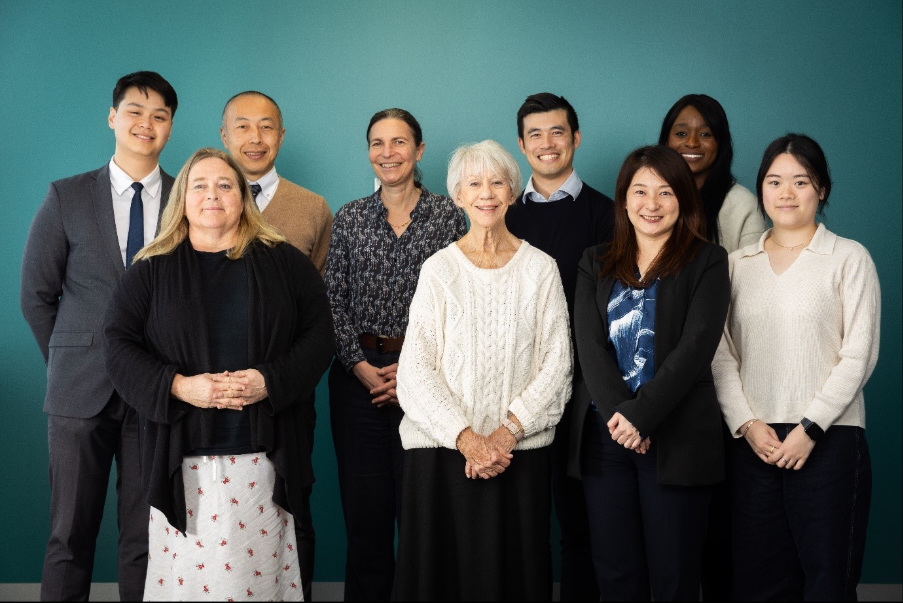

Team Lead
Professor Sarah Hilmer
Head of the Laboratory
Ageing and Pharmacology
Team Members
Intern Pharmacist Dr John Mach
Senior Research Fellow
Dr Lisa Kouladian-O’Donnell
Senior Lecturer
Dr Nashwa Masnoon
Research Fellow

Dr Kenji Fujita
Research Fellow
Associate Professor Susan Ogle
Clinical academic
Dr James Hardy
Clinical academic
Dr Helen Wu
Clinical academic
Dr Kevin Chang
Clinical academic
Sarita Lo
Research Pharmacist
Maureen Bartels
Administration officer
Bonnie Liu – PhD Student
Kevin Winardi – Research Scientist
Connie Vogler
Project Manager
Mai Duong – PhD Student
Christine Lu
Professor (USyd Chair of Clinical Pharmancy)
(Temitope) Esther Afolabi
PhD Student
Bridin Murnion
Staff Specialist
Bella Ianni
Intern Pharmacist
Noriko Sato
Research Fellow
Nina Pham
Research Fellow (Pharmacy Practitioner)
Leping (Victor) Kong
PhD Student
Chin Hang (Benson)
Yiu – PhD student
Arpita Das
Research Program Manager
Yazan Alhamdan
Masters Student
Shumin Tan
Research Officer
Matthew Oraha
Honours Student |
Kang Wen (Carmen) Zhao
| Honours student |
Our translational, transdisciplinary research projects fill knowledge and implementation gaps in optimising treatment for older people.

Our program on ageing and precision medicine, led by Dr Mach, investigates mechanisms of the effects of polypharmacy in old age and reversibility with drug withdrawal (deprescribing). Dr Mach and Mr Winardi apply bioinformatics and systems biology data from preclinical models of chronic use of multiple medicines to understand effects of polypharmacy and deprescribing on frailty, including effects on proteomics, transcriptomics, metabolomics and the gut microbiome. We are translating these findings to samples and data from clinical trials and cohort studies. We aim to develop biomarkers that predict which older people will develop medication-related harm and identify when frailty or cognitive impairment are caused by medications and many be reversible with deprescribing.
We lead and collaborate on clinical trials that aim to improve the healthcare of older people, including:
Optimising medication review in frail older inpatients (Chief Investigator A Professor Hilmer, National Health and Medical Research Council funded). This step-wedge multisite clinical trial across 6 hospitals from Northern Sydney and Central Coasts local health districts tested implementation of the Drug Burden Index with a stewardship pharmacist. This led to ongoing use in clinical care and current scaling of the implementation through the NSW Health Single Digital Patient Record.
FITTEST study (Chief Investigator A Professor Hubbard, Chief Investigator, Professor Hilmer, Medical Research Future Fund funded): Supporting older people to participate in frailty prevention programs. This national clinical trial investigates the implementation and effectiveness of a multicomponent frailty program that integrates exercise, nutrition, optimisation of medicines and social connectedness. We codesigned the medication optimisation intervention with consumers and clinicians, creating a patient portal called ‘My Medicines Goals’ to help older people manage their medicines.
- Automation of Frailty Screening in the electronic medical record to enable frailty-informed care (CIA Hilmer, MRFF Funded). While frailty screening is recommended by national and international guidelines, it is currently only performed in a small proportion of patients. This national research program will design and implement automated frailty screening using existing data from the electronic medical records.
- Frailty Screening and Management in Primary Care (CIA Morgan, CI Hilmer, CI Kouladjian O’Donnell, MRFF Funded). Our contribution is codesigning and implementing clinical decision support for medication optimisation for older patients in primary care.
- Frailty Across Different Disciplines (NRMRC CRE, CIA Hubbard, CIB Hilmer) investigates frailty in older patients in acute hospitals. Our research has uses big data from hospital electronic medical records to understand the prevalence and outcomes of frailty and dementia, patterns of medication use in routine care according to frailty and the costs of frailty in hospital.
- Using Human Factors and AI to improve Clinical Decision Support (NHMRC CRE, CIA Baysari, CI Hilmer). Ensures that clinical decision support systems are designed around the capabilities, limitations, needs and preferences of users. Hilmer will contribute to programs on frailty screening and drug-drug interactions.
- SUPPORT Meds (DoH QUDTP Clinician Education Grant, CIA Reeve). This program develops, implements and evaluates education on deprescribing in primary care nationally.
- Guidelines: We have contributed to rigorous national guidelines on medication use in old age, including deprescribing guidelines, guidelines for the appropriate use of psychotropic medications in people living with dementia and in aged care, and the current update of the Dementia Clinical Practice Guidelines.
We conduct and collaborate on pharmacoepidemiology studies, investigating the association between drug use and global health outcomes in older people nationally and internationally. We created the TO HOME[SH1] multisite cohort study of older adults in hospital. Research led by Dr Tan links national big data to investigate medication use and outcomes in people living with dementia and patterns of multimorbidity. We apply machine learning to big data to predict outcomes and inform personalised medicine for older people. We collaborate internationally on large cohort studies, such as the Canadian Longitudinal Study of Ageing and UK Biobank, bringing together pharmacoepidemiology and biomarkers to understand and predict drug response in old age and polypharmacy.
Recommendations for a National Strategic Action Plan to Reduce Inappropriate Polypharmacy: development and implementation. This informed the Australian Government’s response to the WHO Third Patient Safety Challenge: Medication Without Harm.
Representativeness of clinical trials to inform the healthcare of frail older people. Hilmer contributed to FDA Roadmap to 2030 for Drug Evaluation in Older Adults, and led the IUPHAR statement on international gaps in drug development for older people . Through the Sydney Health Partners Geriatric Medicine Clinical Academic Group, Hilmer led a paper on Principles for involvement of Older People in Clinical Trials. Ongoing work on education and policy change to enable representative recruitment of older people and people with frailty in clinical trials.
National expert consensus statement on prevention and management of frailty.
Prof Hilmer is the Australian lead of the Australia New Zealand Prescribing Skills Assessment, which is an assessment of prescribing competency that aims to improve medication safety.
As chair of the IUPHAR Clinical and Translational Section and its geriatric committee, Prof Hilmer led development of an international curriculum in geriatric pharmacology and several teaching resources.
Dr Liu is creating microlearning modules for junior doctors to teach them how to review medications when called to manage common presentations in older patients in hospital such as falls and delirium.
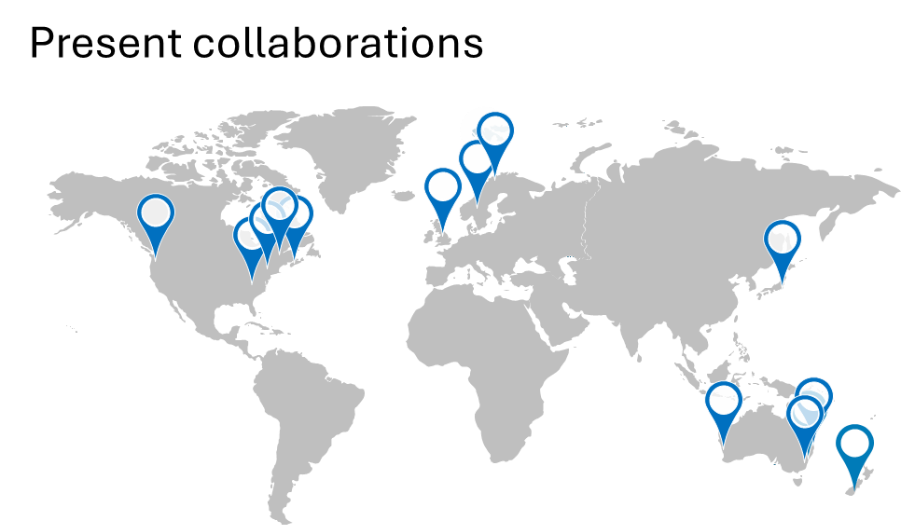
Institutional networks: NSLHD Rehabilitation and Aged Care Network; Kolling Institute; CPC; Concord Clinical School; Sydney Medical School; Sydney Pharmacy School; Sydney Nursing School; School of Medical Sciences.
Research Networks for national collaborations: Sydney Health Partners Geriatric Medicine Clinical Academic Group, Australian Frailty Network, Australian Deprescribing Network and Australian Biology of Ageing Network.
Professional societies for clinical and policy engagement: NSW Therapeutic Advisory Group, Australian New Zealand Society of Geriatric Medicine, Australasian Society of Clinical and Experimental Pharmacologists and Toxicologists, International Union of Basic and Clinical Pharmacology.
Australian Universities for Research Collaboration: Microbiome Research Centre, UNSW; Graduate School of Biomedical Engineering, UNSW; Centenary Institute, UTS, The George Institute; Centre for Medication Use and Safety, Monash University; Frazer Institute
Faculty of Health, Medicine and Behavioural Sciences, The University of Queensland; The University of Western Australia.
International Universities and Institutes for Research Collaboration: Dalhousie University, Canada; Universite de Sherbrooke, Canada; Princeton University, USA; Yale University, USA; National Institute on Aging, NIH, USA; West Virginia University, USA; Institute of Systems Biology, USA; UiT The Arctic University of Norway, Norway; Leeds University, UK; Tokyo University, Japan; Karolinska Institutet, Sweden, University of Otago, New Zealand
Kolling Institute active Research Collaborations across all Kolling Focused Research Areas: Bowel Cancer and Biomarker Laboratory, Raymond Purves Bone and Joint Research Lab, Renal Research Laboratory, John Walsh Centre for Rehabilitation Research, and Pain Management Research Institute.

