
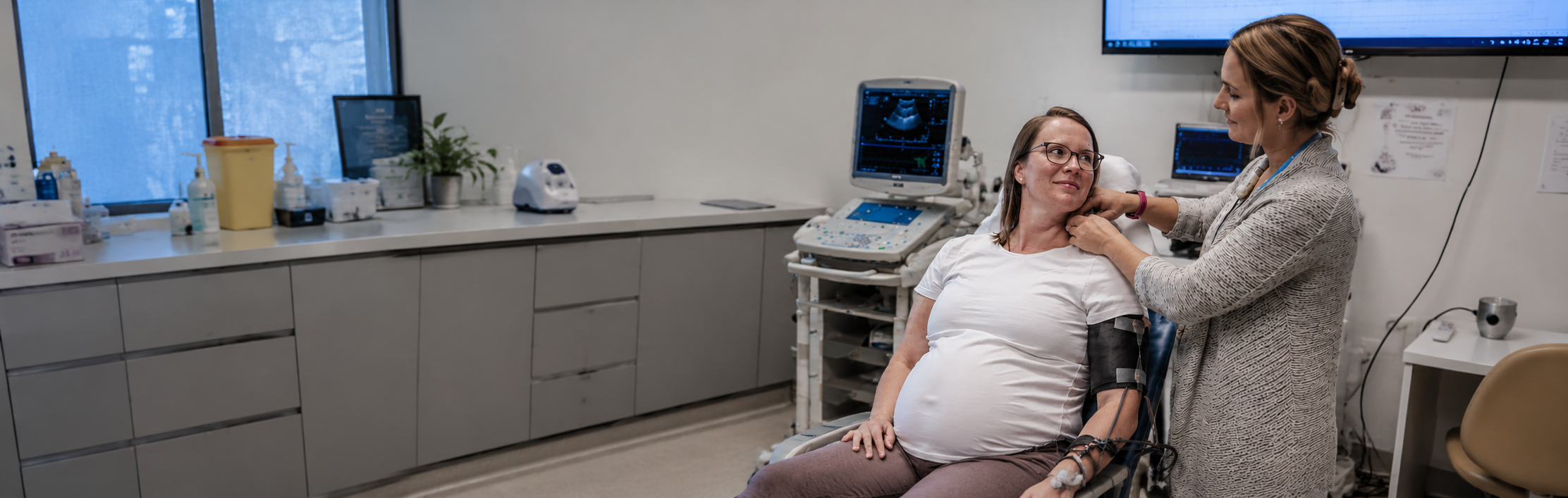
Purpose: To ensure the best health outcomes of women and babies in our community and wider afield.
Our purpose is to ensure the best health outcomes for women and babies in our community and throughout the world. Our research group undertakes basic scientific research, systematic review and metanalysis, clinical trials in maternity and birth suite, and large population cohort studies to generate the best evidence to guide best practice of care.
We are a team of clinician scientists, scientists and research midwives at the Kolling Institute, the University of Sydney and Northern Sydney Local Health District. Our work is codesigned with people with lived experience to address key conditions during pregnancy and the perinatal period answering clinically important questions to promote equitable care.

Team Lead
Team Members
Placental function is compromised in preeclampsia. In collaboration with the Cardiovascular Membrane Biology group at the Kolling Institute, we have shown that beta 3 agonists can improve sodium potassium pump function and this may provide a therapy for patients with preeclampsia.
Asthma is the most common disease in pregnancy; many women have a worsening of symptoms or need to seek medical help for an asthma attack in pregnancy. Asthma is associated with poor outcomes for baby including being born too early or too small. We propose that a personalised medicine approach which addresses lung inflammation, common co-morbidities such as reflux and rhinitis and behavioural factors such as smoking, physical activity and inhaler use may improve outcomes for mother and baby.
Clinicians at Northern Sydney Local Health District have developed an initiative to empower women to make informed decisions around their pregnancy and birth. An ongoing initiative to prevent early birth where possible. For more information please refer: Every week counts
We are assessing fetal wellbeing in labour using a novel device called DelivAssure. DelivAssure continuously measures the level of lactate produced by the baby and provides an indication of how well thebaby is tolerating labour. The results of this study may positively impact the way we monitor babies during labour globally.
We are assessing the utility of a small band aid-like sensor that detects baby movement non-invasively. The sensor is worn on the abdomen and continuously monitors fetal movement while the mother is sleeping at home.
University of Newcastle – Clinical research assessing successful treatment of asthma in pregnancy
University of Queensland – Academic partnership assessing placental development and pregnancy outcomes using genomic data from placental pathologies.
University of Melbourne – Clinical trials assessing the best antibiotic for successful prevention of infection in preterm rupture of membranes
Stillbirth CRE – Implementation. Working closely to identify knowledge gaps in still birth prevention and bereavement care and develop and disseminate resources to prevent this tragedy.

