
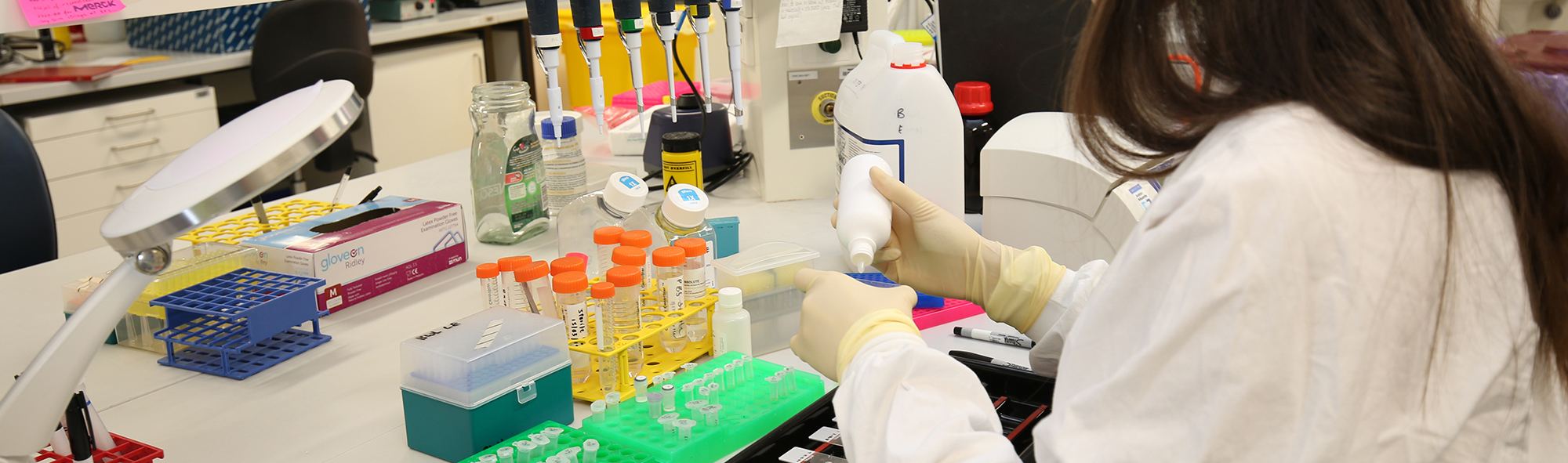
Bowel cancer, also known as colorectal cancer, is the fourth most common cancer in Australian men and women. It is Australia’s second deadliest cancer, with over 5,000 people dying each year. Concerningly, there is also an unexplained increasing trend for bowel cancer in younger people (younger than 50 years). The Bowel Cancer and Biomarker Laboratory at the Kolling Institute is a shared initiative of The University of Sydney and Bowel Cancer Australia. Our research team studies the genes, proteins, microbiome and immune cells involved in bowel cancers growing and spreading. Our aim is to improve patient survival of bowel cancer through several research initiatives: (1) repurpose existing drugs to prevent bowel cancer (2) find better ways to screen for early detection, (2) use a patient’s own molecular information to better understand their risk of bowel cancer, (4) search for cancer vulnerabilities opening new ways to treat bowel cancer.

Team Lead

Prof Mark P. Molloy, PhD | Lawrence Penn Chair of Bowel Cancer Research
The University of Sydney | Northern Clinical School
Faculty of Medicine and Health
Honorary Professor | Dept. Molecular Sciences, Macquarie University
Secretary | Australasian Proteomics Society
Team Members

Dr Benita Tse
Research Fellow

Matthew McKay
Senior Research Officer
Bharat Venkatesh Gunappa
Research Officer
(Vo Van) Anh Pham
PhD Student
YuHong Fu
Visiting Researcher
Ping (Wendy) Wu
Visiting Research Assistant
Kiera Hicks
Honours Student
Colby Stevenson
PhD Student
Eve Hopping
Masters Student
Gabriella Parrilla
Research Assistant
Samuel Pheeney
Honours Student
(Hafiz) Saad Ahmad
PhD Student
Orsolya Kekesi
Postdoctoral Research Associate
Sarah Ivanhoe
Honours Student
Jie (Oliver) Huang
Honours Student
This project seeks to test whether approved medications can be repurposed for a new indication. We are testing approved drugs that regulate metabolic control and/or weight-loss to understand how anti-cancer activities are mediated. Our aim is to use these drugs in high-risk populations as novel prevention therapies to reduce colorectal cancer incidence.
This multi-disciplinary project collaboration between scientists and medical oncologists aims to identify new vulnerabilities in BRAF-mutated colorectal cancer. BRAF-mutated colorectal cancer represents an aggressive subtype of 10% colorectal cancers. They can be successfully treated with targeted therapies, but resistance ultimately develops. We are established patient-derived tumour organoids to examine tumour biology to find new drug targets.
Colorectal polyps are precursors to tumour formation. This project leverages our human biobanked specimens to examine the genes, proteins, immune cells and microbiomes that are involved in tumour formation. This is necessary to improve our understanding of patient risk and surveillance in specific patient groups.
The aim of this project is to develop a patient-friendly blood test with high sensitivity for detection of early disease. This will overcome problems with the current stool screening test which has poor patient acceptability and misses non-bleeding tumours. By catching more tumours in early development, this will lessen the burden of colorectal cancer as treatments of early disease are highly effective.
- Bowel Cancer Australia – Research partnership with The University of Sydney
- Royal North Shore Hospital – Clinical research partnership with colorectal surgeons and oncologists
- Sangui Bio – Biotech industry partner working on bowel cancer screening tests
- Sydney Cancer Partners – Translational cancer research partnership within NSW
- The Chinese University Hong Kong – Research collaboration with Prof Jun Yun investigating microbiome in colorectal cancer
- University of Hamburg, Germany – Research collaboration with Prof Hartmut Schluter investigating proteomics of colorectal liver metastases

